Complete Guide to Hamster Diet | Nutritional Balance and Calorie Management of Pellets, Timothy Hay, and Vegetables
Detailed explanation of the roles and feeding amounts of hamster's main foods: pellets, timothy hay, and vegetables. A complete guide to meal management for maintaining health, including calorie management by type, foods to avoid, and obesity prevention.
Key Takeaways
Detailed explanation of the roles and feeding amounts of hamster's main foods: pellets, timothy hay, and vegetables. A complete guide to meal management for maintaining health, including calorie management by type, foods to avoid, and obesity prevention.
Related Species
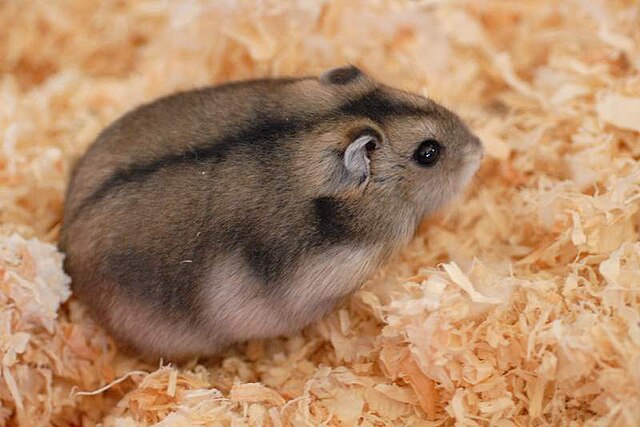
Proper diet management is a crucial factor in keeping your hamster healthy and long-lived. Many hamster owners struggle with the question: "What should I feed, how much, and how often?" This article explains the roles of hamster's main foods—pellets, timothy hay, and vegetables—and provides detailed guidance on calorie management and appropriate feeding amounts.
Hamster Dietary Habits and Nutritional Needs
Diet in the Wild
In the wild, hamsters are omnivores that eat seeds, grains, grass, insects, and small animals. They have the remarkable ability to efficiently extract fat and protein from seeds and grains, allowing them to accumulate energy reserves to survive harsh winters.
This "fat accumulation ability" often becomes the cause of obesity in captivity, making careful control of feeding amounts and fat content extremely important.
Basic Nutritional Requirements (Dwarf Species)
| Nutrient | Recommended Level |
|---|---|
| Crude Protein | 16–24% |
| Crude Fat | 4–8% |
| Crude Fiber | 6–15% |
| Water | Provide fresh water at all times |
Note: Golden (Syrian) hamsters and dwarf species (Djungarian, Roborovski, etc.) differ in body size, so feeding amounts will vary accordingly.
Choosing the Right Pellets
Why Pellets Should Be the Main Diet
Commercial pellets (formulated grain mixtures) are designed to contain balanced nutrition necessary for hamsters. Compared to mixed seed and grain foods, they offer the following benefits:
- Guaranteed nutritional balance: Prevents selective eating and nutritional deficiencies
- Prevents excessive fat intake: Avoids overeating high-fat foods like sunflower seeds
- Promotes tooth wear: Appropriate hardness supports dental health and wear
Key Points for Selecting Pellets
- Check main ingredients: Should contain grains (barley, wheat, corn) as primary ingredients
- Protein content: Aim for crude protein of 16–20%
- Fat content: Choose products with 8% crude fat or less (excess fat causes obesity and diabetes)
- Additives and dyes: Select products with minimal additives
- Size: Small pellets are easier for dwarf hamsters to eat
Foods to Avoid:
- Products with added sugar or honey (especially risky for Djungarian hamsters, which have high diabetes risk)
- Mixed foods with high dried fruit content (excessive sugar)
- Foods with heavy artificial flavors and dyes
Recommended Daily Pellet Amounts
| Hamster Type | Body Weight Range | Daily Pellet Amount |
|---|---|---|
| Golden (Syrian) | 90–150g | 10–15g |
| Djungarian | 30–50g | 3–5g |
| Campbell | 30–50g | 3–5g |
| Roborovski | 15–30g | 2–3g |
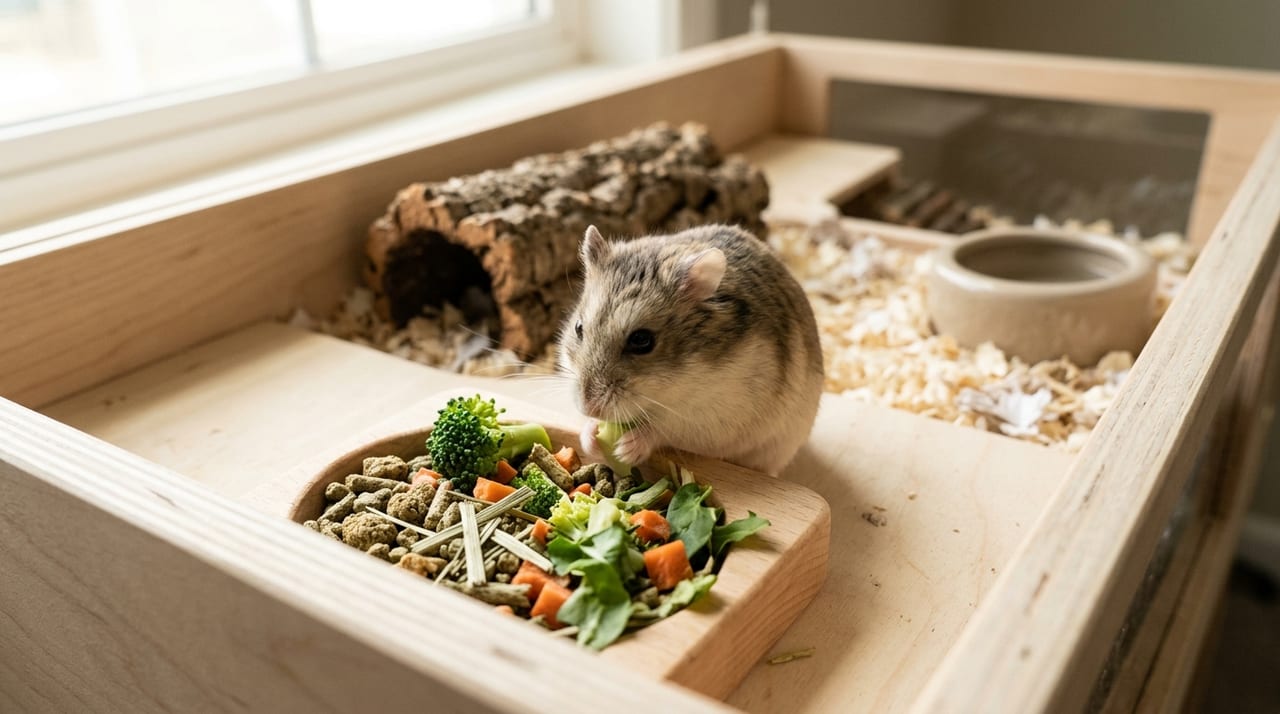
As a general rule, feed approximately 10% of body weight, and check the remaining amount the next day to adjust accordingly. Hamsters store food in their cheek pouches, so uneaten food may not be visible but could be hoarded in their nests. Check around the nesting area regularly.
Timothy Hay: Role and Feeding Methods
Is Timothy Hay Necessary for Hamsters?
Timothy hay is well-known as a staple food for rabbits and guinea pigs, but it is also recommended for hamsters.
Main reasons to feed timothy hay to hamsters:
- Digestive health: Fiber helps maintain healthy intestinal function and prevents diarrhea and constipation
- Tooth wear: Hard stems contribute to tooth maintenance and wear
- Nesting material and environmental enrichment: Serves as nesting material and promotes psychological well-being
Types and Selection of Timothy Hay
- First cut: Contains more hard stems with high fiber. Most suitable for digestive health
- Second cut: Softer with more leaves. Better for individuals with poor appetite or elderly hamsters
- Third cut: Softest with highest nutritional value. Suitable for young or recovering hamsters
Which for hamsters? First cut is optimal for healthy adults. It's rich in fiber with appropriate firmness.
Amount and Feeding Method
Timothy hay is given as a supplement to pellets. Provide about 5–10% of body weight daily, placing it in a corner of the cage or near the nest box to allow free feeding. Replace uneaten hay every 1–2 days to maintain hygiene.
Selecting Vegetables and Fruits
Recommended Vegetables
Vegetables are valuable sources of water, vitamins, and minerals. Feed them 3–4 times weekly in small amounts, about the size of a fingernail.
Safe vegetables (examples):
- Broccoli: Rich in vitamin C; safe in appropriate amounts
- Komatsuna/spinach (small amounts): Calcium supplementation
- Cabbage (small amounts): Easy to digest
- Carrot: Rich in β-carotene; feed in moderation due to sugar content
- Cucumber: Good for hydration; low nutritional value, so don't use as main food
- Bell peppers (red/yellow): Rich in vitamin C
Vegetables Requiring Caution:
- Spinach: High oxalic acid content; large amounts prohibited
- Corn: High sugar content; feed sparingly
- Potatoes: Sprouts and green skin contain solanine and chaconine, which are not reduced by cooking
Foods Absolutely NOT to Feed
- Onions, scallions, chives, garlic: May cause Heinz body anemia
- Avocado: Contains persin (toxin)
- Chocolate and cocoa: Theobromine is toxic to nervous and cardiac systems
- Alcoholic beverages
- Artificial sweeteners (xylitol): Risk of sudden hypoglycemia
- Raw legumes and seeds (apricot and peach pits): Cyanogenic glucosides are poisonous
Fruits as Occasional Treats
Fruits are high in sugar and should be given only once weekly in minimal amounts.
- Apple (seeds removed): Safe in small amounts
- Blueberries: Rich in antioxidants; 1–2 per week
- Banana: Very high in sugar; extremely small amounts only
Djungarian hamsters have a genetic predisposition to diabetes, so avoid fruits as much as possible.
Calorie Management and Obesity Prevention
How to Assess Obesity
A healthy hamster should have intestinal outlines felt when touching the abdomen. If it becomes too round and the intestines cannot be felt, obesity is likely.
Weigh your hamster weekly, and reassess diet if weight increases 20% or more above baseline.
Methods to Reduce Calories
- Review pellet portions: Reduce to appropriate amounts relative to body weight
- Restrict sunflower seeds and nuts: These are high in fat and calories; if given, limit to 1–2 per week
- Encourage exercise: Provide an environment for adequate nightly exercise using a wheel
- Increase timothy hay: Provides satiety with low calories and high fiber
Summary
Maintaining hamster health requires a balanced approach: pellets as the main food, timothy hay for fiber supplementation, and vegetables for hydration and vitamins. Since feeding amounts vary by species, weigh your hamster regularly and monitor for obesity or excessive weight loss. Calorie and sugar management is particularly critical for Djungarian hamsters due to their high diabetes risk. Proper diet management significantly extends your hamster's healthy lifespan. If you've acquired your hamster from a breeder, you can verify its health status and dietary history, making it easier to establish appropriate feeding management from the start.