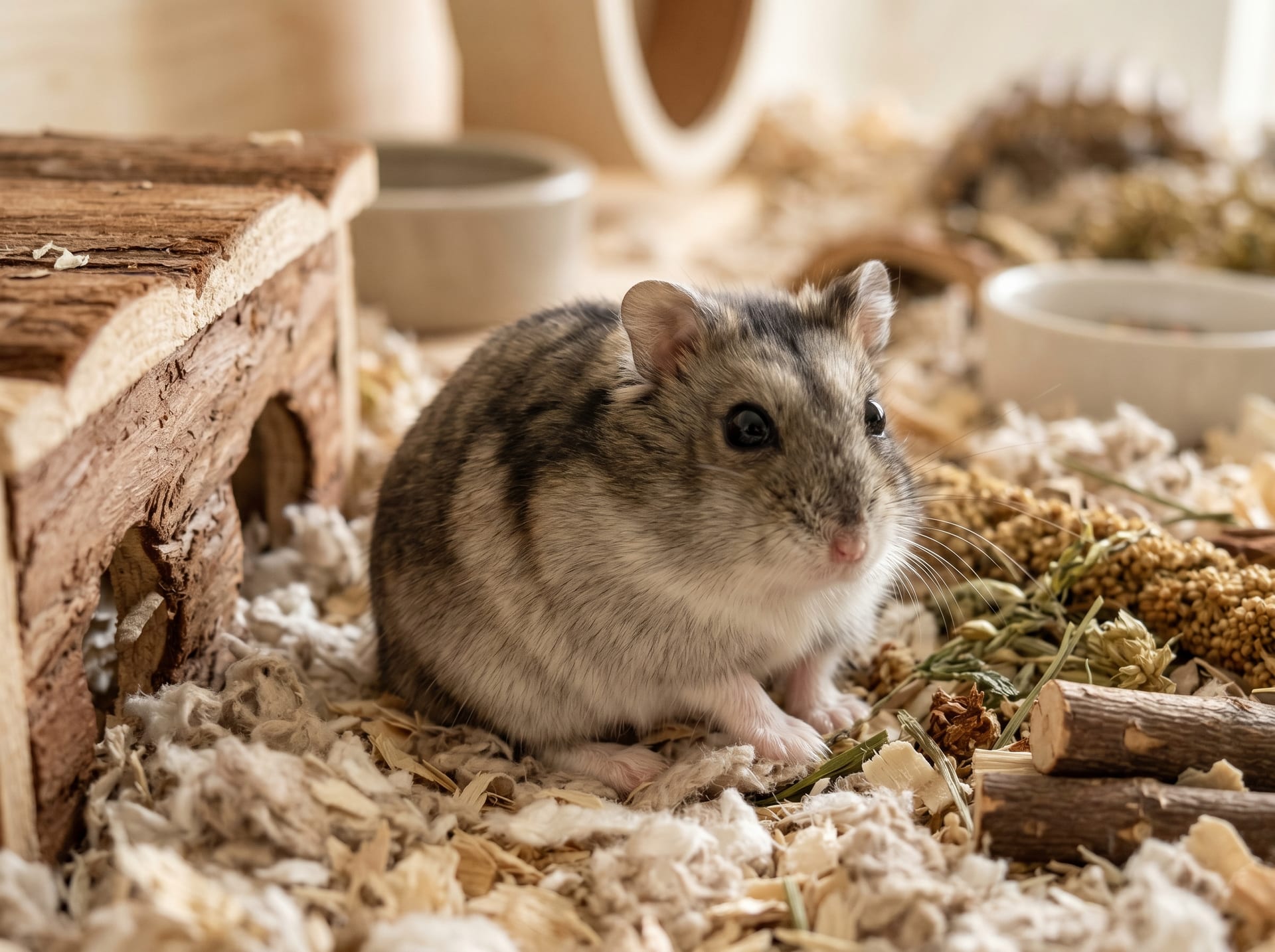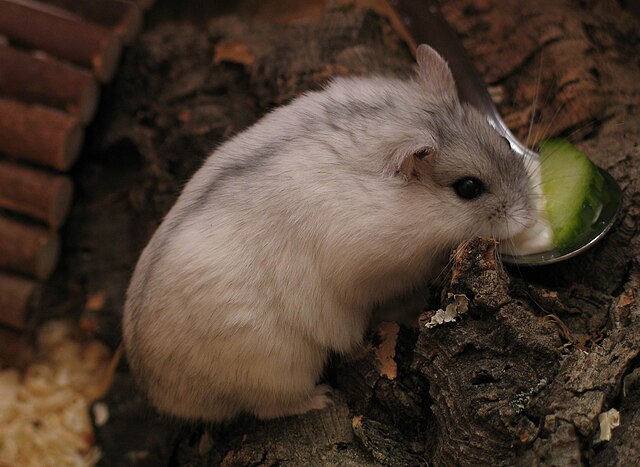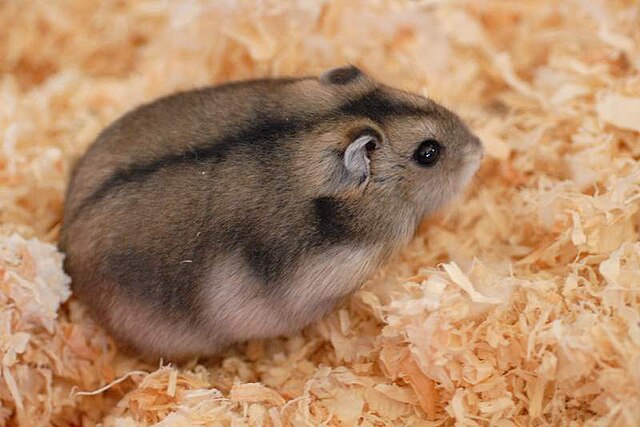
Source: Wikimedia Commons
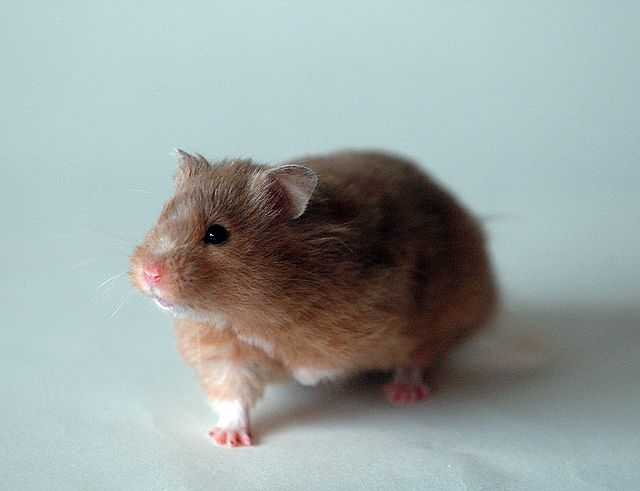
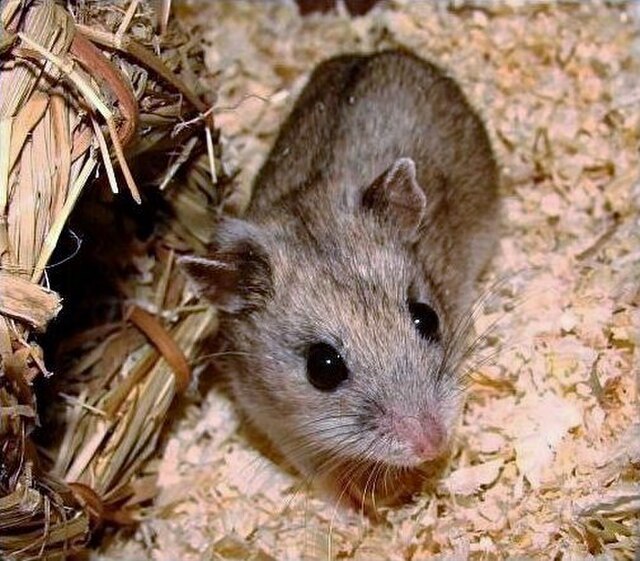
Djungarian Hamster
BeginnerPhodopus sungorus
Popular small hamster with a gentle temperament. Easy to tame and ideal for beginners. Some individuals develop a winter coat.
Difficulty
Beginner
Temperature
18〜26℃
Lifespan
1.5-2 years
Size
7-12cm / 30-45g
Humidity
40〜60%
Diet
Hamster pellets, seeds, vegetables
About
The Djungarian hamster (Phodopus sungorus), also called the Siberian hamster or striped dwarf hamster, is native to the wheat fields of Kazakhstan and the meadow-steppes of Mongolia and Siberia. Adults measure 7–12 cm and weigh 30–45 g. A distinctive dark dorsal stripe runs along the spine, and the belly is white. In winter conditions, some individuals undergo a gradual coat change to near-white, a trait that distinguishes them from the closely related winter white hamster (P. campbelli). Compared to the Syrian hamster, Djungarians show slightly more tolerance for conspecifics, though same-sex pairs must still be monitored for aggression. Housing should include a cage of at least 40 cm width and a wheel no smaller than 15 cm in diameter. Optimal temperature is 18–26 °C. They are prone to diabetes mellitus, so sugary foods must be avoided. Other common issues include tumors and cheek-pouch prolapse. Lifespan is 1.5–3 years.
Source: Wikipedia (CC BY-SA 4.0)
Basic Info
Origin
Kazakhstan, Mongolia, and Siberia
Lifespan
1.5-2 years
Size
7-12cm / 30-45g
Temperature
18〜26℃
Humidity
40〜60%
Diet
Hamster pellets, seeds, vegetables
Care Guide
Care Specifications
Solitary
Sources: Dwarf hamster (Phodopus) same-sex aggression at maturity
Morphs (Varieties)
ジャンガリアン(ウィンターホワイト)ハムスター Phodopus sungorus のカラー変異。サファイア・パールは劣性(出典: 各種ハムスター遺伝学)。
RecessiveVisual only with two copies; one copy = het (carrier).
SapphirePearl
DominantVisual with a single copy; no distinct super form.
Normal (wild type)
Sources: Winter white dwarf hamster (Wikipedia)
A curated selection of notable morphs. Inheritance modes are a breeding-planning guide; actual appearance varies with combos.
References & Sources
Edited & verified by: br-choku editorial team
The taxonomic, regulatory, and husbandry data on this page are compiled and verified against the authoritative primary sources below.
Taxonomy & Authority
Accepted name: Phodopus sungorus (Pallas, 1773)
Authority databases: GBIF
Nomenclature follows global taxonomic authority databases.
Regulations & Conservation Status
Not CITES-listed
Sources: CITES Appendices
Regulations may change. Always verify the latest information with the relevant authorities.
Djungarian Hamster Listings
Loading latest listingsFind listings for this species