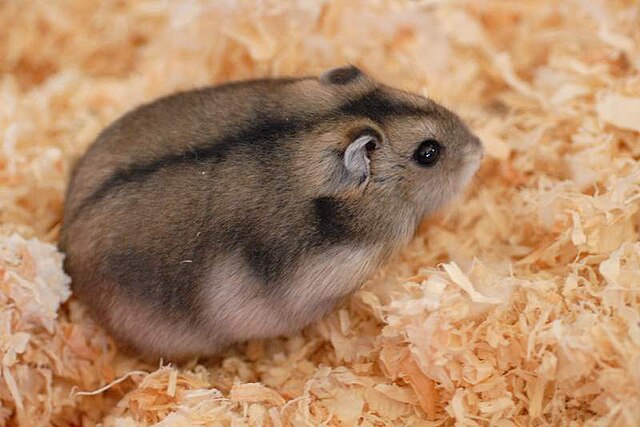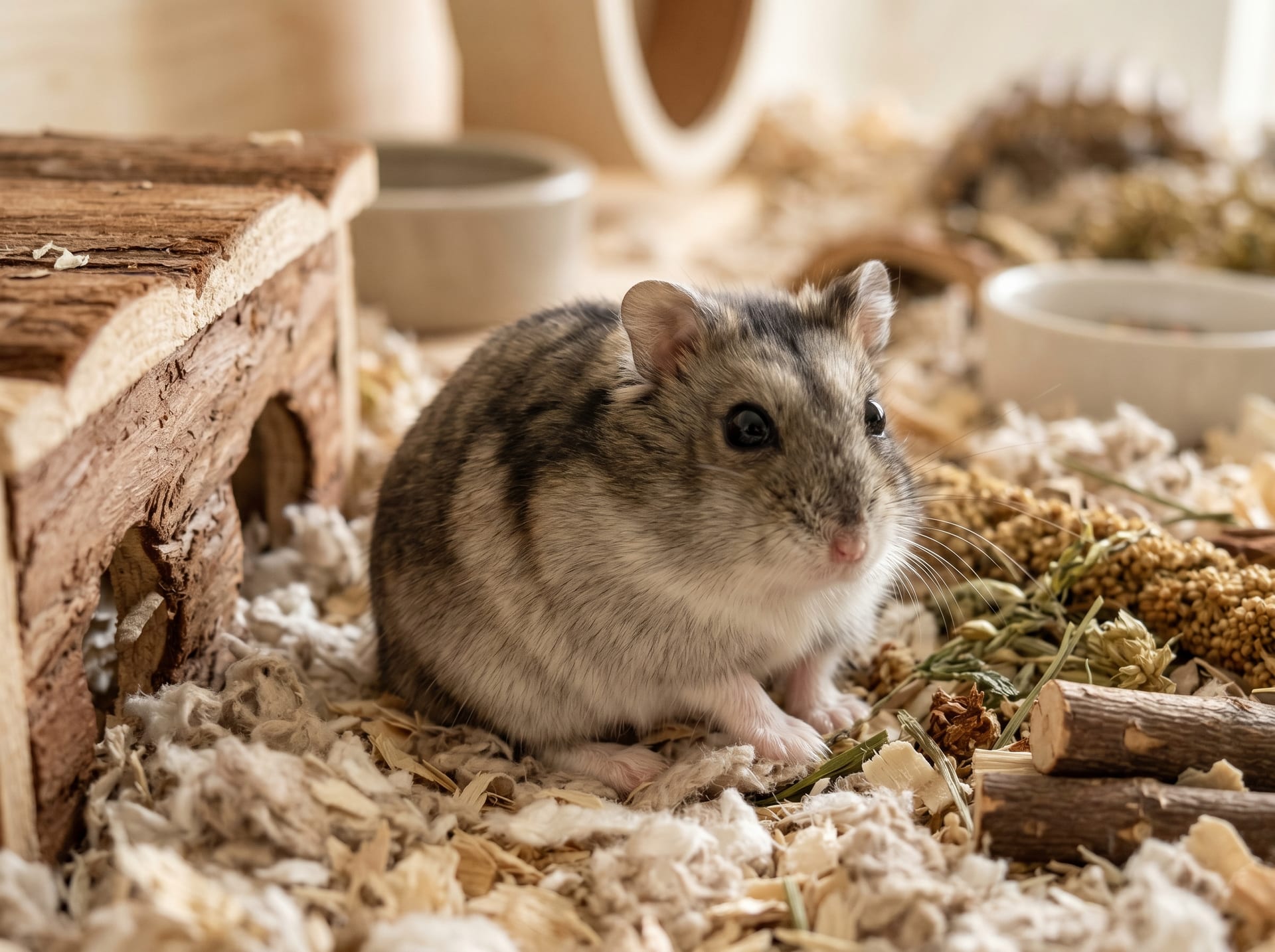
Source: Wikimedia Commons
Chinese Hamster
BeginnerCricetulus griseus
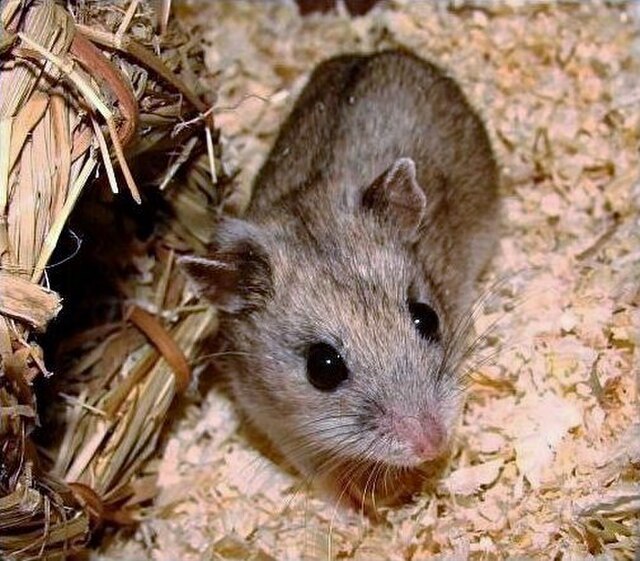
Slim hamster with a notably long tail. Gentle and affectionate, endearingly wraps around fingers when held.
Difficulty
Beginner
Temperature
18〜26℃
Lifespan
2-3 years
Size
9-12cm / 30-45g
Humidity
40〜60%
Diet
Hamster pellets, seeds, vegetables
About
The Chinese hamster (Cricetulus griseus) is native to the dry plains and agricultural areas of northern China and Mongolia. Unlike other commonly kept hamsters, it belongs to the genus Cricetulus and is distinguished by its slender body and a notably long tail of 2–3 cm, giving it a more mouse-like appearance. Chinese hamsters are generally more docile than dwarf hamsters and can become quite tame with regular, gentle handling. Housing should include a cage at least 40 cm wide with deep bedding to accommodate their burrowing instinct. They are frequently used as laboratory animals in medical research. Common health issues include diabetes, neoplasia, and respiratory infections.
Source: Wikipedia (CC BY-SA 4.0)
Lifespan of the Chinese Hamster
The Chinese Hamster lives 2-3 years.
Lifespan is 2–3 years.
Size of the Chinese Hamster
The Chinese Hamster grows to 9-12cm / 30-45g.
Adults measure 8–13 cm and weigh 30–45 g.
Temperature & humidity for the Chinese Hamster
Optimal temperature is 18–26 °C.
Basic Info
Origin
northern China and Mongolia
Lifespan
2-3 years
Care Specifications
Solitary
Sources: Chinese hamster (Cricetulus griseus) solitary/territorial
References & Sources
Edited & verified by: BreederDirect editorial team
The taxonomic, regulatory, and husbandry data on this page are compiled and verified against the authoritative primary sources below.
Taxonomy & Authority
Accepted name: Cricetulus griseus Milne-Edwards, 1867
Synonyms: Cricetulus barabensis griseus
Authority databases: GBIF
Nomenclature follows global taxonomic authority databases.
Regulations & Conservation Status
Not CITES-listed
Sources: CITES Appendices
Regulations may change. Always verify the latest information with the relevant authorities.
Chinese Hamster Listings
Loading latest listingsFind listings for this species