Source: Wikimedia Commons
Ringtail
AdvancedBassariscus astutus
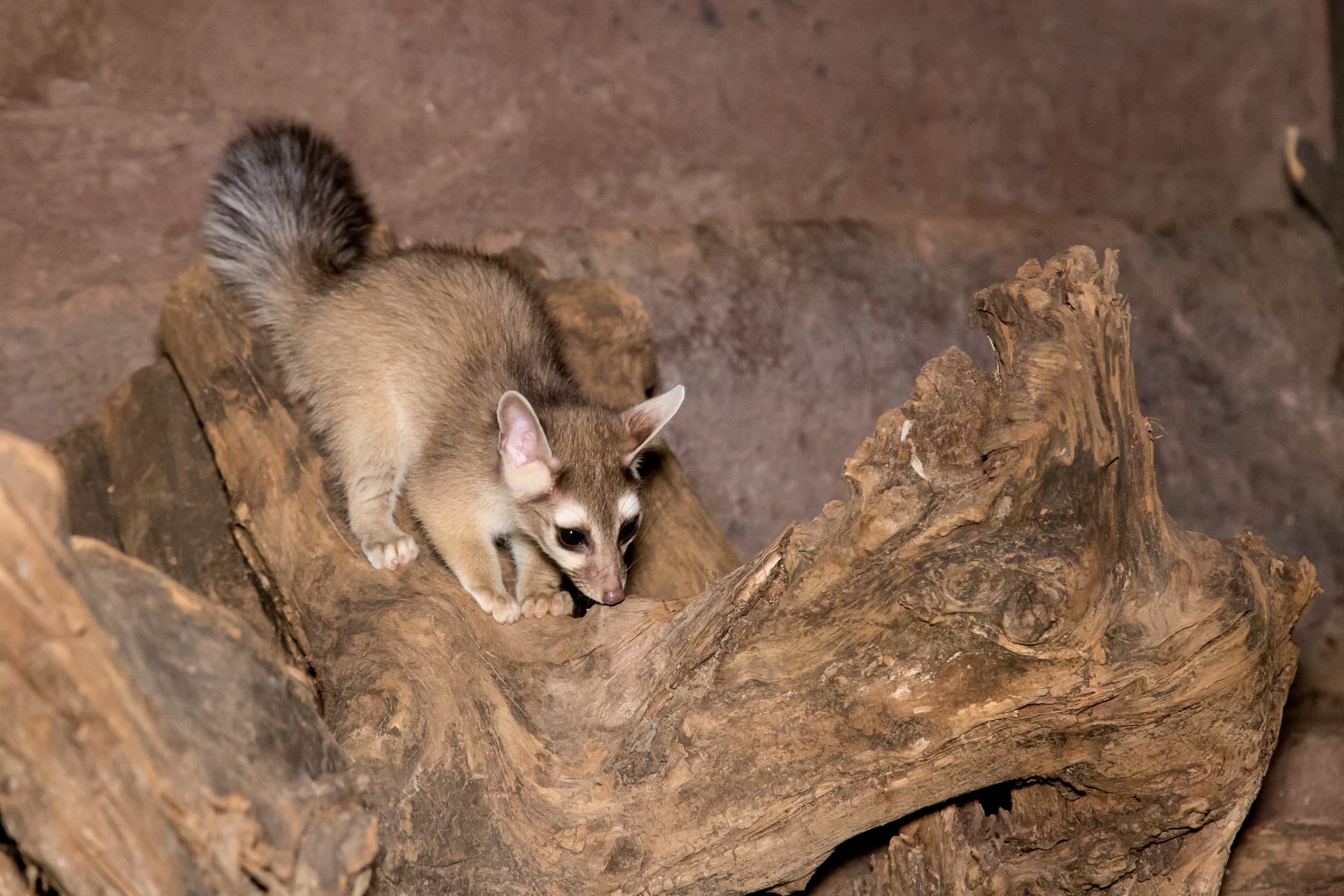
A nocturnal procyonid of the arid south-western United States and Mexico. Head-body 30-42 cm with a long black-and-white ringed tail, 0.7-1.5 kg; ankles rotate over 180 degrees, making it an exceptional climber.
Difficulty
Advanced
Temperature
18〜26℃
Lifespan
About 7 years in the wild; up to 16 years recorded in captivity
Size
Head-body 30-42cm, tail 31-44cm, 0.7-1.5kg
Humidity
40〜60%
Diet
Omnivore diet, poultry, insects, fruit and berries
About
The ringtail, described by Lichtenstein in 1830, is a small procyonid of the arid south-western United States, from Oregon and California through Arizona, New Mexico and Texas, and of Mexico from Baja California to Oaxaca. Its ankle joints rotate more than 180 degrees, and with the tail for balance it moves freely over rock faces and through trees. Nocturnal and solitary outside the breeding season. The diet is omnivorous - rodents, birds, reptiles and insects - with berries dominant in spring and summer. When threatened it releases a pungent secretion from the anal glands. Miners and settlers once kept it for pest control, earning it the nickname miner's cat, and it is said to tame readily. The IUCN lists it as Least Concern and it is not on CITES. In Japan it is rarely handled by exotic specialists and current availability needs checking.
Source: Wikipedia (CC BY-SA 4.0)
Lifespan of the Ringtail
The Ringtail lives About 7 years in the wild; up to 16 years recorded in captivity.
Wild lifespan is about 7 years, but a captive animal has reached 16.
Size of the Ringtail
The Ringtail grows to Head-body 30-42cm, tail 31-44cm, 0.7-1.5kg.
Head-body length is 30-42 cm and the tail, at 31-44 cm, is longer than the body and carries 14-16 black and white rings; weight is 0.7-1.5 kg.
Basic Info
Origin
South-western United States (Oregon and California to Texas) and Mexico
Lifespan
About 7 years in the wild; up to 16 years recorded in captivity
Care Specifications
Solitary
Sources: Animal Diversity Web / Wikipedia (Ringtail) / Wikipedia ja (Ringtail)
References & Sources
Edited & verified by: BreederDirect editorial team
The taxonomic, regulatory, and husbandry data on this page are compiled and verified against the authoritative primary sources below.
Taxonomy & Authority
Accepted name: Bassariscus astutus (Lichtenstein, 1830)
Authority databases: GBIF
Nomenclature follows global taxonomic authority databases.
Regulations & Conservation Status
Not CITES-listedIUCN LC · Least Concern
Domestic law: 感染症法に基づく動物の輸入届出制度の対象(陸生哺乳類)。
Sources: CITES Appendices (species not listed) / IUCN Red List / MHLW Animal Import Notification System
Regulations may change. Always verify the latest information with the relevant authorities.
Ringtail Listings
Loading latest listingsFind listings for this species