Source: Wikimedia Commons
Capybara
AdvancedHydrochoerus hydrochaeris
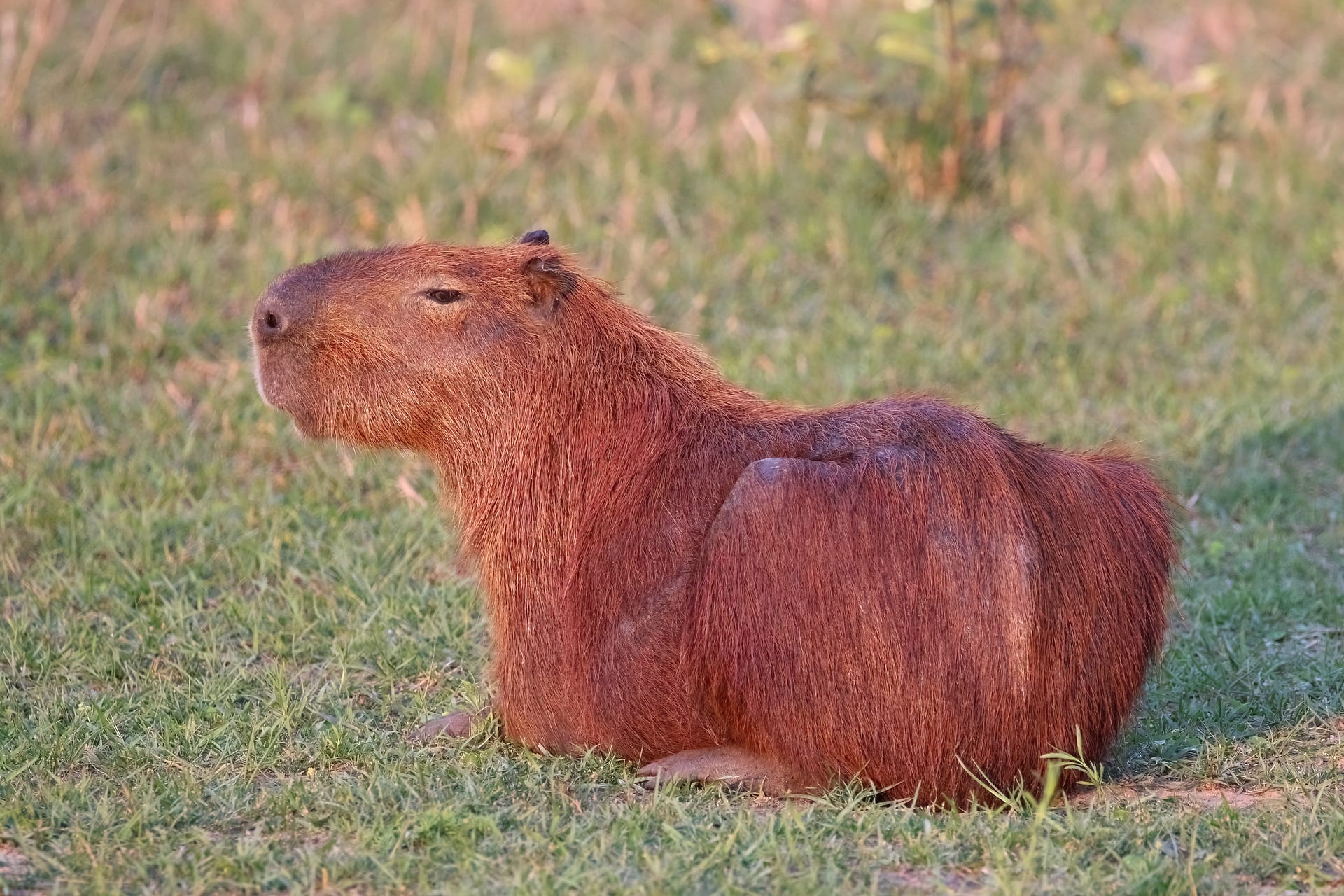
The world's largest rodent at 35-66 kg. Lives in groups of 10-20 by South American waterways, swims well and can stay under for five minutes. Gentle, but needs companions and water, so private keeping requires extensive facilities.
Difficulty
Advanced
Temperature
18〜26℃
Lifespan
About 4 years in the wild, up to 12 in captivity
Size
106-134cm body (50-62cm at withers) / 35-66kg
Humidity
40〜60%
Diet
Hay, grasses, aquatic plants, vegetables, a little fruit, large-herbivore pellets
About
The capybara (Hydrochoerus hydrochaeris) is a large cavy-family rodent living along rivers, lakes and wetlands throughout South America except Chile, and the largest living rodent. Semi-aquatic and a superb swimmer, it can hold its breath underwater for up to five minutes. It is herbivorous, grazing mainly on grasses and aquatic plants with some fruit and bark. Highly social, it lives in groups of 10-20 and sometimes up to 100. It is docile and often allows people to pet and hand-feed it, though direct contact is discouraged because its ticks can carry Rocky Mountain spotted fever. Private keeping requires a group of at least two, a pool deep enough to submerge, a large paddock, abundant hay to wear down the teeth, and heating in winter as it is cold-sensitive. IUCN Least Concern, not CITES-listed and not a Japanese specified animal. Imports fall under the rodent notification system of the Infectious Diseases Control Act; in Japan captive-bred animals occasionally circulate through exotic dealers and farms.
Source: Wikipedia (CC BY-SA 4.0)
Lifespan of the Capybara
The Capybara lives About 4 years in the wild, up to 12 in captivity.
Predation limits wild lifespan to about four years, but captive animals live up to 12.
Size of the Capybara
The Capybara grows to 106-134cm body (50-62cm at withers) / 35-66kg.
Head-body length 106-134 cm, shoulder height 50-62 cm, weight typically 35-66 kg (average 48.9 kg in the Venezuelan Llanos).
Basic Info
Origin
South America (all countries except Chile)
Lifespan
Care Specifications
Group
Sources: Wikipedia (en) Capybara
References & Sources
Edited & verified by: BreederDirect editorial team
The taxonomic, regulatory, and husbandry data on this page are compiled and verified against the authoritative primary sources below.
Taxonomy & Authority
Accepted name: Hydrochoerus hydrochaeris (Linnaeus, 1766)
Authority databases: GBIF
Nomenclature follows global taxonomic authority databases.
Regulations & Conservation Status
Not CITES-listedIUCN LC · Least Concern
Domestic law: Imports into Japan fall under the Infectious Diseases Control Act notification system for rodents; a health certificate from the exporting government is required.
Not a Japanese specified (dangerous) animal.
Sources: CITES Appendices (species not listed) / IUCN Red List Hydrochoerus hydrochaeris (LC) / MHLW Animal Import Notification System (Infectious Diseases Control Act) / Ministry of the Environment Specified Animal List
Regulations may change. Always verify the latest information with the relevant authorities.
Capybara Listings
Loading latest listingsFind listings for this species