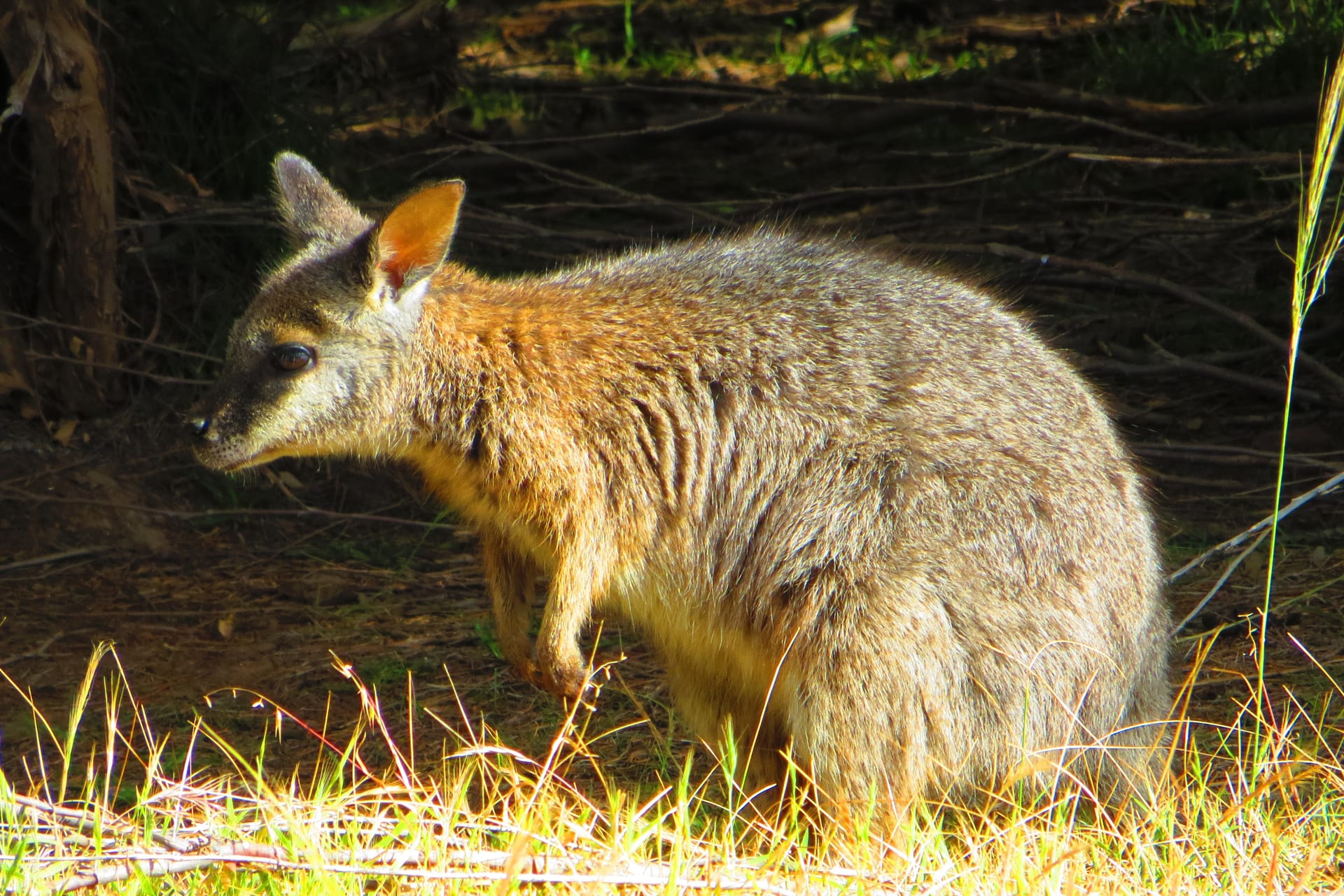
Source: Wikimedia Commons
Tammar Wallaby
AdvancedNotamacropus eugenii
A small wallaby of islands off southern Australia. A gregarious grazer and browser, also known as a model species for marsupial reproduction research. Needs a large outdoor enclosure and is for advanced keepers.
Difficulty
Advanced
Temperature
18〜26℃
Lifespan
11-14 years (maximum 15.1 years)
Size
Head-body 52-68cm / tail 33-45cm / 6.9-9.1kg
Humidity
40〜60%
Diet
Grass hay, kangaroo/wallaby pellets, leafy greens, browse
About
The tammar wallaby is a small wallaby native to South Australia and Western Australia, known from island populations such as Kangaroo Island; it has been introduced to New Zealand and reintroduced to parts of the mainland where it had been extirpated. Its genus is debated: traditionally Macropus eugenii, it is placed by many researchers in Notamacropus on the basis of genetic studies that support raising the subgenera to genus rank. It is herbivorous, both grazing and browsing, and is gregarious, forming groups. Females mature at nine months and live to 14, males mature around two years and live 11; the captive record is 15.1 years. It is a well-known model for marsupial embryonic diapause and lactation research, raising its young in the pouch. The IUCN lists it as Least Concern with at most 50,000 mature individuals. Keeping it requires a large outdoor grassy enclosure with room to run, measures to prevent fence collisions when startled (visual barriers, no sharp corners), a shelter from weather, and group housing. Oral hygiene and a high-fibre diet are important to prevent lumpy jaw, a bone infection common in macropods. In Japan it is occasionally handled by exotic pet shops.
Source: Wikipedia (CC BY-SA 4.0)
Lifespan of the Tammar Wallaby
The Tammar Wallaby lives 11-14 years (maximum 15.1 years).
Size of the Tammar Wallaby
The Tammar Wallaby grows to Head-body 52-68cm / tail 33-45cm / 6.9-9.1kg.
Head-body length is 59-68 cm in males and 52-63 cm in females, tail 34-45 cm and 33-44 cm, and weight up to 9.1 kg and 6.9 kg respectively; both sexes stand about 45 cm tall.
Basic Info
Origin
Australia (islands and some mainland areas of South Australia and Western Australia)
Care Specifications
References & Sources
Edited & verified by: BreederDirect editorial team
The taxonomic, regulatory, and husbandry data on this page are compiled and verified against the authoritative primary sources below.
Taxonomy & Authority
Accepted name: Notamacropus eugenii (Desmarest, 1817)
Synonyms: Macropus eugenii
Authority databases: GBIF
Nomenclature follows global taxonomic authority databases.
Regulations & Conservation Status
Not CITES-listedIUCN LC · Least Concern
Sources: CITES Appendices (species not listed) / IUCN Red List Notamacropus eugenii
Regulations may change. Always verify the latest information with the relevant authorities.
Tammar Wallaby Listings
Loading latest listingsFind listings for this species