Source: Wikimedia Commons
Asian Small-clawed Otter
AdvancedAonyx cinereus
The world's smallest otter, using dexterous forepaws to eat shellfish and crustaceans and living in family groups. Listed on CITES Appendix I in 2019; in Japan only registered animals may be transferred.
Difficulty
Advanced
Temperature
18〜26℃
Lifespan
Up to 15 years (in captivity)
Size
Head-body 41-64cm / tail 25-35cm / 2.7-5.4kg
Humidity
40〜60%
Diet
Fish, crustaceans, shellfish, otter diet, chicken
About
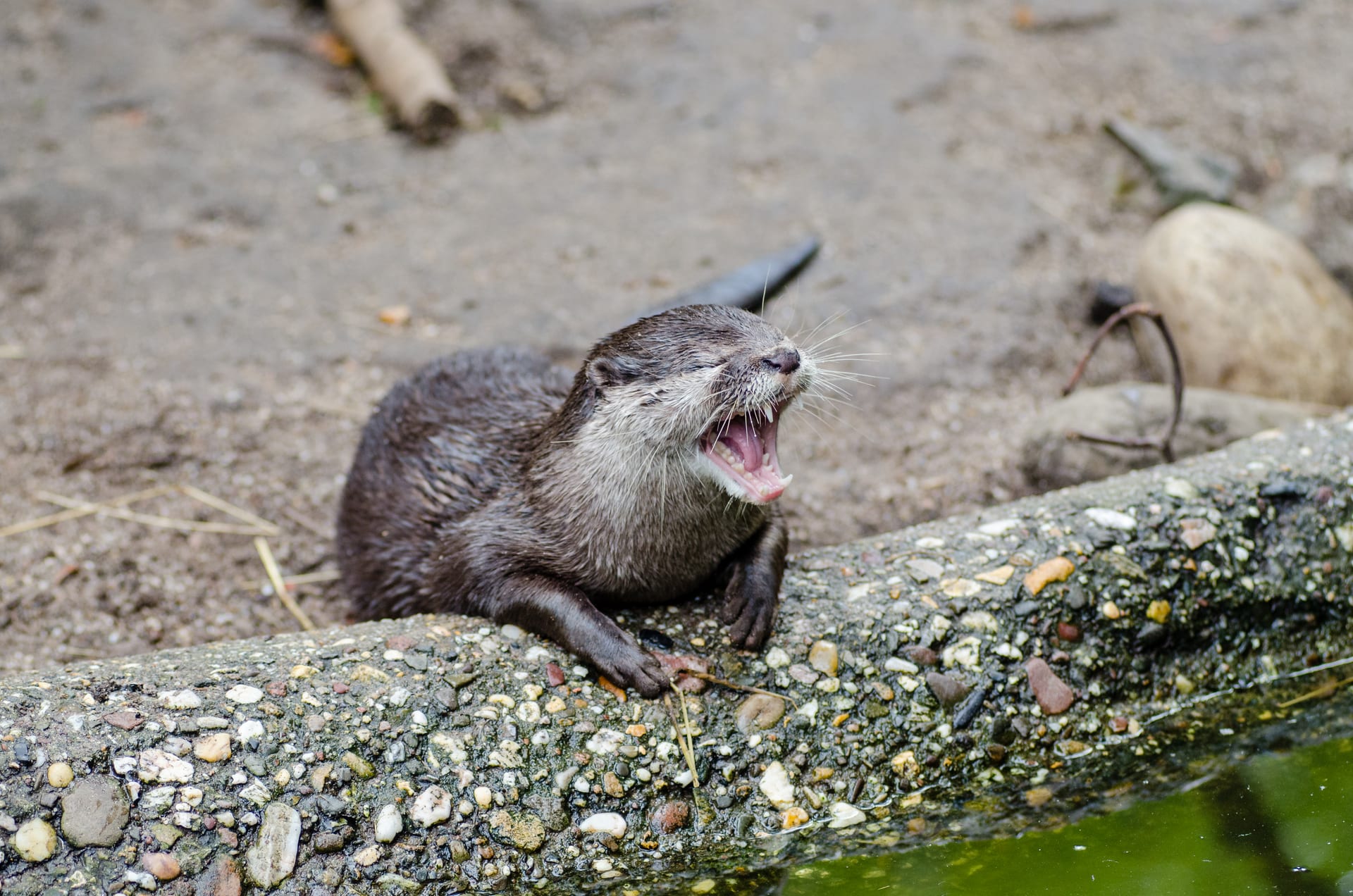
The Asian small-clawed otter is the world's smallest otter, distributed from India, Bangladesh, Nepal and Bhutan through southern China, Myanmar, Thailand, Laos, Cambodia, Vietnam and Malaysia to Indonesia (Sumatra, Java, Borneo) and the Philippines (Palawan). As the name suggests the claws are small, and the dexterous, partly webbed forepaws are used to feel for prey. It feeds mainly on crustaceans, also taking molluscs, insects, fish and reptiles. It lives in family groups built around long-term pairs, up to about 15 animals in the wild, and can reach 15 years in captivity. The IUCN lists it as Vulnerable, with illegal trade for the Asian pet market among the main threats; 35 of 49 otters seized between 2015 and 2018 were reportedly bound for Japan, and in August 2019 the species was uplisted to CITES Appendix I. Appendix I species are designated internationally endangered under Japan's Act on Conservation of Endangered Species, and domestic transfer requires a registration certificate issued by the Japan Wildlife Research Center, so only registered animals can be sold legally and only a few change hands between licensed animal businesses. Keeping one requires a large pool and land area, group housing as a family, a diet including crustaceans, and management of strong odour and loud calls; it is not suited to ordinary households.
Source: Wikipedia (CC BY-SA 4.0)
Lifespan of the Asian Small-clawed Otter
The Asian Small-clawed Otter lives Up to 15 years (in captivity).
Size of the Asian Small-clawed Otter
The Asian Small-clawed Otter grows to Head-body 41-64cm / tail 25-35cm / 2.7-5.4kg.
Head-body length is 41-64 cm, tail 25-35 cm and weight 2.7-5.4 kg.
Basic Info
Origin
Care Specifications
References & Sources
Edited & verified by: BreederDirect editorial team
The taxonomic, regulatory, and husbandry data on this page are compiled and verified against the authoritative primary sources below.
Primary sources
- Wikipedia
- CITES Appendices (Aonyx cinereus Appendix I)
- IUCN Red List Aonyx cinereus
- Ministry of the Environment - Designation of foreign endangered species
- Ministry of the Environment - Forms and registration body (Japan Wildlife Research Center)
- Wikipedia (JA) - Asian small-clawed otter (size, tail, weight, lifespan, diet, social structure)
- GBIF
Taxonomy & Authority
Accepted name: Aonyx cinereus (Illiger, 1815)
Synonyms: Aonyx cinerea, Amblonyx cinereus, Lutra cinerea
Authority databases: GBIF
Nomenclature follows global taxonomic authority databases.
Regulations & Conservation Status
CITES Appendix IIUCN VU · Vulnerable
Domestic law: 種の保存法 国際希少野生動植物種(CITES 附属書 I 由来): 登録票のある個体のみ譲渡可。
Uplisted to CITES Appendix I in August 2019. Appendix I species are designated internationally endangered under Japan's Act on Conservation of Endangered Species; domestic transfer requires a registration certificate issued by the Japan Wildlife Research Center.
Sources: CITES Appendices (Aonyx cinereus Appendix I) / IUCN Red List Aonyx cinereus / Ministry of the Environment - Designation of foreign endangered species / Ministry of the Environment - Forms and registration body (Japan Wildlife Research Center)
Regulations may change. Always verify the latest information with the relevant authorities.
Asian Small-clawed Otter Listings
Loading latest listingsFind listings for this species