Source: Wikimedia Commons
African Pygmy Mouse
IntermediateMus minutoides
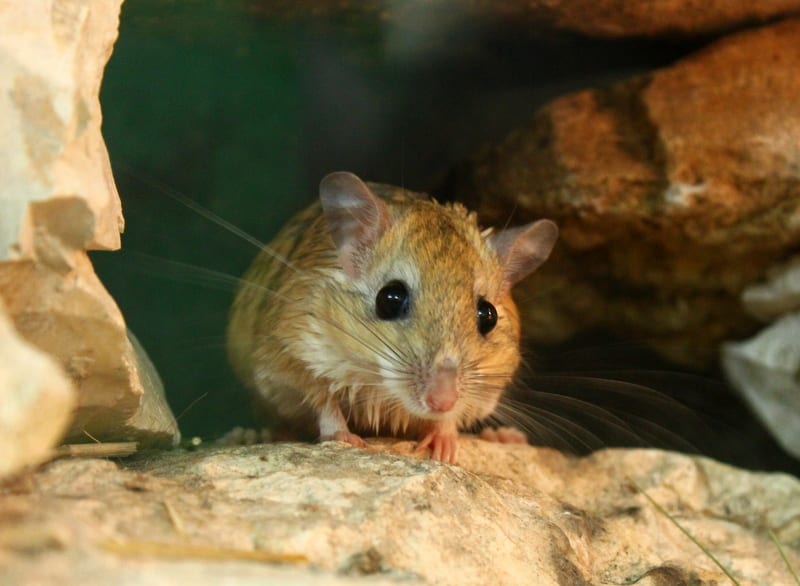
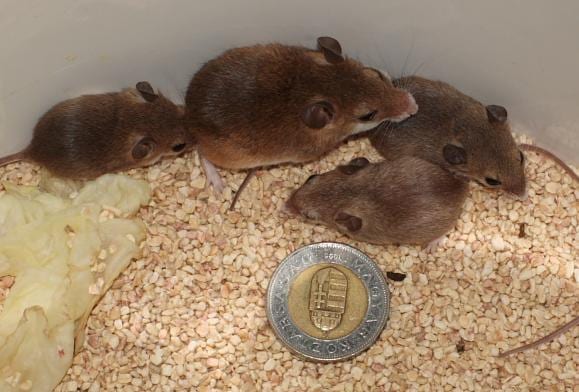
One of the world's smallest mice at about 5 cm and 5 g. Widespread in sub-Saharan Africa and active by day and night. Too small to handle safely; a species to keep for observation.
Difficulty
Intermediate
Temperature
18〜26℃
Lifespan
About 2 years in the wild; over 4 years recorded in captivity
Size
About 5cm body (4cm tail) / about 5g
Humidity
40〜60%
Diet
Small-bird seed mix, millet, small insects, a little vegetable
About
In the wild it lives in pairs or small colonies in grass near water, climbs well and can jump up to 50 cm. As a pet it is too small to be handled safely, is usually housed in a covered aquarium to prevent escape, and is kept mainly for observation. Because it is colonial, it should always be kept as a pair or small group. Feed a small-bird seed mix and millet supplemented with small insects. The species is known for an unusual sex-determination system in which X-chromosome rearrangements make some XY individuals female. IUCN Least Concern, not CITES-listed. Imports into Japan fall under the notification system for rodents of the Infectious Diseases Control Act.
Source: Wikipedia (CC BY-SA 4.0)
Lifespan of the African Pygmy Mouse
The African Pygmy Mouse lives About 2 years in the wild; over 4 years recorded in captivity.
It is active both day and night; wild lifespan is about two years, but over four years has been recorded in captivity.
Size of the African Pygmy Mouse
The African Pygmy Mouse grows to About 5cm body (4cm tail) / about 5g.
The African pygmy mouse (Mus minutoides) is one of the smallest members of the mouse family, widespread in sub-Saharan Africa: about 5 cm long with a 4 cm tail, adults weigh around 5 g and newborns only 0.8 g.
Basic Info
Origin
Sub-Saharan Africa
Lifespan
About 2 years in the wild; over 4 years recorded in captivity
Care Specifications
Group
Sources: Wikipedia (en) African pygmy mouse
References & Sources
Edited & verified by: BreederDirect editorial team
The taxonomic, regulatory, and husbandry data on this page are compiled and verified against the authoritative primary sources below.
Taxonomy & Authority
Accepted name: Mus minutoides A. Smith, 1834
Authority databases: GBIF
Nomenclature follows global taxonomic authority databases.
Regulations & Conservation Status
Not CITES-listedIUCN LC · Least Concern
Domestic law: Imports into Japan fall under the Infectious Diseases Control Act notification system for rodents; a health certificate from the exporting government is required.
Sources: CITES Appendices (species not listed) / IUCN Red List Mus minutoides (LC) / MHLW Animal Import Notification System (Infectious Diseases Control Act)
Regulations may change. Always verify the latest information with the relevant authorities.
African Pygmy Mouse Listings
Loading latest listingsFind listings for this species