AI-generated image
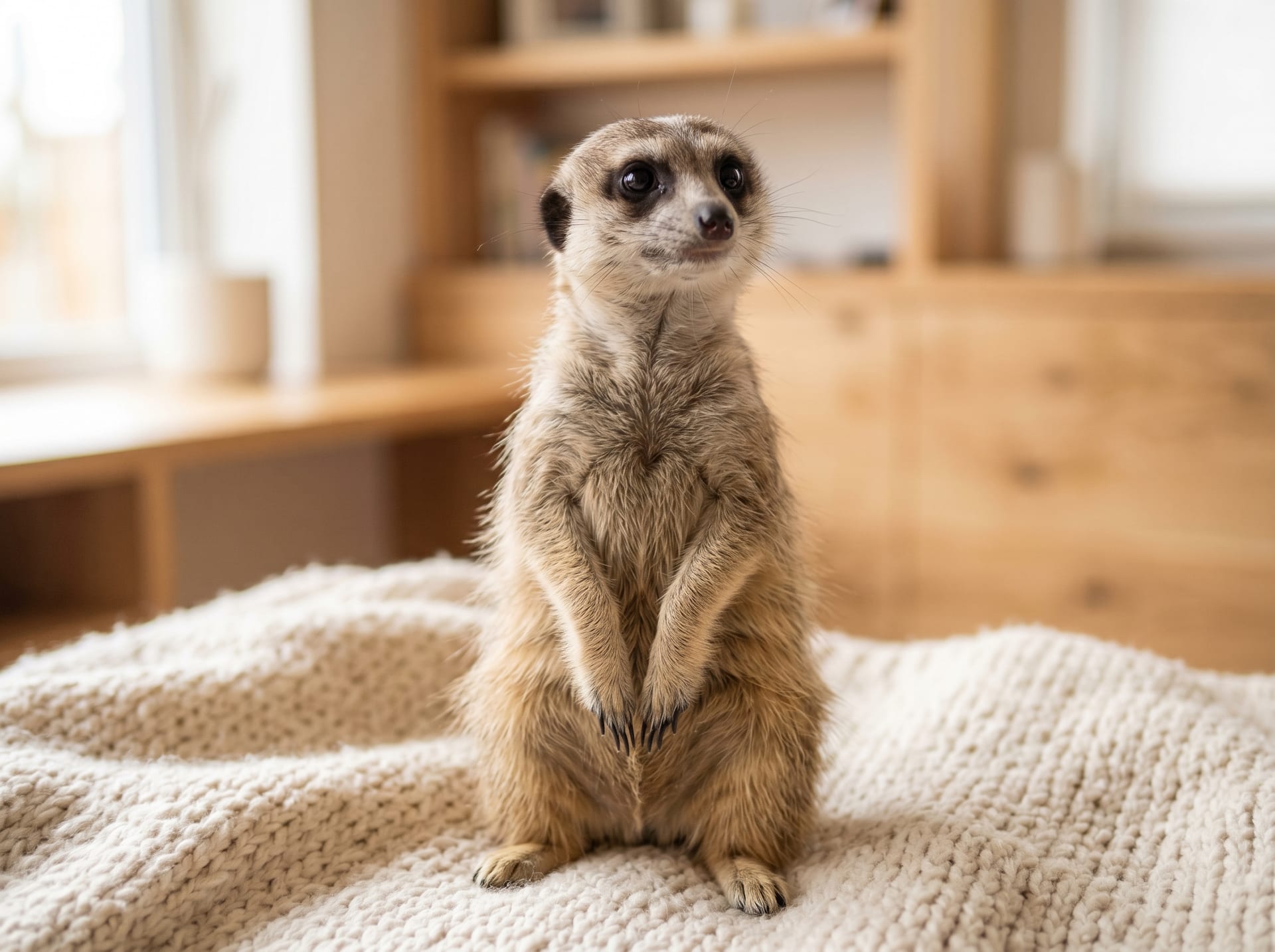
Meerkat
AdvancedSuricata suricatta
Highly social mongoose from southern Africa. Known for their upright sentinel posture. Live in groups, so keeping multiples is recommended.
Difficulty
Advanced
Temperature
18〜26℃
Lifespan
12-14 years
Size
25-35cm / 620-970g
Humidity
40〜60%
Diet
Insects, raw meat, eggs, small amounts of vegetables and fruits
About
The meerkat (Suricata suricatta) is a small carnivoran of the family Herpestidae, native to the arid savannas and semi-desert scrublands of the Kalahari Desert across Botswana, Namibia, and South Africa. Meerkats are famous for their sentinel behavior: designated members stand bipedally on elevated lookout posts, scanning for predators and issuing alarm calls to their group. They are highly social, living in cooperative groups called mobs or gangs of up to 30 individuals. When raised from a young age with consistent human interaction, meerkats can become highly affectionate; however, territorial and aggressive behavior may develop in maturing adults. Housing requires substantial space, ideally an outdoor enclosure, and they should be kept in social groups. Diet is carnivorous and insectivorous: insects, small vertebrates, eggs, and commercial carnivore diets. Common health concerns include infectious disease, nutritional deficiencies, and stress.
Source: Wikipedia (CC BY-SA 4.0)
Lifespan of the Meerkat
The Meerkat lives 12-14 years.
Captive lifespan is 12–14 years.
Size of the Meerkat
The Meerkat grows to 25-35cm / 620-970g.
Adults measure 24–35 cm in body length with a 19–24 cm tail, and weigh 620–975 g.
Temperature & humidity for the Meerkat
Optimal temperature is 22–30 °C with access to sunbathing areas.
Basic Info
Origin
Care Specifications
Group
Sources: Meerkat colony social structure
References & Sources
Edited & verified by: BreederDirect editorial team
The taxonomic, regulatory, and husbandry data on this page are compiled and verified against the authoritative primary sources below.
Taxonomy & Authority
Accepted name: Suricata suricatta (Schreber, 1776)
Authority databases: GBIF
Nomenclature follows global taxonomic authority databases.
Regulations & Conservation Status
Not CITES-listedIUCN LC · Least Concern
Suricata suricatta is not listed in CITES and does not qualify as a specified animal.
Sources: Suricata suricata IUCN LC (not CITES-listed) / Ministry of the Environment Specified Animal List
Regulations may change. Always verify the latest information with the relevant authorities.
Meerkat Listings
Loading latest listingsFind listings for this species