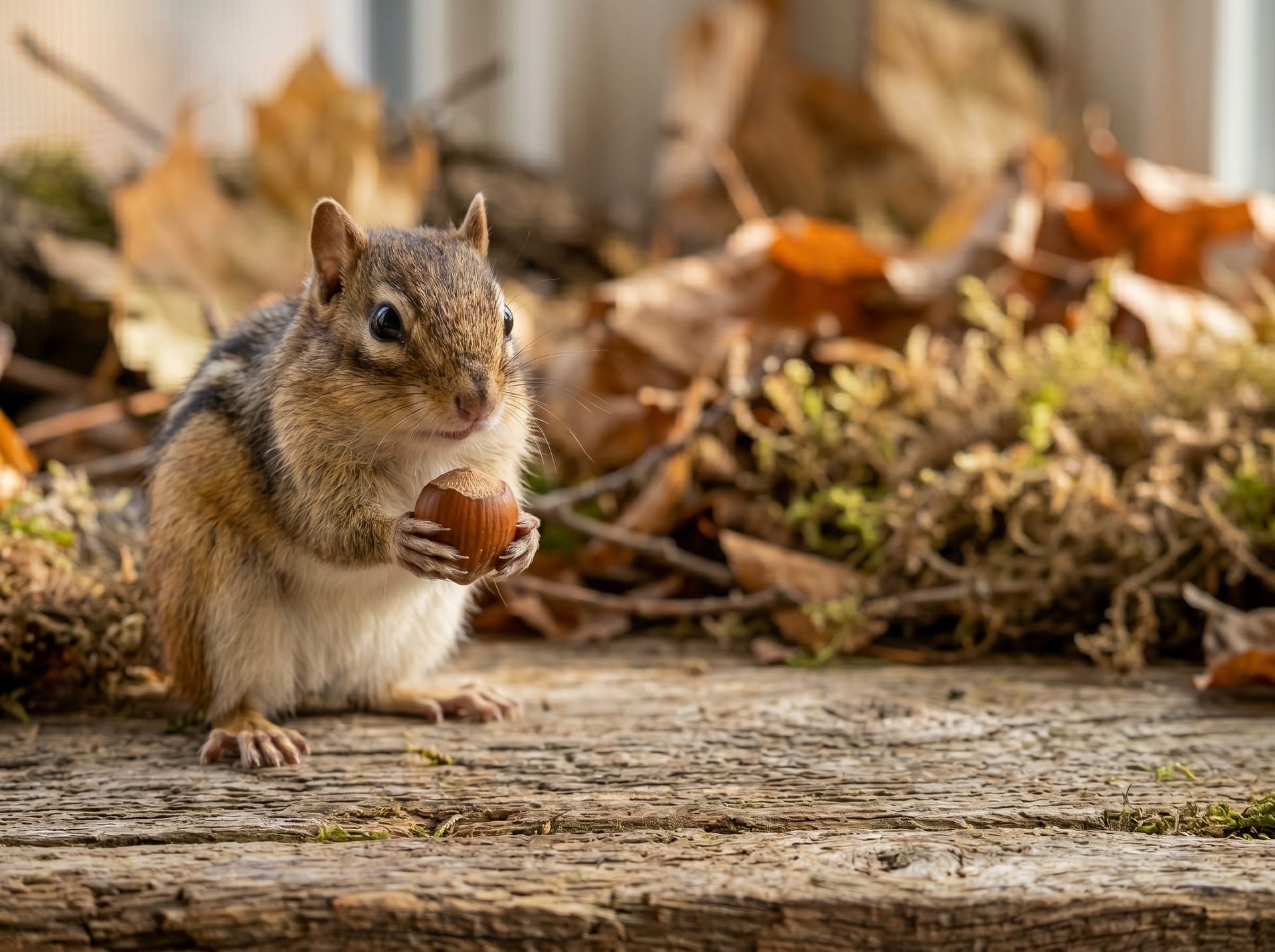
AI-generated image
Siberian Chipmunk
AdvancedTamias sibiricus
Small striped squirrel with beautiful back markings. Active and fast-moving, entertaining to watch. May become aggressive in autumn/winter.
Difficulty
Advanced
Temperature
18〜26℃
Lifespan
6-10 years
Size
12-15cm (25cm with tail) / 80-120g
Humidity
40〜60%
Diet
Squirrel pellets, seeds, nuts, fruits, insects
About
Chipmunks are small, striped rodents of the family Sciuridae, found across North America (genus Tamias) and Eurasia (T. sibiricus, distributed across central Russia, China, and the Korean Peninsula). The Siberian chipmunk is the species most commonly kept as a pet in Europe and Japan. Their distinctive five black-and-white dorsal stripes are their most recognizable feature. In autumn, they fill their cheek pouches with food and store it in their burrows for winter. Wild instincts remain strong in captive chipmunks; they are generally better suited for observation than handling, though patient socialization can produce tamer individuals. Housing should be a spacious cage (minimum 60 cm width) with branches, a nest box, and burrowing substrate. They undergo seasonal torpor (hibernation) in winter. Diet is omnivorous: seeds, nuts, vegetables, and insects. Common health concerns include hibernation-related problems, parasites, and fractures from falls.
Source: Wikipedia (CC BY-SA 4.0)
Lifespan of the Siberian Chipmunk
The Siberian Chipmunk lives 6-10 years.
Lifespan is 6–10 years.
Size of the Siberian Chipmunk
The Siberian Chipmunk grows to 12-15cm (25cm with tail) / 80-120g.
Adults measure 12–16 cm in body length with a bushy tail of similar length, and weigh 80–140 g.
Basic Info
Origin
northern Asia from central Russia to China, Korea
Lifespan
6-10 years
References & Sources
Edited & verified by: BreederDirect editorial team
The taxonomic, regulatory, and husbandry data on this page are compiled and verified against the authoritative primary sources below.
Taxonomy & Authority
Accepted name: Tamias sibiricus (Laxmann, 1769)
Synonyms: Eutamias sibiricus
Authority databases: GBIF
Nomenclature follows global taxonomic authority databases.
Regulations & Conservation Status
Not CITES-listed
Siberian chipmunk (Tamias sibiricus) is not a specified invasive species but a caution-warranted invasive species / ecosystem damage prevention alien species. Exercise caution regarding escapes and releases.
Sources: Ministry of the Environment Specified Alien Species List / Ministry of the Environment Watch List of Alien Species (Siberian chipmunk)
Regulations may change. Always verify the latest information with the relevant authorities.
Siberian Chipmunk Listings
Loading latest listingsFind listings for this species