Source: Wikimedia Commons
Belgian Hare
AdvancedOryctolagus cuniculus
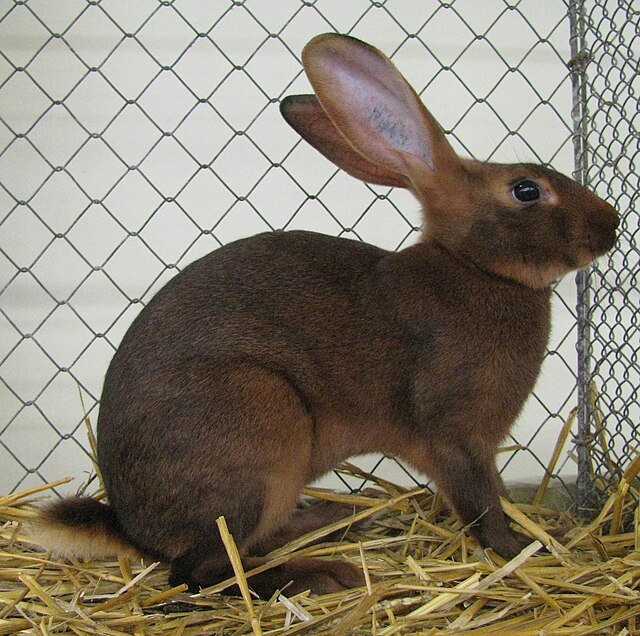
Athletic rabbit resembling a wild hare with a lean body and rich chestnut coat. Very active and best suited for experienced owners.
Difficulty
Advanced
Temperature
18〜26℃
Lifespan
5-8 years
Size
45-55cm / 2.7-4kg
Humidity
40〜60%
Diet
Timothy hay, rabbit pellets, forage greens, leafy vegetables
About
The Belgian Hare is a domestic rabbit breed developed in Belgium in the 19th century through selective breeding to maximize resemblance to the wild European hare. Their slender, muscular body; long, arched back; lean face; and rich chestnut-red coat with black ticking give them an appearance strikingly similar to a true hare, quite unlike most domestic rabbit breeds. Belgian Hares are exceptionally energetic and fast, requiring generous exercise space and at least 2 hours of free movement daily. They can be high-strung and nervous, requiring patient, consistent handling and a calm environment. They are highly regarded in the show fancy for their elegant, hare-like conformation. Diet consists of unlimited timothy hay, pellets, and fresh vegetables. Common health concerns include malocclusion, GI stasis, and fractures due to their active nature.
Source: Wikipedia (CC BY-SA 4.0)
Lifespan of the Belgian Hare
The Belgian Hare lives 5-8 years.
Lifespan is 5–8 years.
Size of the Belgian Hare
The Belgian Hare grows to 45-55cm / 2.7-4kg.
Adults measure 45–55 cm and weigh 2.7–4 kg.
Temperature & humidity for the Belgian Hare
Optimal temperature is 15–25 °C.
Basic Info
Origin
Belgium
Lifespan
Care Specifications
Pair
Sources: RWAF Rabbit companionship
Morphs (Varieties)
ARBA-recognized Belgian Hare varieties (Rufus / Tan).
Other
RufusTan
Sources: ARBA Recognized Breeds and Varieties
A curated selection of notable morphs. Inheritance modes are a breeding-planning guide; actual appearance varies with combos.
References & Sources
Edited & verified by: BreederDirect editorial team
The taxonomic, regulatory, and husbandry data on this page are compiled and verified against the authoritative primary sources below.
Taxonomy & Authority
Accepted name: Oryctolagus cuniculus (Linnaeus, 1758)
Authority databases: GBIF
Nomenclature follows global taxonomic authority databases.
Regulations & Conservation Status
Not CITES-listed
Sources: CITES Appendices / Ministry of the Environment Specified Alien Species List
Regulations may change. Always verify the latest information with the relevant authorities.
Belgian Hare Listings
Loading latest listingsFind listings for this species