Source: Wikimedia Commons
Red Fox
AdvancedVulpes vulpes
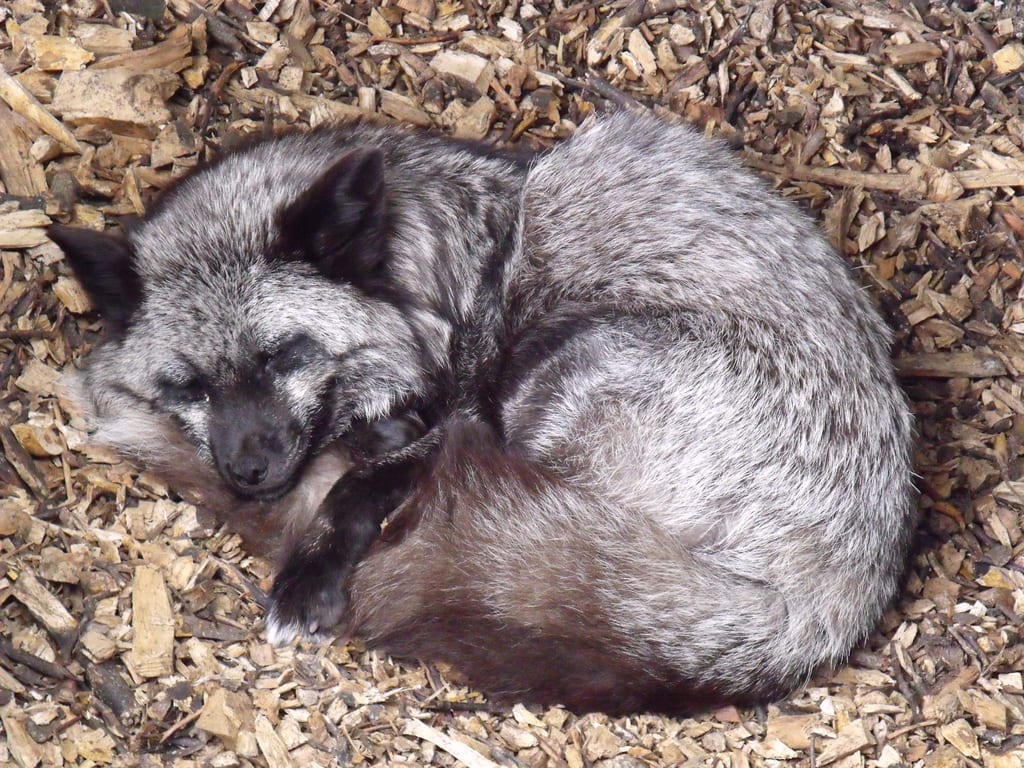
A fox found across the Northern Hemisphere; Japan's Hokkaido and Honshu foxes are subspecies. Pet animals are captive-bred colour lines such as silver from fur-farm stock, and despite being canids they are demanding to keep.
Difficulty
Advanced
Temperature
18〜26℃
Lifespan
About 12 years (in captivity; maximum 21.3 years)
Size
Head-body 45.5-86.5cm / tail 30-56cm / 2.7-6.8kg
Humidity
40〜60%
Diet
Fox or dog food, raw meat, insects, fruit, vegetables
About
The red fox is the most widespread member of the genus Vulpes, native across the Northern Hemisphere in North America, Europe, Asia and parts of North Africa and introduced to Australia. Japan has two subspecies, the Hokkaido fox and the Honshu fox, among 45 recognized worldwide. The diet centres on rodents and extends to rabbits, insects, fruit, earthworms, eggs and birds, about 0.5-1 kg a day. Wild foxes live around 3 years, but captive animals reach 12 years, with a record of 21.3 years. Pet foxes are colour lines developed by the fur industry; the silver fox in particular is a melanistic form of the red fox fixed on fur farms. In Novosibirsk, Russia, Belyaev and colleagues began in 1952 selecting the tamest fur-farm foxes for breeding and within decades produced a line as tame and eager to please as dogs, with floppy ears and piebald patches appearing by the tenth generation. In Japan the Rabies Prevention Act subjects dogs, cats, raccoons, foxes, skunks and monkeys to import quarantine, so foxes are included. Echinococcosis and rabies are the main zoonotic concerns linked to the species, making hygiene and access to an experienced vet essential. With strong odour, digging and escape skills and night-time calls, it is an advanced animal that needs a sturdy outdoor enclosure.
Source: Wikipedia (CC BY-SA 4.0)
Lifespan of the Red Fox
The Red Fox lives About 12 years (in captivity; maximum 21.3 years).
Size of the Red Fox
The Red Fox grows to Head-body 45.5-86.5cm / tail 30-56cm / 2.7-6.8kg.
Head-body length is 45.5-86.5 cm, tail 30-56 cm and weight 2.7-6.8 kg, with large regional variation; European animals are bigger than North American ones.
Basic Info
Origin
Across the Northern Hemisphere (North America, Europe, Asia, North Africa)
References & Sources
Edited & verified by: BreederDirect editorial team
The taxonomic, regulatory, and husbandry data on this page are compiled and verified against the authoritative primary sources below.
Primary sources
- Wikipedia
- CITES Appendices (Vulpes vulpes Appendix III, India)
- IUCN Red List Vulpes vulpes
- MAFF Animal Quarantine Service (rabies quarantine animals)
- Ministry of the Environment Specified Alien Species List
- Wikipedia (JA) - Red fox (size, tail, weight, lifespan, diet, subspecies, zoonoses)
- Wikipedia - Domesticated silver fox (melanistic form, Belyaev experiment)
- AnAge - Vulpes vulpes (maximum longevity 21.3 years)
- GBIF
Taxonomy & Authority
Accepted name: Vulpes vulpes (Linnaeus, 1758)
Authority databases: GBIF
Nomenclature follows global taxonomic authority databases.
Regulations & Conservation Status
CITES Appendix IIIIUCN LC · Least Concern
Domestic law: 狂犬病予防法の輸入検疫対象動物(きつね)。特定外来生物一覧に非掲載。
Listed in CITES Appendix III by India (effective 16 March 1989). Import requires documentation such as a certificate of origin, but no registration is needed to keep or transfer it within Japan. In Japan the Rabies Prevention Act subjects dogs, cats, raccoons, foxes, skunks and monkeys to import quarantine. Native subspecies exist, so it is not a specified invasive alien species.
Sources: CITES Appendices (Vulpes vulpes Appendix III, India) / IUCN Red List Vulpes vulpes / MAFF Animal Quarantine Service (rabies quarantine animals) / Ministry of the Environment Specified Alien Species List
Regulations may change. Always verify the latest information with the relevant authorities.
Red Fox Listings
Loading latest listingsFind listings for this species