Source: Wikimedia Commons
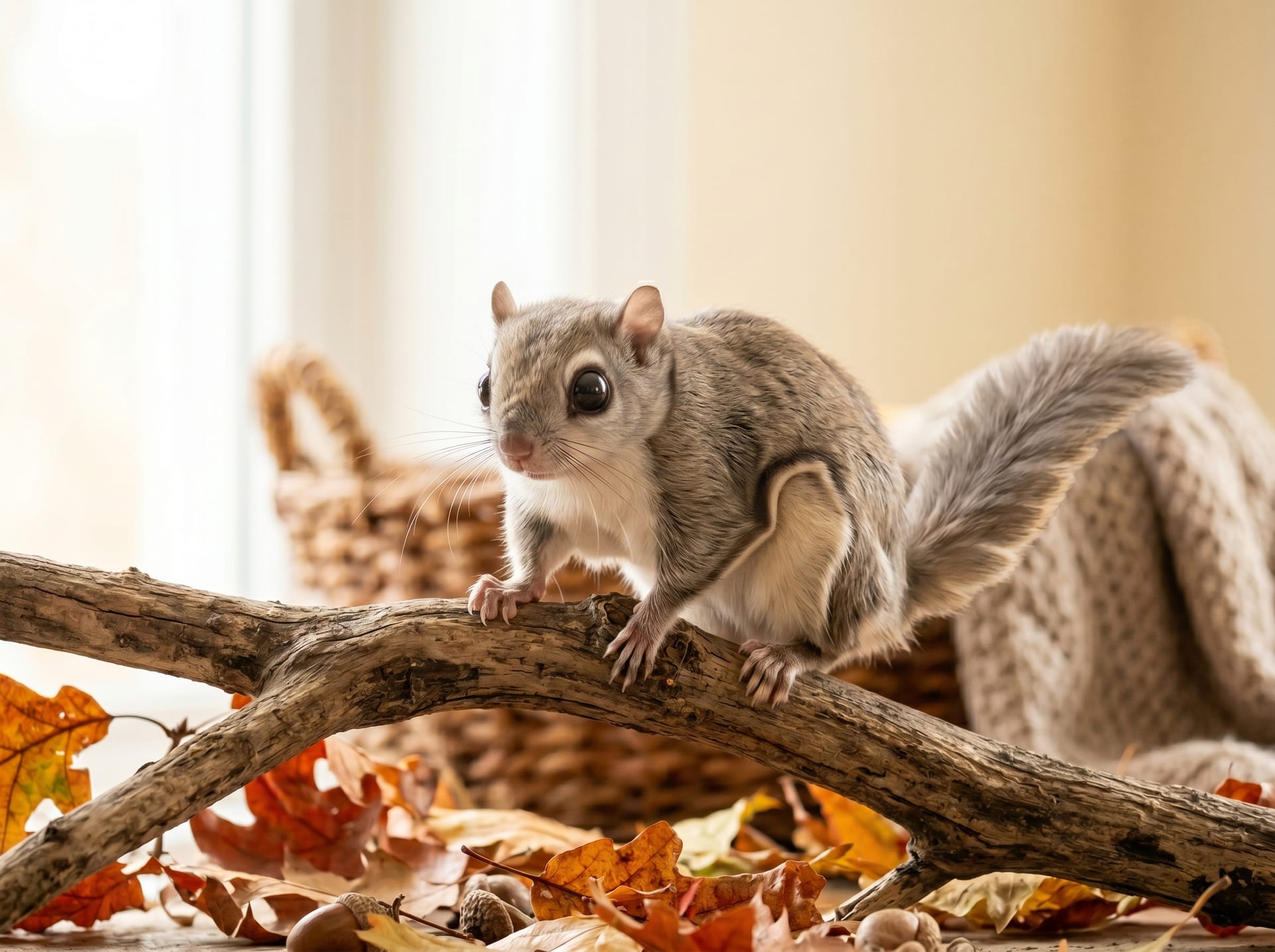
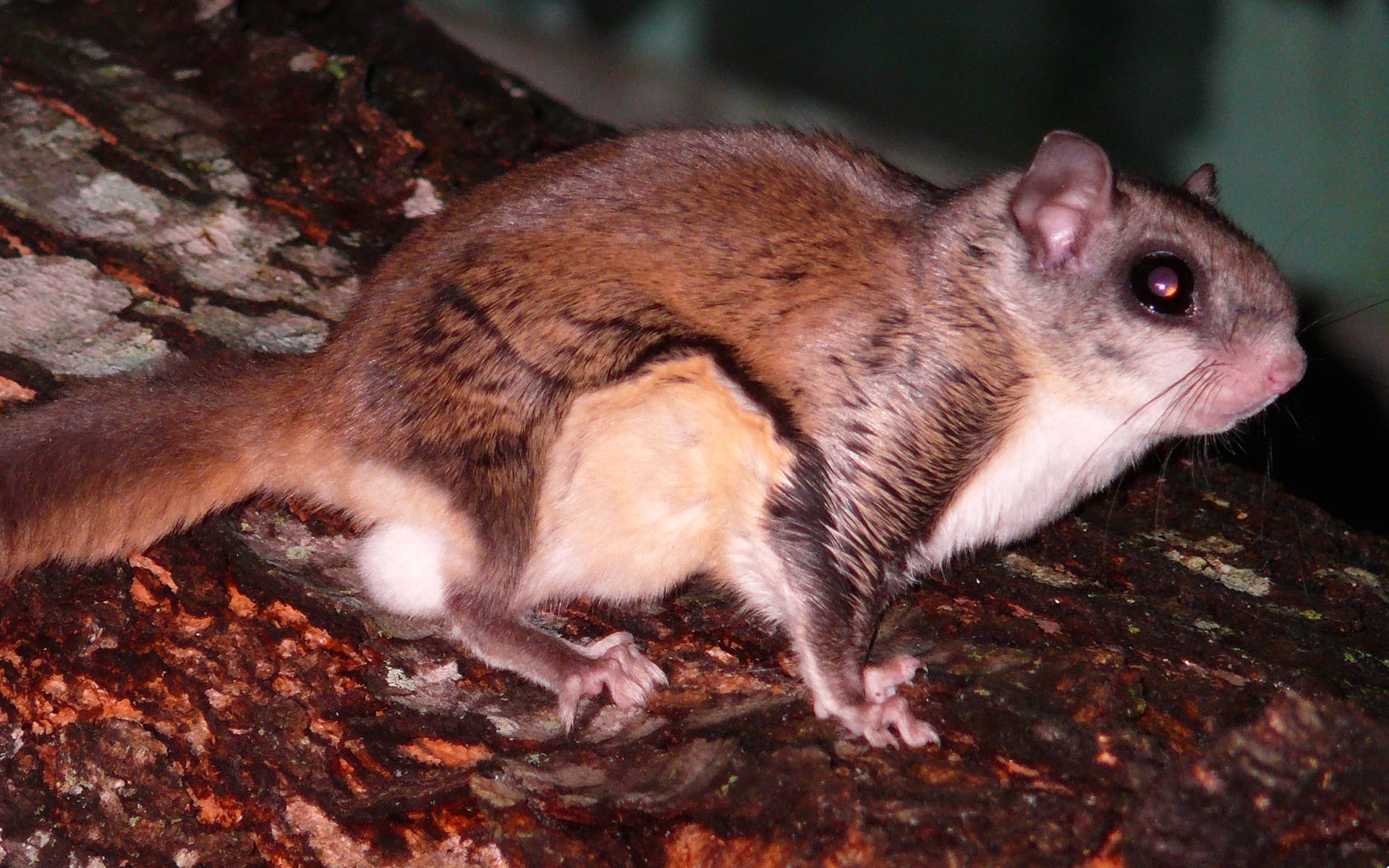
Southern Flying Squirrel
IntermediateGlaucomys volans
A small flying squirrel of eastern North American forests and the flying squirrel most commonly sold in Japan. Total length 20-28cm, 40-90g. Nocturnal, nests communally, and lives about 10 years in captivity.
Difficulty
Intermediate
Temperature
18〜26℃
Lifespan
About 10 years in captivity (max 19)
Size
Total length 20-28cm / 38-90g
Humidity
40〜60%
Diet
Nuts, fruit, insects
About
The southern flying squirrel (Glaucomys volans) inhabits deciduous and mixed forests of eastern North America from southeastern Canada to Florida, with isolated populations in Mexico, Guatemala and Honduras. A membrane stretched between the fore and hind limbs lets it glide from tree to tree. Strictly nocturnal, it eats fruit, nuts, insects and bird eggs and is unusually carnivorous for a squirrel. It is highly social: up to 20 may share a winter nest for warmth, and even in warm months nests average five animals. It is Least Concern and not CITES-listed. It is a different genus and species from the existing flying-squirrel entry (Japanese dwarf flying squirrel) and from the Siberian flying squirrel (Pteromys volans), a designated invasive species; Glaucomys does not appear on the Ministry of the Environment list. Imports fall under the infectious-disease notification system. Provide a tall cage with nest boxes, and keep more than one in line with its social nature. Let it sleep by day and interact at night when it is active.
Source: Wikipedia (CC BY-SA 4.0)
Lifespan of the Southern Flying Squirrel
The Southern Flying Squirrel lives About 10 years in captivity (max 19).
Wild lifespan is 3-5 years, but in captivity it averages 10 years with a record of 19.
Size of the Southern Flying Squirrel
The Southern Flying Squirrel grows to Total length 20-28cm / 38-90g.
Total length is 200-285 mm and weight 38-90 g.
Basic Info
Origin
Eastern North America (southeastern Canada to Florida; isolated populations in Central America)
Care Specifications
References & Sources
Edited & verified by: BreederDirect editorial team
The taxonomic, regulatory, and husbandry data on this page are compiled and verified against the authoritative primary sources below.
Taxonomy & Authority
Accepted name: Glaucomys volans (Linnaeus, 1758)
Authority databases: GBIF
Nomenclature follows global taxonomic authority databases.
Regulations & Conservation Status
Not CITES-listedIUCN LC · Least Concern
Domestic law: Glaucomys is not on the Ministry of the Environment invasive species list (the Siberian flying squirrel Pteromys volans is). Imports are subject to the Infectious Diseases Control Act notification system.
Sources: CITES Appendices (not listed) / IUCN Red List Glaucomys volans / Ministry of the Environment Specified Alien Species List / MHLW Animal Import Notification System
Regulations may change. Always verify the latest information with the relevant authorities.
Southern Flying Squirrel Listings
Loading latest listingsFind listings for this species