Source: Wikimedia Commons
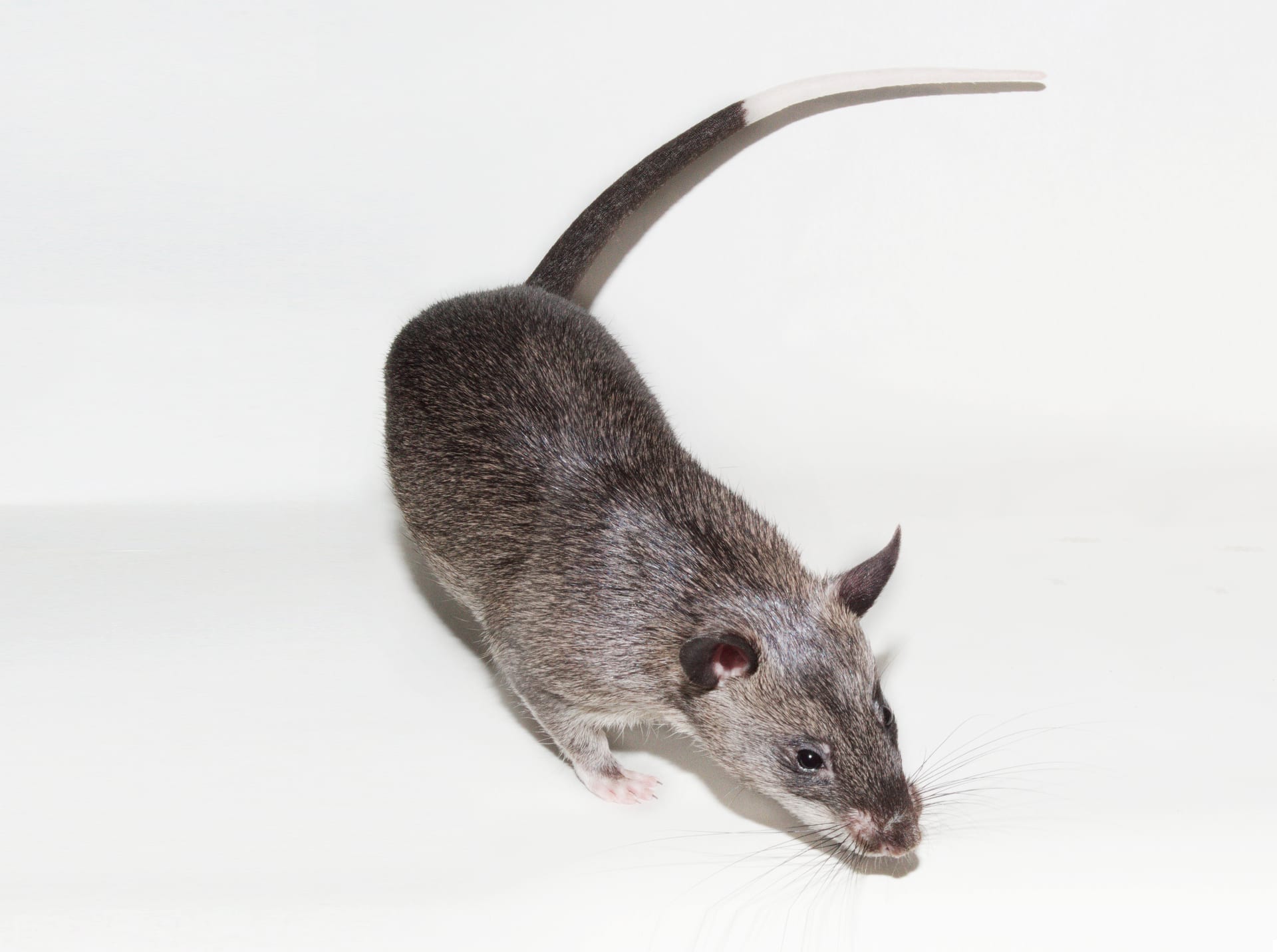
Gambian Pouched Rat
IntermediateCricetomys gambianus
One of Africa's largest rodents, nearly 90 cm including the tail. Carries food in cheek pouches and is famous as a landmine-detection rat. Tames readily but needs a large enclosure.
Difficulty
Intermediate
Temperature
18〜26℃
Lifespan
5-7 years in captivity (up to 8)
Size
65-91cm total length incl. tail / 1.0-1.4kg
Humidity
40〜60%
Diet
Rat pellets, fruit, vegetables, nuts, insects
About
The Gambian pouched rat (Cricetomys gambianus) is a large rodent of the family Nesomyidae, widespread south of the Sahara from Senegal to Kenya and Angola to Mozambique. Its long tail makes up half its length and it stuffs food into cheek pouches; it is omnivorous, eating palm fruit, seeds, insects, crabs and snails. Nocturnal, it stays almost inactive by day in burrows in forest and thicket. Its keen nose is why a closely related species is trained by APOPO to detect landmines and tuberculosis. The species was blamed for the 2003 monkeypox outbreak in the US Midwest, after which the CDC and FDA banned its import. Even a large rat cage is too small; it needs a dog-pen sized enclosure with thick chew wood and hides. Tame individuals are calm, but they defend nests aggressively and males fight. IUCN Least Concern, not CITES-listed. Imports into Japan fall under the rodent notification system of the Infectious Diseases Control Act.
Source: Wikipedia (CC BY-SA 4.0)
Lifespan of the Gambian Pouched Rat
The Gambian Pouched Rat lives 5-7 years in captivity (up to 8).
Captive lifespan is 5-7 years, occasionally 8.
Size of the Gambian Pouched Rat
The Gambian Pouched Rat grows to 65-91cm total length incl. tail / 1.0-1.4kg.
Total length including the tail reaches 65-91 cm and weight 1.0-1.4 kg (up to 1.47 kg).
Basic Info
Origin
Sub-Saharan Africa (Senegal to Kenya, Angola to Mozambique)
Lifespan
5-7 years in captivity (up to 8)
Care Specifications
Solitary
Sources: Animal Diversity Web Cricetomys gambianus / Wikipedia (en) Gambian pouched rat
References & Sources
Edited & verified by: BreederDirect editorial team
The taxonomic, regulatory, and husbandry data on this page are compiled and verified against the authoritative primary sources below.
Taxonomy & Authority
Accepted name: Cricetomys gambianus Waterhouse, 1840
Authority databases: GBIF
Nomenclature follows global taxonomic authority databases.
Regulations & Conservation Status
Not CITES-listedIUCN LC · Least Concern
Domestic law: Imports into Japan fall under the Infectious Diseases Control Act notification system for rodents. The United States has banned import of this species since the 2003 monkeypox outbreak.
Sources: CITES Appendices (species not listed) / IUCN Red List Cricetomys gambianus (LC) / MHLW Animal Import Notification System (Infectious Diseases Control Act)
Regulations may change. Always verify the latest information with the relevant authorities.
Gambian Pouched Rat Listings
Loading latest listingsFind listings for this species