Source: Wikimedia Commons
White-nosed Coati
AdvancedNasua narica
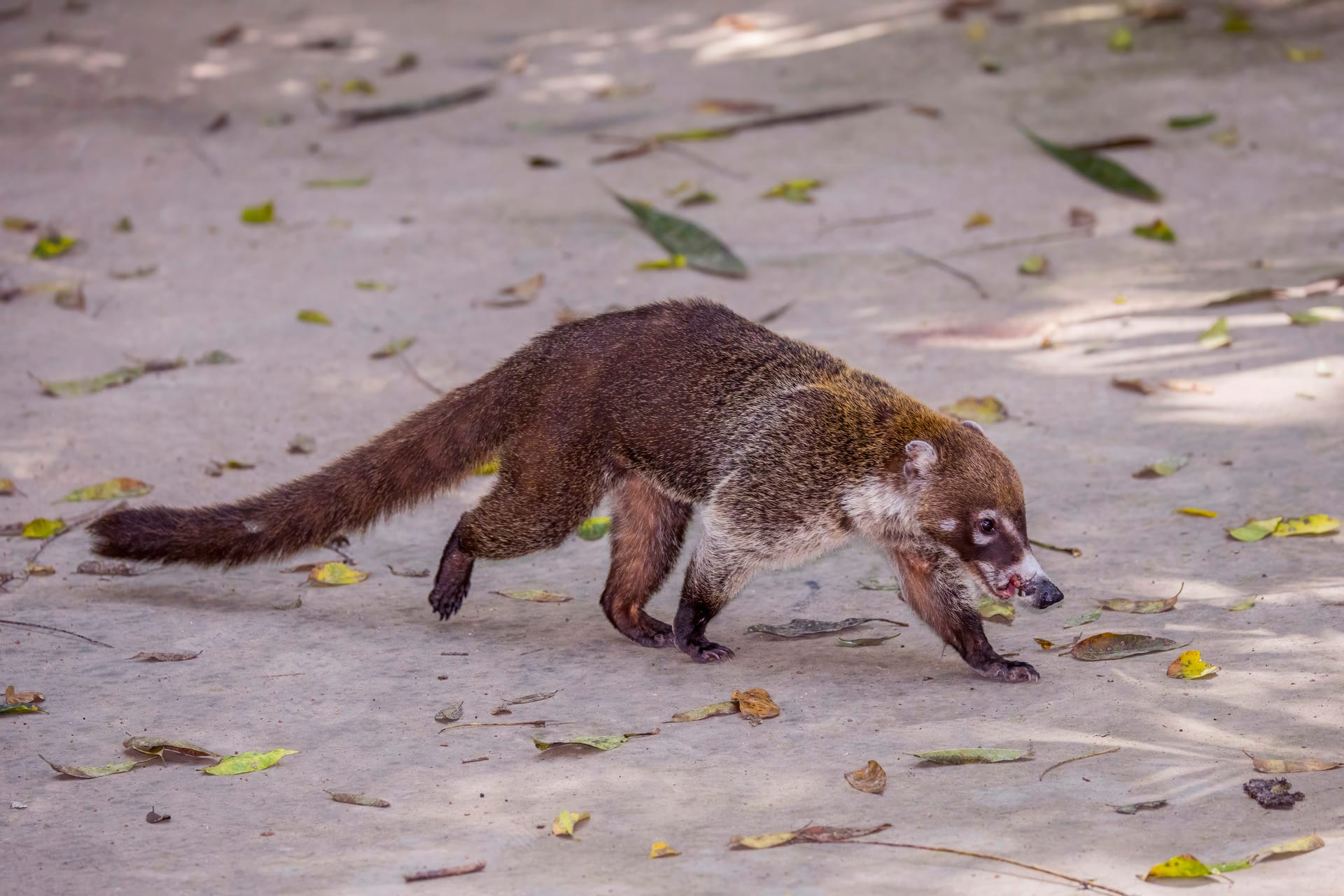
A coati of the raccoon family with a long, mobile snout banded white near the tip. Grey-brown, it walks with its long, black-ringed tail held up; it is diurnal, lives in bands of females and young, and eats mainly insects.
Difficulty
Advanced
Temperature
18〜26℃
Lifespan
About 14 years on average in captivity (some into their late teens)
Size
80–130cm including tail (over half is tail); 3–5kg
Humidity
40〜60%
Diet
Omnivore: mainly insects and other invertebrates, plus fruit
About
The white-nosed coati (Nasua narica) is a member of the raccoon family (Procyonidae). It ranges from south-eastern Arizona through Mexico and Central America to western Colombia and Ecuador, in habitats from tropical lowland forest to dry highland woods. The coat is grey-brown; the long, pointed, flexible snout has a white band near the tip, with white spots above and below each eye and on the cheeks. It walks with its long, black-ringed tail held up and has curved claws on the forefeet. It is told from the ring-tailed coati (Nasua nasua) already kept in Japan by coat colour and muzzle markings. It is mainly diurnal, foraging on the ground with its nose down for beetles, spiders, scorpions, termites and grubs, and sleeping in trees at night; it also eats fruit and sometimes mice or lizards. Males live alone and mark ranges with urine and anal-gland secretions, while females and young up to two years form bands of 4–20. In Florida, escaped captives have been found in the wild. Honduras lists it in CITES Appendix III. In Japan it is occasionally offered by specialists.
Source: Wikipedia (CC BY-SA 4.0)
Lifespan of the White-nosed Coati
The White-nosed Coati lives About 14 years on average in captivity (some into their late teens).
Average captive lifespan is about 14 years.
Size of the White-nosed Coati
The White-nosed Coati grows to 80–130cm including tail (over half is tail); 3–5kg.
It is 80–130cm long including a tail that makes up over half of that, and weighs 3–5kg.
Basic Info
Origin
South-eastern Arizona through Mexico and Central America to western Colombia and Ecuador
References & Sources
Edited & verified by: BreederDirect editorial team
The taxonomic, regulatory, and husbandry data on this page are compiled and verified against the authoritative primary sources below.
Taxonomy & Authority
Accepted name: Nasua narica (Linnaeus, 1766)
Authority databases: GBIF · GBIF: Nasua narica
Nomenclature follows global taxonomic authority databases.
Regulations & Conservation Status
CITES Appendix IIIIUCN LC · Least Concern
Listed in CITES Appendix III by Honduras (since 13 April 1987); imports from other countries still need documents such as a certificate of origin. It is not a specified animal in Japan. Imports fall under Japan's animal import notification system (Infectious Diseases Control Law, MHLW): a health certificate from the exporting country's government must be filed with the quarantine station. Animals bred in Japan can be sold and kept without notification. Never release captive animals into the wild.
Sources: Species+: CITES listing of Nasua narica / MHLW: Animal import notification system (JA) / Ministry of the Environment: Specified (dangerous) animals list (JA)
Regulations may change. Always verify the latest information with the relevant authorities.
White-nosed Coati Listings
Loading latest listingsFind listings for this species