Source: Wikimedia Commons
Big Hairy Armadillo
AdvancedChaetophractus villosus
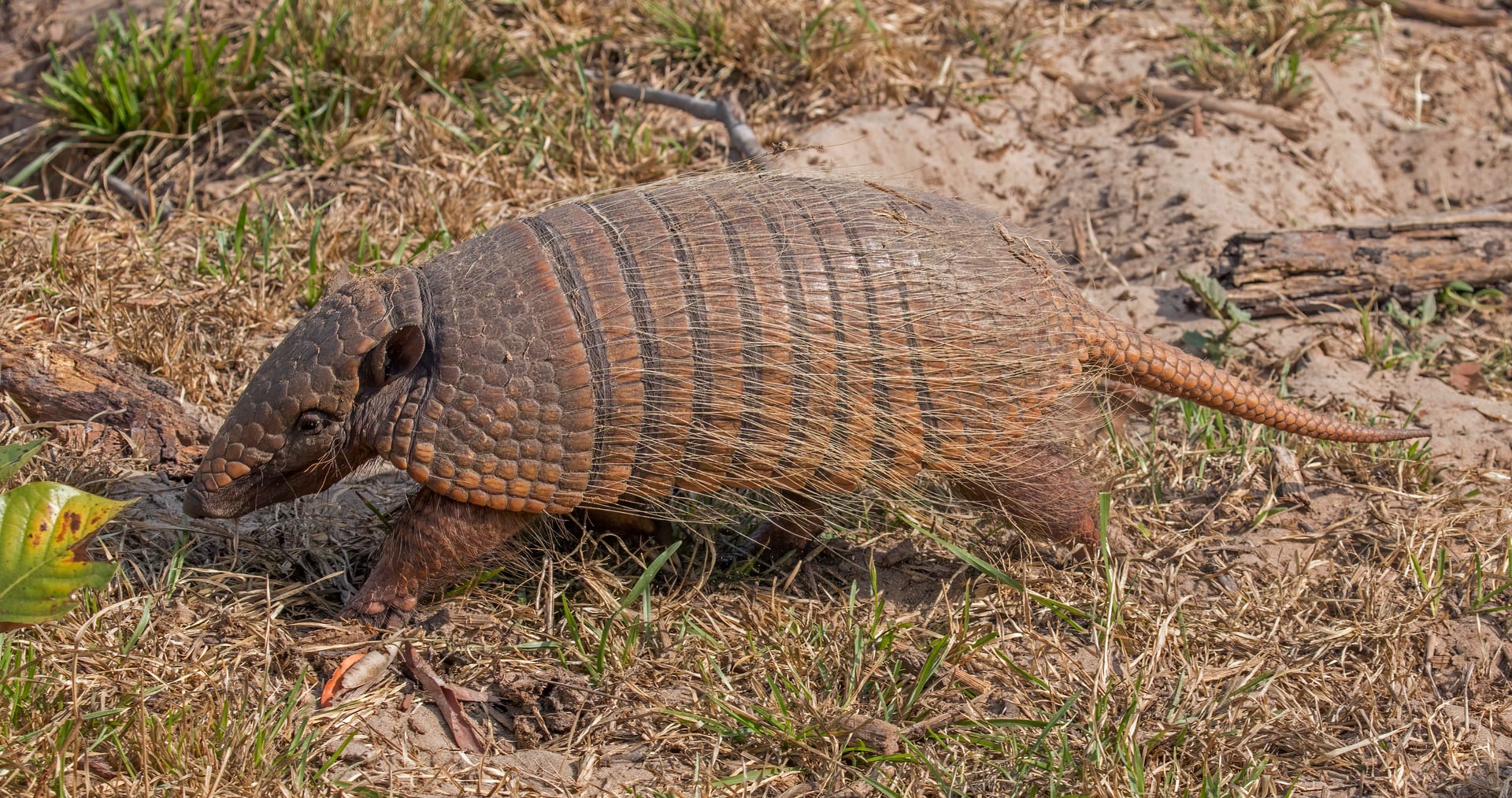
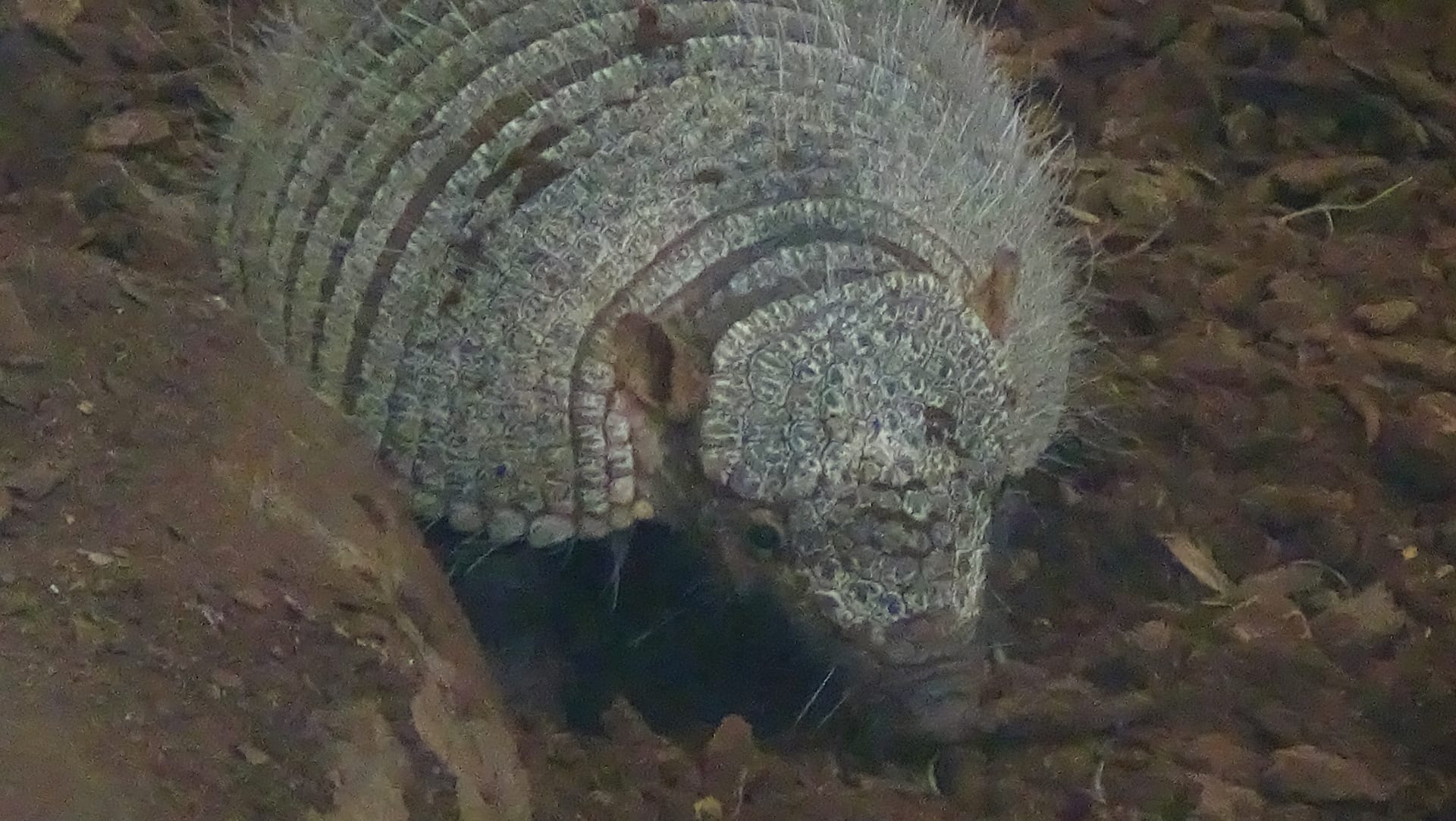
A shaggy armadillo with grey-brown to white hair growing between its shell plates and over its belly. About 2kg and an expert digger, it eats insects, small animals, plants and carrion, and has lived over 30 years in captivity.
Difficulty
Advanced
Temperature
18〜26℃
Lifespan
Captive record over 30 years (average 19–20)
Size
22–40cm long; about 2kg on average
Humidity
40〜60%
Diet
Omnivore: insects, small vertebrates, plants and carrion
About
The big hairy armadillo (Chaetophractus villosus) ranges from northern Paraguay and southern Bolivia to central Argentina and is best adapted to open, semi-desert country. It is 22–40cm long and averages about 2kg. Its back is covered by a double layer of horn and bone with about 18 bands, 7–8 of them movable, and a small shield protects the ears and the back of the neck. Hair grows out between the plates and covers the soft belly skin; the skin is brown to pinkish and the hair greyish brown to white. Its peg-like teeth grow throughout life. It burrows to escape predators, to find food and to cool off on hot days, and becomes more nocturnal in summer to avoid heat. It is an omnivore, eating insects and other invertebrates, small vertebrates such as rodents and lizards, plants and carrion, with plants making up over half its winter diet. It has lived over 30 years in captivity. Its relative the screaming hairy armadillo (C. vellerosus) is a separate species small enough to fit in a palm. In Japan it appears only occasionally at specialists, as a different species from the six-banded armadillo already kept.
Source: Wikipedia (CC BY-SA 4.0)
Lifespan of the Big Hairy Armadillo
The Big Hairy Armadillo lives Captive record over 30 years (average 19–20).
Size of the Big Hairy Armadillo
The Big Hairy Armadillo grows to 22–40cm long; about 2kg on average.
Basic Info
Origin
Semi-desert of South America, from northern Paraguay and southern Bolivia to central Argentina
Lifespan
Captive record over 30 years (average 19–20)
References & Sources
Edited & verified by: BreederDirect editorial team
The taxonomic, regulatory, and husbandry data on this page are compiled and verified against the authoritative primary sources below.
Taxonomy & Authority
Accepted name: Chaetophractus villosus (Desmarest, 1804)
Authority databases: GBIF · GBIF: Chaetophractus villosus
Nomenclature follows global taxonomic authority databases.
Regulations & Conservation Status
Not CITES-listedIUCN LC · Least Concern
Not covered by CITES, the Invasive Alien Species Act or the specified-animal rules. Imports fall under Japan's animal import notification system (Infectious Diseases Control Law, MHLW): a health certificate from the exporting country's government must be filed with the quarantine station. Animals bred in Japan can be sold and kept without notification. Never release captive animals into the wild.
Sources: MHLW: Animal import notification system (JA) / Species+ CITES query (not listed) / Ministry of the Environment: Specified (dangerous) animals list (JA)
Regulations may change. Always verify the latest information with the relevant authorities.
Big Hairy Armadillo Listings
Loading latest listingsFind listings for this species