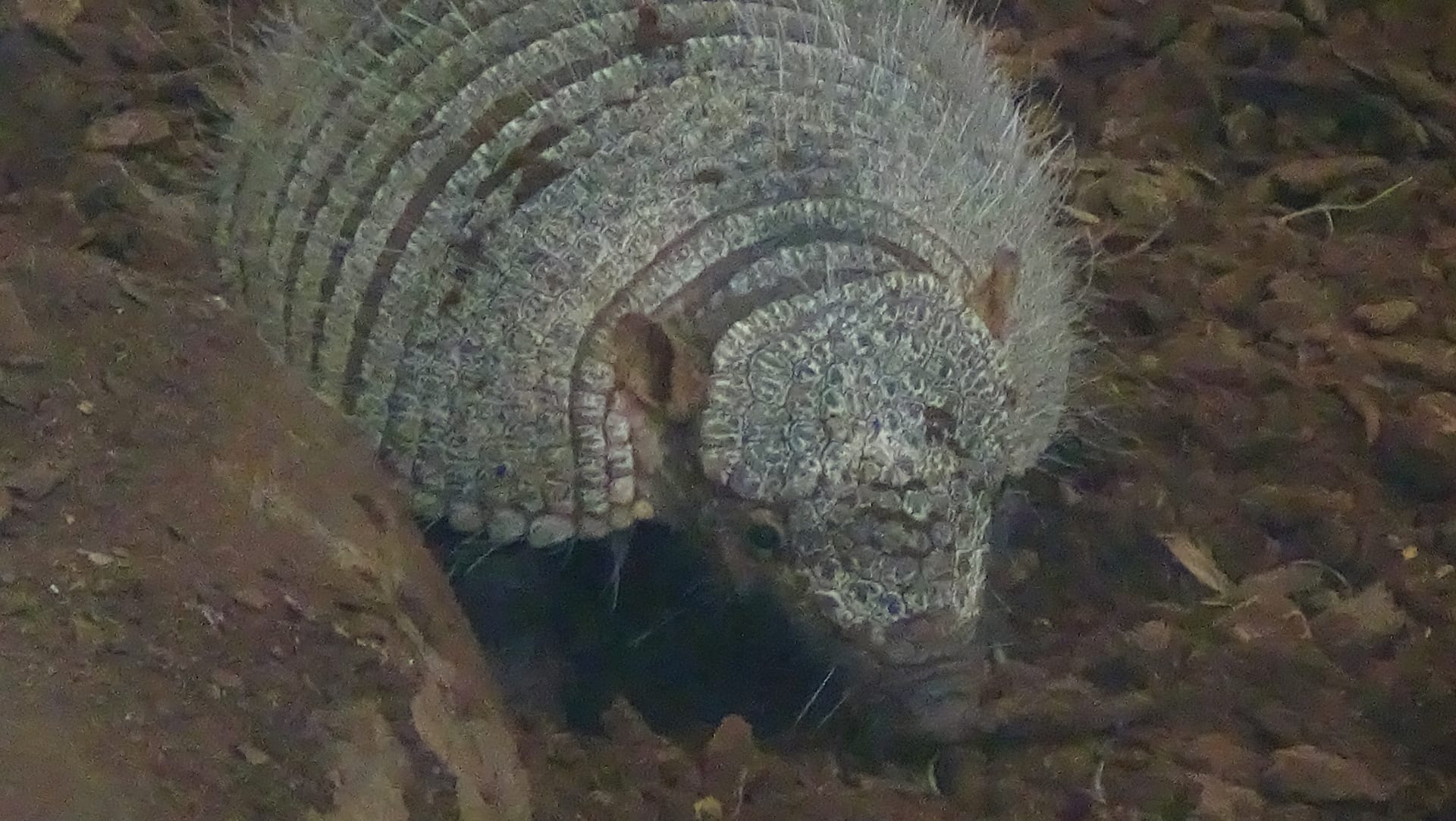
Source: Wikimedia Commons
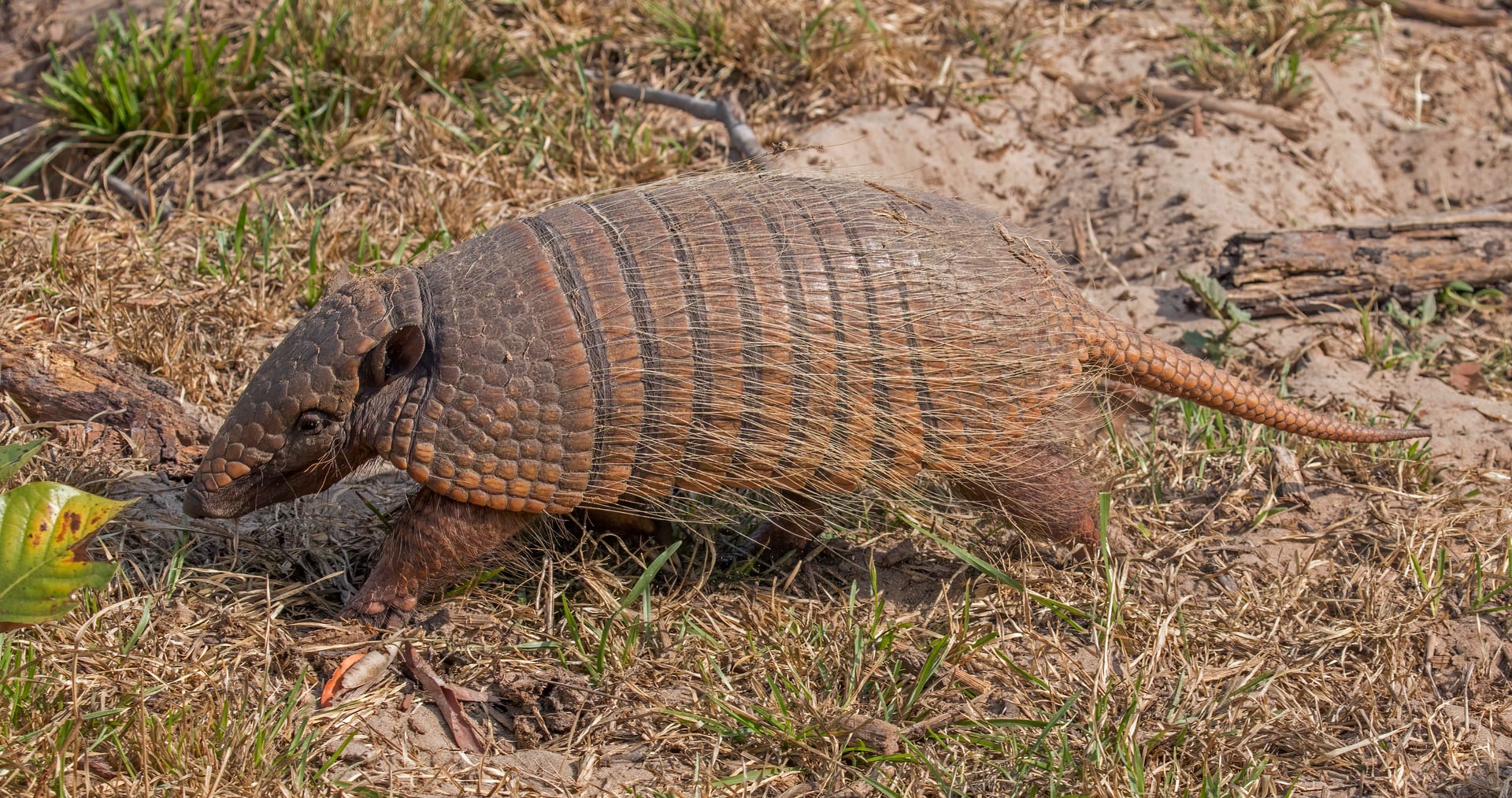
Six-banded Armadillo
AdvancedEuphractus sexcinctus
A South American armadillo named for the six movable bands on its back. Unlike most armadillos it is diurnal and cannot roll into a ball; hardy, and one of the more commonly kept species.
Difficulty
Advanced
Temperature
18〜26℃
Lifespan
About 18 years (in captivity; maximum 22.1 years)
Size
Head-body 40-50cm / tail 12-24cm / 3.2-6.5kg
Humidity
40〜60%
Diet
Dog food, insects, fruit, vegetables, boiled egg
About
The six-banded armadillo is distributed across South America from Brazil and southern Suriname through Bolivia, Paraguay and Uruguay to northern Argentina, and is the sole living species of its genus, described by Linnaeus in 1758. It lives mainly in open habitats such as savannas, cerrado, shrubland and deciduous forest. The yellowish to pale reddish-brown carapace has about six movable bands across the middle, the source of its name. Unlike the three-banded armadillo it cannot roll into a ball; when threatened it runs or flattens itself against the ground. It cannot jump and cannot clear a wall of about 50 cm. Where most armadillos are nocturnal, this species tends to be diurnal and is solitary. An omnivore, it eats carrion, small invertebrates, insects and ants as well as bromeliad fruit, palm nuts and tubers, and digs burrows in dry grassland. The IUCN lists it as Least Concern. In captivity it is relatively docile and hardy, eats dog food readily and makes no vocalizations, but its powerful claws demand a sturdy, non-plastic enclosure and it will dig if given substrate. In Japan it is occasionally available at exotic pet shops.
Source: Wikipedia (CC BY-SA 4.0)
Lifespan of the Six-banded Armadillo
The Six-banded Armadillo lives About 18 years (in captivity; maximum 22.1 years).
One captive animal lived nearly 18 years and the longevity record is 22.1 years.
Size of the Six-banded Armadillo
The Six-banded Armadillo grows to Head-body 40-50cm / tail 12-24cm / 3.2-6.5kg.
Head-body length is 40-50 cm, tail 12-24 cm and weight 3.2-6.5 kg, rising to 8-11 kg when fat is stored.
Basic Info
Origin
South America (Brazil and southern Suriname to Bolivia, Paraguay, Uruguay and northern Argentina)
Care Specifications
References & Sources
Edited & verified by: BreederDirect editorial team
The taxonomic, regulatory, and husbandry data on this page are compiled and verified against the authoritative primary sources below.
Taxonomy & Authority
Accepted name: Euphractus sexcinctus (Linnaeus, 1758)
Authority databases: GBIF
Nomenclature follows global taxonomic authority databases.
Regulations & Conservation Status
Not CITES-listedIUCN LC · Least Concern
Sources: CITES Appendices (species not listed) / IUCN Red List Euphractus sexcinctus
Regulations may change. Always verify the latest information with the relevant authorities.
Six-banded Armadillo Listings
Loading latest listingsFind listings for this species