Source: Wikimedia Commons
Alpaca
AdvancedVicugna pacos
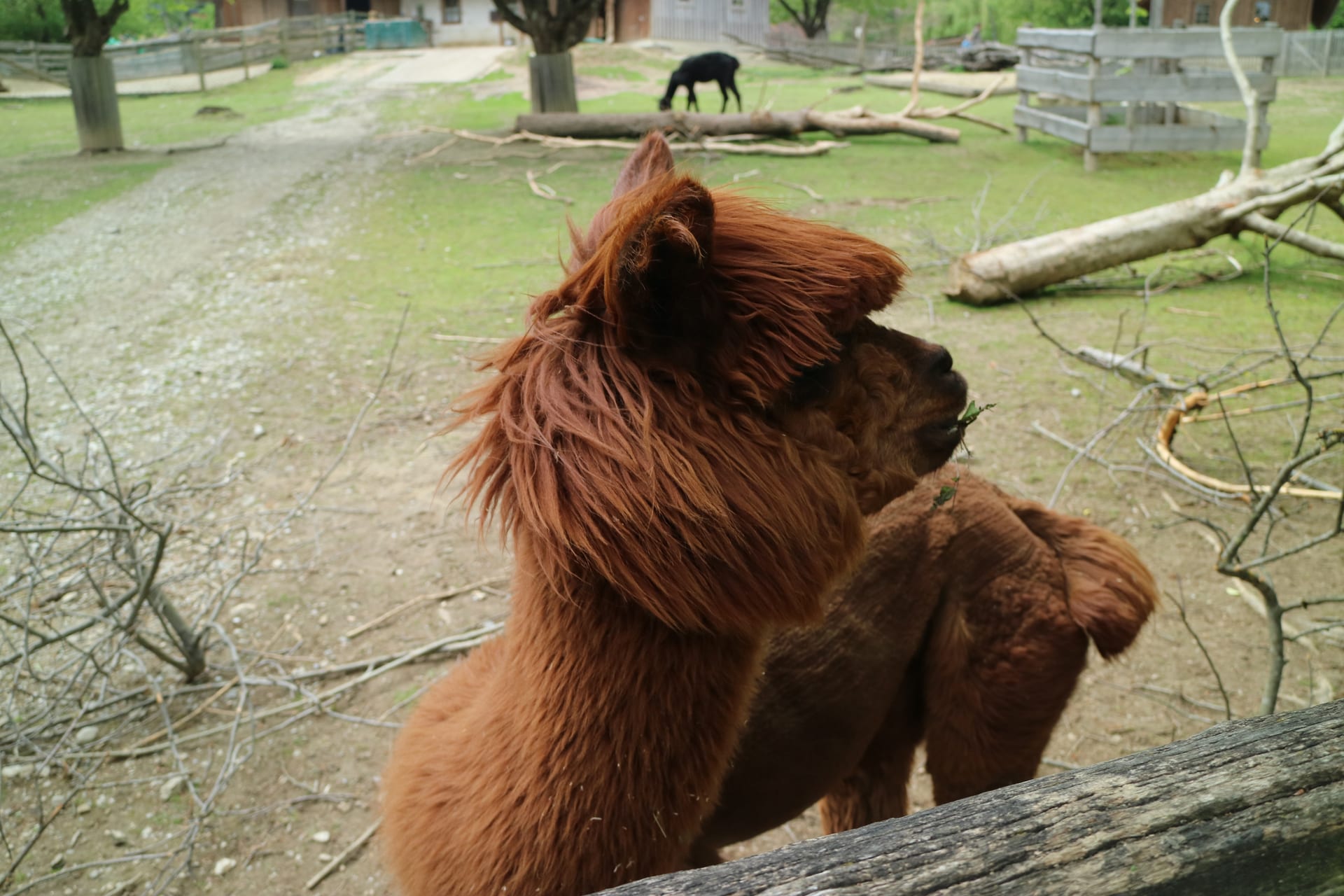
The smallest domesticated camelid, bred in the high Andes. Weighing 55–65kg, it comes in two types, crimpy-fleeced Huacaya and silky, straight-fleeced Suri, and is a herd-living grazer unsuited to living alone.
Difficulty
Advanced
Temperature
18〜26℃
Lifespan
About 20 years in captivity
Size
90–130cm at the shoulder; 55–65kg
Humidity
40〜60%
Diet
Herbivore (grazer): pasture grass and hay
About
The alpaca (Vicugna pacos) is a camelid domesticated on the high plateaus of the central and southern Andes, from Peru to Argentina at up to 4,800m, and is the smallest domesticated camelid. From the 1980s it began to be exported for fibre farming to the United States, New Zealand, Australia, the Netherlands and elsewhere. Coats range from white through browns to black, solid or multicoloured. There are two breeds: Huacaya, by far the most common, covered on the body, legs and neck in long crimpy fleece, and Suri, whose silkier, faster-growing fleece hangs straight along the body without crimp. Adult males develop upper and lower incisors and lower canines into fighting teeth over 3cm long; these stay small in females. Alpacas are social and form herds not only with each other but with llamas, goats and sheep, and may have a hierarchy. They are strict grazers. In Japan, animals imported from farms in South America and elsewhere are supplied to order by livestock dealers.
Source: Wikipedia (CC BY-SA 4.0)
Lifespan of the Alpaca
The Alpaca lives About 20 years in captivity.
Captive lifespan is about 20 years.
Size of the Alpaca
The Alpaca grows to 90–130cm at the shoulder; 55–65kg.
It weighs 55–65kg and stands 90–130cm at the shoulder, with a slender body and neck, a small head and large pointed ears.
Basic Info
Origin
Domesticated in the central and southern Andes of South America (Peru to Argentina)
Lifespan
About 20 years in captivity
References & Sources
Edited & verified by: BreederDirect editorial team
The taxonomic, regulatory, and husbandry data on this page are compiled and verified against the authoritative primary sources below.
Taxonomy & Authority
Accepted name: Vicugna pacos (Linnaeus, 1758)
Synonyms: Lama pacos
Authority databases: GBIF · GBIF: Vicugna pacos · GBIF: Lama pacos
Nomenclature follows global taxonomic authority databases.
Regulations & Conservation Status
Not CITES-listed
Not covered by CITES (the listed species is the wild vicuña, Vicugna vicugna). As an even-toed ungulate it is a designated quarantine item under the Domestic Animal Infectious Diseases Control Law, inspected by the Animal Quarantine Service with a 15-day quarantine period; it is outside the MHLW import notification system. Ask your prefectural livestock hygiene service centre whether keeping one requires notification.
Sources: e-Gov: Enforcement Regulations of the Domestic Animal Infectious Diseases Control Law (JA) / MHLW: Animal import notification system (JA) / Species+ CITES query (not listed)
Regulations may change. Always verify the latest information with the relevant authorities.
Alpaca Listings
Loading latest listingsFind listings for this species