Source: Wikimedia Commons
Rock Hyrax
AdvancedProcavia capensis
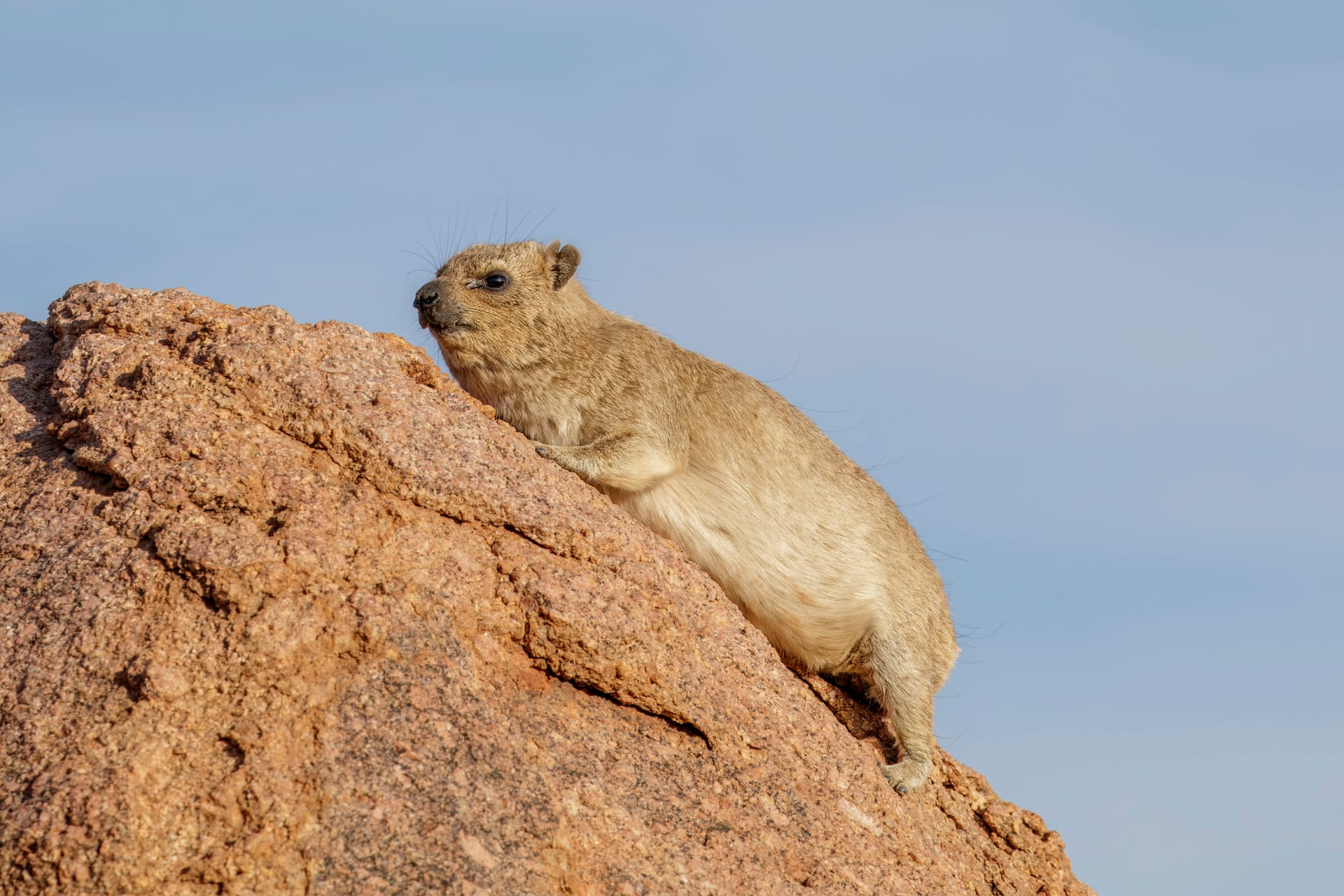
A stocky, woodchuck-like animal that is in fact a distant relative of elephants. It lives in colonies on rocky outcrops and has long, tusk-like upper incisors and a scent gland on its back.
Difficulty
Advanced
Temperature
18〜26℃ (typical for Small Animal)
Lifespan
Up to 12 years wild; about 11 on average in captivity
Size
30.5–55cm long (tail 1.1–2.4cm); up to 4.3kg
Humidity
40〜60%
Diet
Herbivore: mainly grasses, plus shoots, fruit and bark
About
The rock hyrax or rock dassie (Procavia capensis) belongs to the order Hyracoidea. It looks like a woodchuck but is not a rodent; its closest living relatives are, distantly, the elephants. It occurs across most of Africa except the Congo Basin and Madagascar, and in the Arabian Peninsula, including dry mountains of the Namib and Sahara, living among rocks with plenty of crevices. Its upper incisors are long, sharp and tusk-like, larger in males. Black foot pads kept moist by sweat glands give grip on rock. A dorsal gland releases scent for communication and territorial marking. Colonies of up to 80 are built around a territorial male and related females, and captive hyraxes make more than 20 distinct calls. It is mainly a grazer, adding shoots, fruit and bark by season. It lives up to 12 years in the wild, with a captive average of about 11. In Japan it appears only occasionally at exotic-pet specialists.
Source: Wikipedia (CC BY-SA 4.0)
Lifespan of the Rock Hyrax
The Rock Hyrax lives Up to 12 years wild; about 11 on average in captivity.
Size of the Rock Hyrax
The Rock Hyrax grows to 30.5–55cm long (tail 1.1–2.4cm); up to 4.3kg.
It is 30.5–55cm long with a barely visible 1.1–2.4cm tail and weighs up to 4.3kg (males about 4kg, females 3.6kg).
Basic Info
Origin
Rocky habitats across Africa (except the Congo Basin and Madagascar) and the Arabian Peninsula
Lifespan
Up to 12 years wild; about 11 on average in captivity
References & Sources
Edited & verified by: BreederDirect editorial team
The taxonomic, regulatory, and husbandry data on this page are compiled and verified against the authoritative primary sources below.
Taxonomy & Authority
Accepted name: Procavia capensis (Pallas, 1766)
Authority databases: GBIF · GBIF: Procavia capensis
Nomenclature follows global taxonomic authority databases.
Regulations & Conservation Status
Not CITES-listedIUCN LC · Least Concern
Not covered by CITES, the Invasive Alien Species Act or the specified-animal rules. Imports fall under Japan's animal import notification system (Infectious Diseases Control Law, MHLW): a health certificate from the exporting country's government must be filed with the quarantine station. Animals bred in Japan can be sold and kept without notification. Never release captive animals into the wild.
Sources: MHLW: Animal import notification system (JA) / Species+ CITES query (not listed) / Ministry of the Environment: Specified (dangerous) animals list (JA)
Regulations may change. Always verify the latest information with the relevant authorities.
Rock Hyrax Listings
Loading latest listingsFind listings for this species