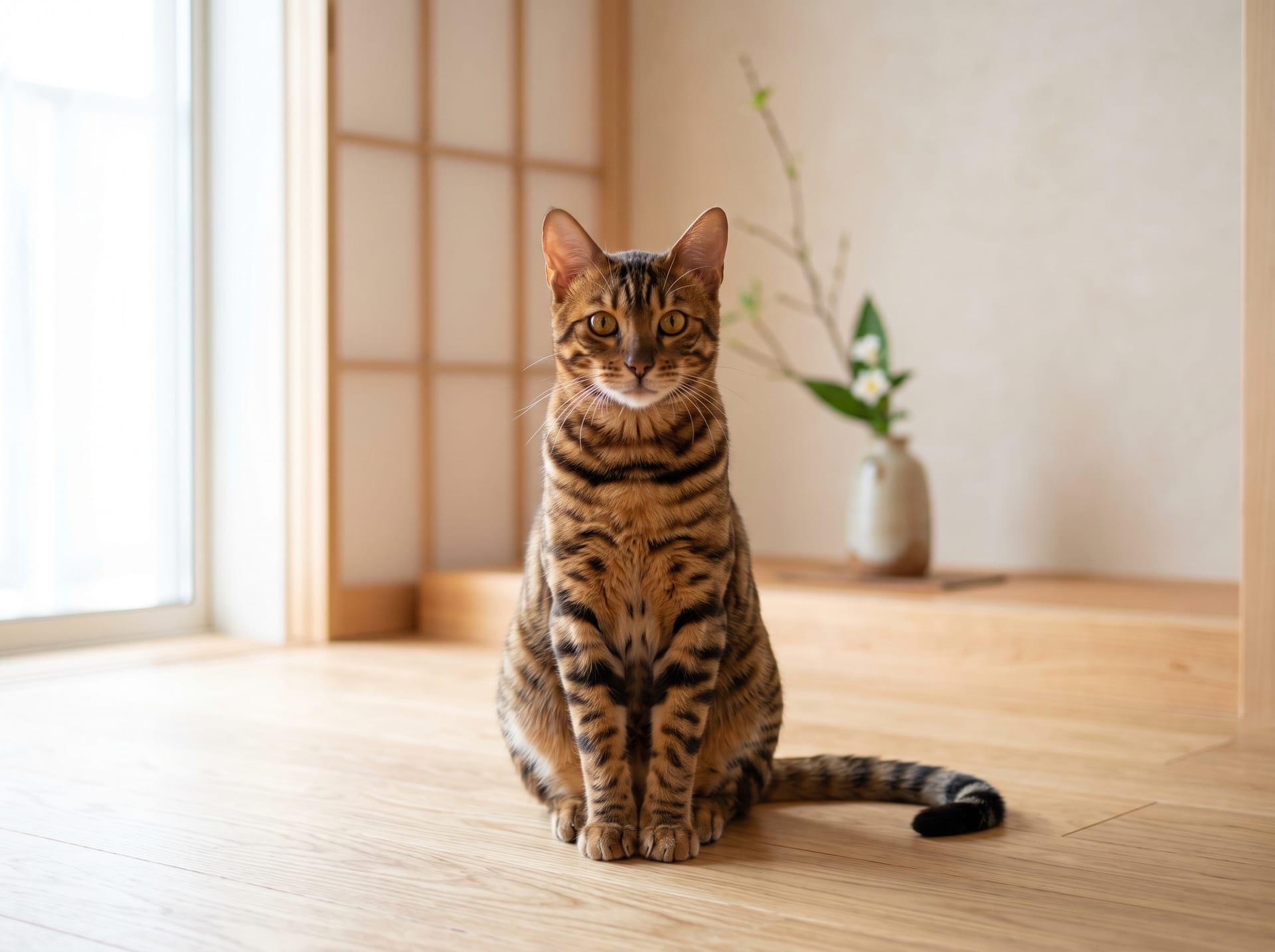
Toyger
'Toy Tiger' — tiger-like stripes on a domestic cat. Relatively new breed. Calm and easy to keep despite wild looks.
View Toyger encyclopedia →- Price Range
- ¥70,000〜¥238,000
0% commission on your first sales!Register by September 30, 2026 and your first 2 sales are commission-free!
Breeder Wanted!
List on BreederDirect and sell directly to customers nationwide!
4 Trust Pillars We Guarantee at Br-Choku
For all kitten listings, Breeder clearly disclose the following information. To ensure safe and transparent direct sales, Br-Choku requires these legally mandated items.
- MicrochipRequired
- Vaccinated
- Health Checked
- Pedigree Certified
* Microchip implants are now legally required for breeding businesses selling dogs and cats under the Animal Protection Law (effective June 2022).
Secure transaction guarantee
Dogs & cats onlyEvery BreederDirect transaction is covered by our transaction guarantee. If you cannot receive your pet, you will be fully refunded. A health guarantee also covers you after handover.
Learn about transaction safety →Browse all 74 breeds
Verified breeders wanted for Cats
Breeders are signing up now ahead of launch. Subscribe to be notified when new listings go live.
Getting alerts is free with a member account. When new listings match your saved search, we'll notify you by email and in-app.
Browse other categories
Verified breeders (preview)
Toyger key facts
- Care level
- Intermediate
- Lifespan
- 12-15 years
- Size
- Weight 3.5-5.5kg
- Diet
- Complete nutrition cat food.
- Temperament
- Calm and friendly. Very approachable despite wild tiger-like appearance.
- Exercise
- Moderately active. Enjoys toy play and interactive games.
- Coat Care
- Short tiger-striped coat. Weekly brushing sufficient.
- Origin
- United States
- Notes
- Relatively new breed with limited genetic data. Regular cardiac screening recommended.
About Toyger
The Toyger was developed in the United States during the 1980s by breeder Judy Sugden, who set out with a clear vision: to recreate the look of a tiger in a domestic cat. Through a careful breeding program combining Bengals with domestic shorthairs, the breed was formally recognized by TICA (The International Cat Association) in 2007. Its most striking feature is the bold mackerel tabby striping that flows vertically along the body, with broader and crisper markings considered the ideal. The Toyger is a medium-to-large, muscular cat with the classic "M" marking on the forehead. In sharp contrast to its fierce appearance, the Toyger is calm and deeply affectionate, often trailing its owner around the house like a loyal dog. Its high intelligence makes it playful and curious, and with adequate enrichment it thrives comfortably indoors. Still relatively rare worldwide, the Toyger captivates cat lovers with its unique combination of wild aesthetics and an easy-going, people-friendly temperament.
7 things to know before welcoming a Toyger
1Markings Are Mackerel Tabby Only
The Toyger's most distinctive trait is its vertical mackerel tabby stripes running along the body. Broader stripes with crisp edges are highly valued by breeders. Since the quality of the markings depends heavily on the breeder's program, it's a good idea to ask for photos of the parents before committing.
2Gentle and People-Oriented
Despite their wild looks, Toygers are gentle and highly people-oriented. They often follow their owners from room to room in a dog-like fashion. They tend to have low aggression and generally get along well with children and other pets.
3Activity Level Suited for Indoor Life
Toygers have a moderate activity level and adapt well to full indoor living. Providing a few daily play sessions and vertical climbing opportunities—such as a cat tree—helps keep them mentally and physically satisfied. They are not overly high-strung, making them manageable even in smaller living spaces.
4Coat Care Is Relatively Easy
The Toyger has a short, dense coat that stays clean with brushing once or twice a week. During shedding season, increasing the frequency helps manage loose hair. Bathing is not required regularly, but getting your cat comfortable with it early on is useful for vet visits and grooming appointments.
5Watch for Hereditary Health Issues
As a relatively new breed, long-term health data for Toygers is still being gathered. Hypertrophic cardiomyopathy (HCM) is a condition that can affect cats broadly, so regular cardiac check-ups are advisable. Reputable breeders conduct genetic screening, and you should ask to see test results before purchasing.
6Expected Purchase and Upkeep Costs
As a rare breed, Toyger kittens typically range from roughly 300,000 to 800,000 yen, depending on markings and pedigree. Monthly upkeep—including food, litter, and routine veterinary care—is generally around 10,000 to 20,000 yen. Enrolling in pet insurance is also worth considering given the potential for unexpected health costs.
7Intelligent and Trainable
Toygers are highly intelligent and respond well to positive reinforcement training using treats and praise. Many owners report that their Toygers learn to respond to their name and pick up simple commands with ease. To prevent boredom-driven mischief, puzzle feeders and interactive toys are great ways to keep their minds engaged.
Frequently asked questions about Toyger
- Q.Can Toygers get along with other pets and children?
- A.Toygers have a gentle, sociable temperament and generally adapt well to other cats, dogs, and children. That said, individual personalities vary, so a gradual, supervised introduction is always the safest approach when bringing them into a multi-pet or family household.
- Q.How long do Toygers typically live?
- A.Toygers are generally expected to live around 12 to 15 years, though long-term data is still being gathered as the breed is relatively new. A balanced diet, regular veterinary check-ups, and a low-stress environment all contribute to a longer, healthier life.
- Q.Where can I find a Toyger? Are there specialist breeders?
- A.Toygers are a rare breed and the number of breeders—both in Japan and globally—remains limited. It's important to seek out TICA-registered breeders or those listed by reputable cat fancy organizations, and to choose one who is transparent about genetic testing and living conditions. They are rarely found in pet shops, so purchasing directly from a breeder is the norm.
- Q.Do all Toygers have the same stripe pattern?
- A.Stripe patterns vary between individuals in terms of width, depth of color, and flow. Show standards favor bold, clearly defined stripes, but for pet owners, each cat's unique markings are part of its charm. The overall quality of the patterning depends greatly on the breeder's selective breeding program.
- Q.Are Toygers vocal? Will they be noisy?
- A.Toygers are not generally considered an overly vocal breed. They tend to vocalize softly when seeking attention or communicating, and are quieter on the whole compared to chatty breeds like Siamese. That said, individual personalities vary, and some Toygers will speak up more readily when they want company or playtime.
Useful tools for Toyger care
Learn more about Toyger in the encyclopedia
View Toyger encyclopedia entry →
Care difficulty, lifespan, size and diet — all basics covered.
More in this category
Can't find the one you're looking for?
Post your wishes for free and breeders with matching animals will contact you with introductions.