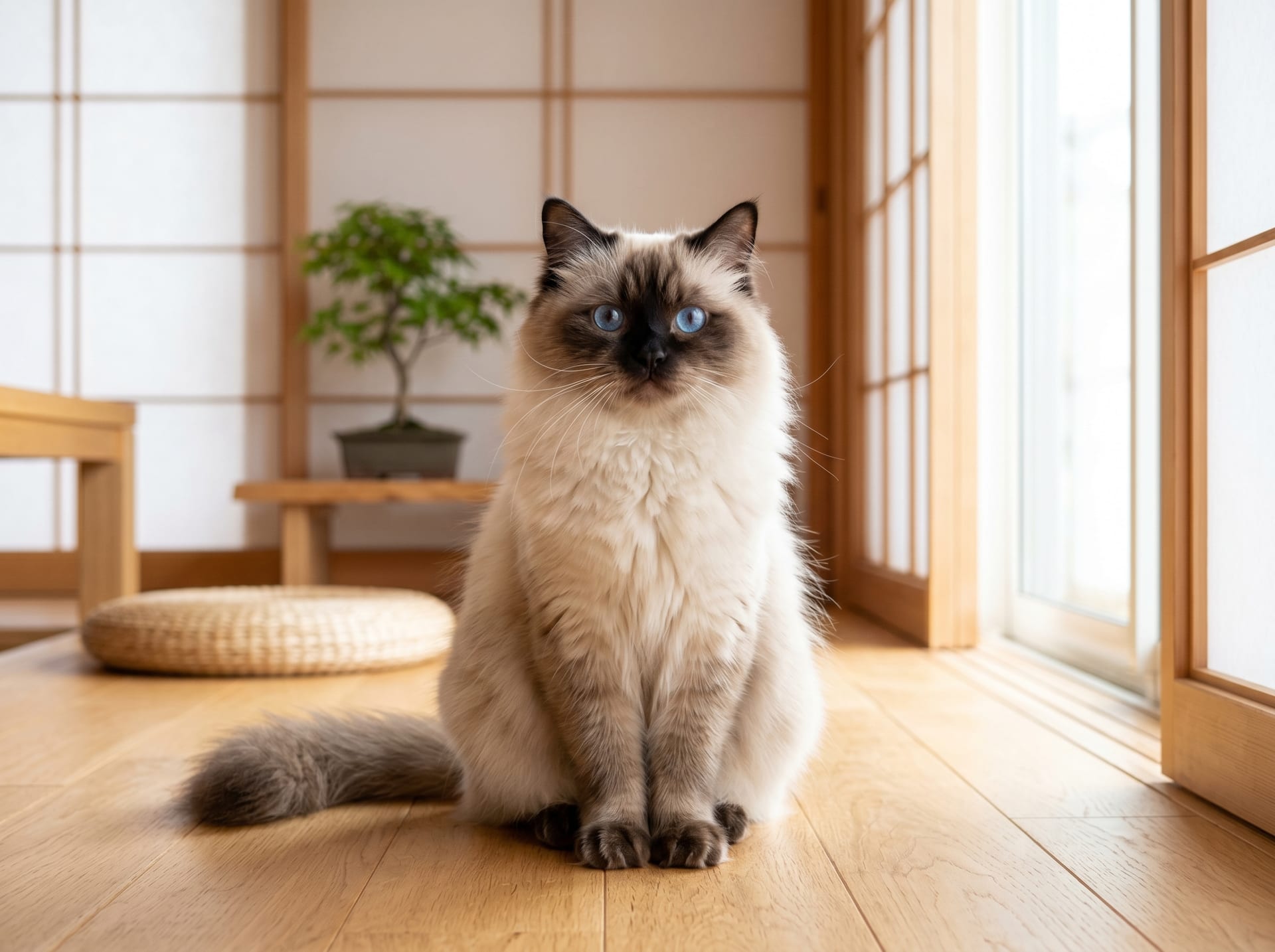
Himalayan
Persian-Siamese cross combining luxurious long coat with pointed coloring. Prefers calm, quiet environment.
View Himalayan encyclopedia →- Price Range
- ¥70,000〜¥238,000
0% commission on your first sales!Register by September 30, 2026 and your first 2 sales are commission-free!
Breeder Wanted!
List on BreederDirect and sell directly to customers nationwide!
4 Trust Pillars We Guarantee at Br-Choku
For all kitten listings, Breeder clearly disclose the following information. To ensure safe and transparent direct sales, Br-Choku requires these legally mandated items.
- MicrochipRequired
- Vaccinated
- Health Checked
- Pedigree Certified
* Microchip implants are now legally required for breeding businesses selling dogs and cats under the Animal Protection Law (effective June 2022).
Secure transaction guarantee
Dogs & cats onlyEvery BreederDirect transaction is covered by our transaction guarantee. If you cannot receive your pet, you will be fully refunded. A health guarantee also covers you after handover.
Learn about transaction safety →Browse all 74 breeds
Verified breeders wanted for Cats
Breeders are signing up now ahead of launch. Subscribe to be notified when new listings go live.
Getting alerts is free with a member account. When new listings match your saved search, we'll notify you by email and in-app.
Browse other categories
Verified breeders (preview)
Himalayan key facts
- Care level
- Intermediate
- Lifespan
- 9-15 years
- Size
- Weight 3.5-6kg
- Diet
- Complete nutrition cat food. Flat dishes for flat face recommended.
- Temperament
- Calm and affectionate. Prefers quiet surroundings; dislikes noisy environments.
- Exercise
- Low activity level. Light indoor play sufficient.
- Coat Care
- Long dense coat requires daily brushing. Facial grooming also important.
- Origin
- United States / United Kingdom
- Notes
- Brachycephalic; breathing issues and tear staining. Watch for PKD.
About Himalayan
The Himalayan was officially established as a breed in the United States in the 1950s, developed through careful crossbreeding to combine the Persian's body type and coat with the Siamese's distinctive point coloration. The breed comes in a variety of point colors including seal, blue, and flame, and is immediately recognizable by its sapphire-blue eyes and magnificent long coat. Medium to large in build with the sturdy frame of the Persian, the Himalayan has a round, slightly flat face that adds to its soft expression. In temperament, it is gentle and easygoing, preferring to quietly stay close to its owner rather than demanding constant attention. Its relatively quiet voice makes it a practical choice for apartment living. While the breed's stunning coat requires dedicated daily grooming and regular health monitoring, those who invest the care find themselves rewarded with a deeply affectionate companion and a richly rewarding bond.
7 things to know before welcoming a Himalayan
1Daily Brushing Is Essential
The Himalayan's long, dense coat mats quickly without daily brushing. Use a wide-tooth comb and a slicker brush, paying extra attention to the armpits and neck area. Regular professional grooming can also help keep the coat manageable.
2Regular Eye Cleaning Needed
Due to their brachycephalic (flat-faced) structure, Himalayans tend to accumulate eye discharge. Gently wipe around the eyes with a damp cotton pad daily or every few days. Neglecting this can lead to fur staining and potential skin irritation.
3Prefers a Calm Environment
Himalayans are gentle and quiet by nature, and can be easily stressed by loud noises or sudden changes in their environment. In homes with young children or large dogs, it's important to provide a dedicated quiet space for the cat. They adapt best to households with a calm, steady routine.
4Watch for Respiratory Issues
Their flat-faced structure can sometimes make breathing more difficult. Additionally, Himalayans carry a known genetic risk for hypertrophic cardiomyopathy (HCM), so regular veterinary cardiac checkups are recommended. Pay close attention to breathing during hot weather or after physical activity.
5Suited to Settled Indoor Life
Himalayans prefer a relaxed lifestyle over vigorous activity. They tend to enjoy lounging in sunny spots or quietly staying close to their owners rather than engaging in intense play. Because of their lower activity level, monitor their food intake carefully to prevent weight gain.
6Budget for Grooming Costs
In addition to daily home brushing, most owners find that regular professional grooming is necessary. Many opt for a summer trim during warmer months. It is wise to budget for grooming costs throughout the year when planning for a Himalayan.
7Check for PKD History
As a Persian-derived breed, Himalayans carry a genetic risk for polycystic kidney disease (PKD). When adopting from a breeder, it is strongly advisable to ask for PKD test results for the parent cats. Early detection allows for monitoring and lifestyle management that can support long-term health.
Frequently asked questions about Himalayan
- Q.Do Himalayans shed a lot?
- A.Yes, as a long-haired breed, Himalayans shed considerably. Shedding increases during seasonal transitions, so daily brushing and regular vacuuming are essential. Many owners find robot vacuums and lint rollers helpful for managing fur around the home.
- Q.Are Himalayans suitable for first-time cat owners?
- A.While their gentle temperament makes them easy to handle, Himalayans require more daily care than many other breeds, including brushing, eye cleaning, and health monitoring. First-time owners who can commit the necessary time and budget can absolutely care for this breed successfully.
- Q.Are Himalayans sensitive to heat?
- A.Due to their flat-faced structure and thick coat, Himalayans do not tolerate heat and humidity well. During summer, keep indoor temperatures around 26°C (79°F) with air conditioning and ensure shaded areas are available. Heatstroke is a real risk and should be taken seriously.
- Q.Can Himalayans get along with other pets or children?
- A.Himalayans are generally gentle and non-aggressive, and can often coexist with calm children and other cats when introduced gradually. However, they are sensitive to noisy environments and sudden handling, so it is important to let the cat set the pace for interactions.
- Q.What is the average lifespan of a Himalayan?
- A.Himalayans generally live around 12 to 15 years. Regular veterinary checkups and early screening for hereditary conditions such as PKD and HCM can contribute to a longer, healthier life.
Useful tools for Himalayan care
Learn more about Himalayan in the encyclopedia
View Himalayan encyclopedia entry →
Care difficulty, lifespan, size and diet — all basics covered.
More in this category
Can't find the one you're looking for?
Post your wishes for free and breeders with matching animals will contact you with introductions.