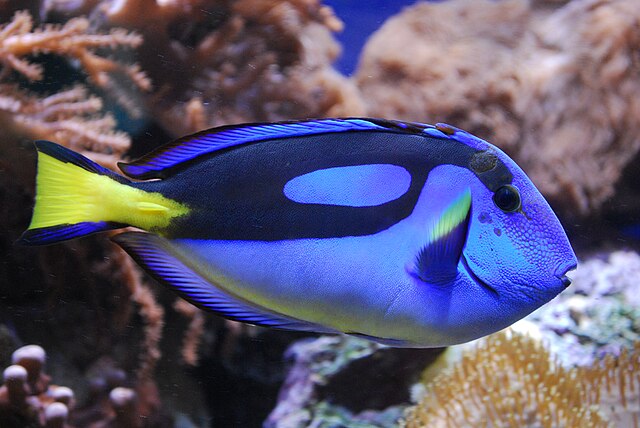
 © DerHans04 / CC BY-SA 3.0
Blue Tang
The Blue Tang is a striking marine fish known for its vivid royal blue body set off by a bright yellow tail. Made famous by an animated film, it has become a favorite among aquarists worldwide. A strong, active swimmer, it moves confidently through the tank even on its own. Its temperament is generally calm, though it can show territorial behavior toward its own species or similarly shaped fish. As an adult it reaches roughly 20 to 30cm, so a tank with ample open swimming space is recommended. Blue Tangs are also prone to ich, making consistent water quality management essential for keeping them healthy long term.
View Blue Tang encyclopedia →0% commission on your first sales!Register by September 30, 2026 and your first 2 sales are commission-free!
Breeder Wanted!
List on BreederDirect and sell directly to customers nationwide!
BreederDirect's 6 Transparency Promises
Every Marine Fish listing shows Breeder's full disclosure. No wild-caught. Captive-bred priority, tank size guidance, temperament details—transparent aquaculture.
- Captive-bred
- WYSIWYG
- Reef-safe
- Care Info Included
- Origin Disclosed
- Temperament Listed
Browse all 175 breeds
Care Difficulty
Reef-safe
Temperament
No listings match your filters
Adjust your filters, or get notified when new listings arrive.
Getting alerts is free with a member account. When new listings match your saved search, we'll notify you by email and in-app.
Browse other categories
Verified breeders (preview)
Are you raising marine fish?
Register as a breeder and connect with buyers directly.
Apply as a breederAbout Blue Tang
The Blue Tang is a large, strikingly royal-blue reef fish with a bright yellow tail. A strong swimmer that needs a spacious tank and careful ich prevention, it suits intermediate marine keepers.
7 things to know before welcoming a Blue Tang
1Needs a Spacious Tank
As a strong, active swimmer that reaches roughly 20-30cm as an adult, a Blue Tang needs plenty of open water to move around freely. A cramped tank can cause stress, so plan for a larger setup from the start.
2Prone to Ich
Blue Tangs are known for being susceptible to ich (white spot disease). Avoiding sudden shifts in water quality or temperature and maintaining consistent care helps reduce the risk.
3Best Kept Solo
This species can be territorial toward its own kind and toward similarly shaped tangs. Keeping just one per tank is generally the safer approach.
4A Long-Term Commitment
With a lifespan of 8 to 20 years, a Blue Tang is a long-term companion. Consider how your circumstances might change over the years before bringing one home.
5An Active Swimmer
Blue Tangs swim energetically throughout the tank. A layout that balances rockwork for hiding with open space for swimming suits them well.
6Needs Plant Matter Too
As an omnivore that grazes on algae in the wild, offering a varied diet that includes marine algae alongside prepared foods supports better long-term health.
7Prepare the Tank First
Before bringing one home, confirm that your tank size, filtration capacity, and water stability are all ready. This groundwork makes the transition smoother.
Frequently asked questions about Blue Tang
- Q.Is the Blue Tang suitable for beginners?
- A.It's generally considered a fish for intermediate keepers. Given its susceptibility to ich and need for a spacious tank, it's best to have some marine fishkeeping experience first.
- Q.Can it be kept with other fish?
- A.It generally does well with calm-tempered tankmates, but it can be territorial toward its own species or similarly shaped tangs. Choose tankmates carefully.
- Q.How large a tank does it need?
- A.Since adults reach 20 to 30cm and are strong swimmers, a larger tank with generous open swimming space is recommended.
- Q.Is there anything I can do about its susceptibility to ich?
- A.Avoiding sudden changes in water quality or temperature and maintaining a stable environment are the basic precautions. Consistent water quality management goes a long way.
- Q.How long does a Blue Tang live?
- A.Its lifespan is typically 8 to 20 years, making it a relatively long-lived marine fish. Plan for consistent, long-term care of its habitat.
Useful tools for Blue Tang care
Learn more about Blue Tang in the encyclopedia
View Blue Tang encyclopedia entry →
Care difficulty, lifespan, size and diet — all basics covered.
Blue Tang related articles
Powder Blue Tang (Acanthurus leucosternon) Care Guide | Beautiful Blue Coloration and Ich Prevention
Learn how to care for the stunning Powder Blue Tang with its vibrant blue coloration. This guide covers required tank size, water parameters, managing susceptibility to ich disease, feeding strategies, and tankmate compatibility—perfect for beginner to intermediate aquarists.
Saltwater Fish Compatibility Guide: Quick Reference Table by Aggression & Size
A comprehensive guide with a quick reference table organizing saltwater fish compatibility by aggression, size, and diet. Detailed explanations of compatibility and precautions for popular species like Clownfish, Blue Tangs, and Yellow Tangs.
Complete Guide to Keeping Blue Tangs (Dory)|Keeping Conditions, Disease Management, and Tank Mate Compatibility Notes
Detailed explanation of Blue Tang care requirements including large aquariums, protein skimmers, water quality management, white spot disease prevention, and tank mate compatibility for long-term care of the fish made famous by the movie.
Complete Tang Care Guide | Raising Blue Tangs and Yellow Tangs
Explaining care methods for tangs, a popular group of saltwater fish. Introducing white spot disease prevention, food selection, and tankmate compatibility considerations.
More in this category
Can't find the one you're looking for?
Post your wishes for free and breeders with matching animals will contact you with introductions.