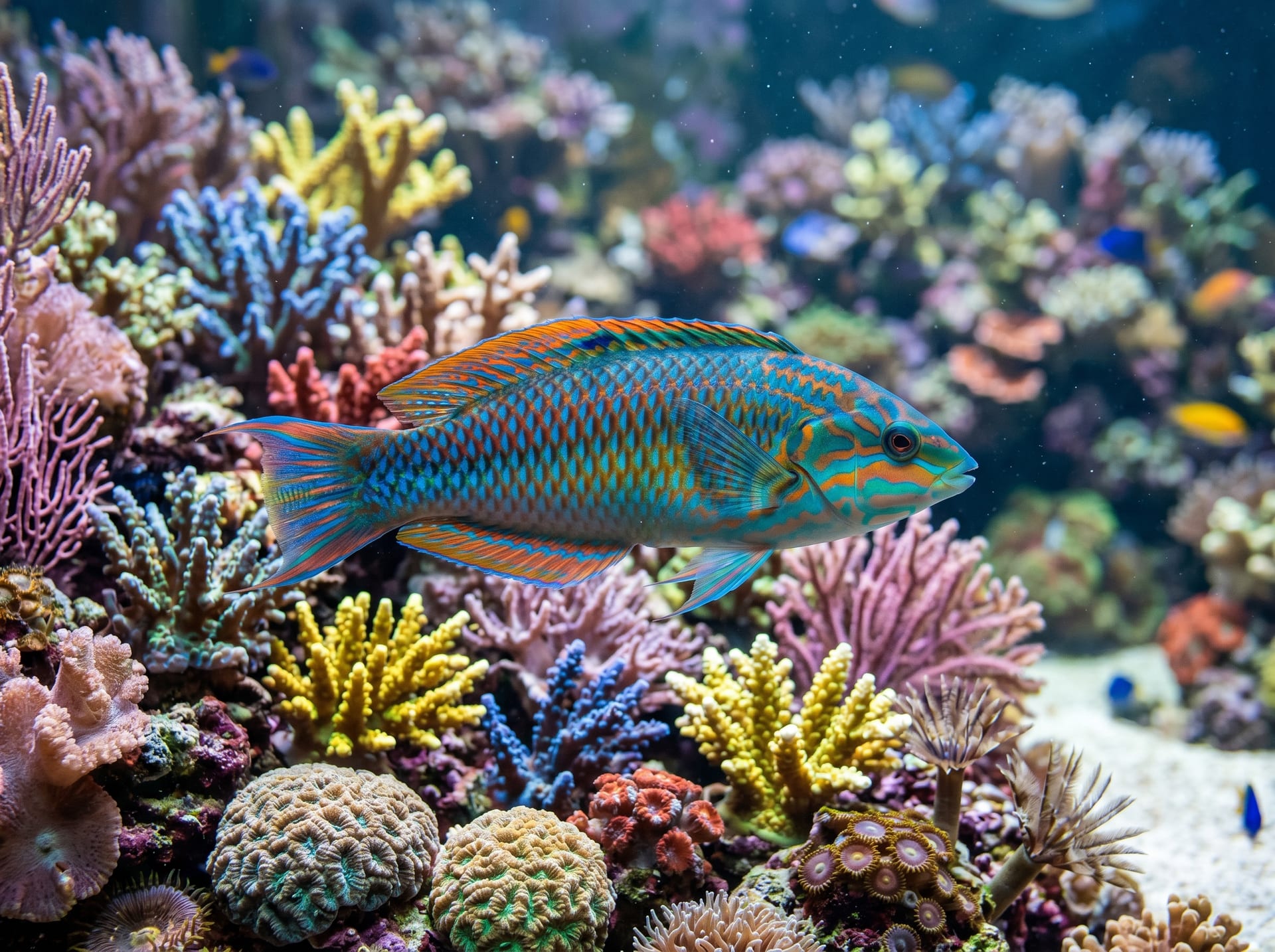
Wrasse
A colorful and diverse marine fish group. Sleeps buried in sand and also serves as a tank cleaner.
View Wrasse encyclopedia →0% commission on your first sales!Register by September 30, 2026 and your first 2 sales are commission-free!
Breeder Wanted!
List on BreederDirect and sell directly to customers nationwide!
BreederDirect's 6 Transparency Promises
Every Marine Fish & Coral listing shows Breeder's full disclosure. No wild-caught. Captive-bred priority, tank size guidance, temperament details—transparent aquaculture.
- Captive-bred
- WYSIWYG
- Reef-safe
- Care Info Included
- Origin Disclosed
- Temperament Listed
Browse all 42 breeds
Care Difficulty
Reef-safe
Temperament
No listings match your filters
Adjust your filters, or get notified when new listings arrive.
Getting alerts is free with a member account. When new listings match your saved search, we'll notify you by email and in-app.
Browse other categories
Verified breeders (preview)
Are you raising marine fish & coral?
Register as a breeder and connect with buyers directly.
Apply as a breederWrasse key facts
- Care level
- Beginner-friendly
- Lifespan
- 5-10 years
- Size
- 8-20cm
- Diet
- Frozen food, Artificial feed
- Housing
- Sand bed (5cm+) needed (sleeps buried in sand)
- Diet & Feeding
- Feed frozen and prepared foods. Many Halichoeres and Coris species act as cleaners, eating flatworms, bristleworms and small snails.
- Feeding
- Cleaner fish that eats parasites
- Tank Mates & Compatibility
- Varies by species, but many are peaceful. Small shrimp and juvenile snails may be eaten, so check each species before housing with invertebrates.
- Health & Cautions
- Highly active and very prone to jumping out, so a gap-free lid is essential. Difficulty varies widely, so check each species' diet before buying.
About Wrasse
The family Labridae (wrasses) encompasses over 600 species inhabiting shallow tropical and subtropical seas worldwide, making it one of the most species-rich and colorful families in the marine aquarium hobby. Color patterns differ dramatically between juveniles, females, and males—many species undergo striking sex-change transitions accompanied by brilliant shifts to blue, green, red, or purple hues. Wrasses have a characteristic elongated, fusiform body and a distinctive rowing swimming style using their pectoral fins. Their temperament is typically bold and curious; settled individuals often interact with their keepers. Most species lean toward carnivory, with several well-known "cleaner" wrasses consuming parasites and small crustaceans in the wild. The instinct to burrow into sand at night—an anti-predator behavior retained from the wild—is one of the most captivating aspects of keeping wrasses and is a delight to observe in a home aquarium. Given suitable conditions, wrasses are relatively hardy and long-lived, making them a popular choice for hobbyists venturing into the marine fishkeeping world.
7 things to know before welcoming a Wrasse
1Sand-Diving Behavior
Most wrasses bury themselves in sand at night or when startled, so a fine coral sand bed of at least 5 cm deep is essential. Without adequate substrate they may become stressed and refuse to eat. It is normal for newly introduced wrasses to remain hidden in the sand for several days.
2Escape-Proof the Tank
Wrasses are powerful swimmers and notorious jumpers, especially when startled. A tight-fitting lid with no gaps around cables or pipes is essential to prevent fatal escape accidents. Securing the aquarium cover is one of the most important steps before introducing any wrasse.
3Choosing Tank Mates
Wrasses can be territorial toward their own and related species, so carefully consider species and gender combinations when keeping multiple wrasses together. Small shrimp and other crustaceans are often viewed as prey and are generally not safe tank mates. Pairing wrasses with peaceful, medium-sized fish tends to work best.
4Feeding and Diet
Wrasses are predominantly carnivorous, feeding on worms, crustaceans, and small fish in the wild. Transitioning them to frozen mysis, brine shrimp, and high-quality pellets is key to long-term success. Feed two to three small portions daily, removing any uneaten food promptly.
5Water Quality Management
Maintain salinity at 1.023–1.025, water temperature between 24–26°C, and keep nitrates as low as possible, as with most marine fish. Some wrasse species are moderately sensitive to declining water quality, making regular water changes and proper filtration essential. Pay special attention to avoiding sudden parameter shifts during the acclimation period.
6Sex-Changing Species
Many wrasse species are protogynous hermaphrodites, meaning they change from female to male as they mature or in response to social hierarchy. The dominant individual in a group often transitions to male, so do not assume fixed sexes in a pair or group. This sex-changing behavior is a normal biological trait, not a sign of illness.
7Tank Size and Initial Costs
Even smaller wrasse species (8–10 cm) are best kept in a tank of at least 60 cm, as they are active swimmers that need room to roam. Initial setup costs for a complete marine system, including tank, filtration, lighting, salt mix, and hydrometer, typically range from roughly 30,000 to 100,000 yen. Wrasse prices vary widely by species, from a few hundred to tens of thousands of yen.
Frequently asked questions about Wrasse
- Q.Can wrasses be kept in a reef tank with corals?
- A.It depends on the species. Many wrasses such as fairy wrasses and sixline wrasses are reef-safe and won't bother corals. However, some species will prey on ornamental shrimp and small crustaceans, so verify the specific species' diet before adding it to a mixed reef system.
- Q.Is it abnormal if my wrasse stays buried in the sand?
- A.Burrowing during the first days after introduction or at night is completely normal for wrasses. If the fish stays buried for extended periods during daylight hours, it may signal stress or poor water quality. Check temperature, salinity, and ammonia levels, and look for any sudden environmental changes.
- Q.Can I keep multiple wrasses in the same tank?
- A.Keeping a harem—one male with multiple females—often works well in larger tanks of 90 cm or more. Keeping two males of the same species together typically leads to serious aggression and is best avoided. Even different species that look similar in color or body shape can compete with each other.
- Q.My wrasse won't eat prepared food. What should I do?
- A.Start by stimulating appetite with frozen brine shrimp or mysis, then gradually mix in small amounts of pellets or flake food. Increasing the ratio of prepared food over one to two weeks is an effective approach. If refusal persists beyond that, revisit whether the food type matches the species' natural preferences.
- Q.How much does it cost to keep wrasses?
- A.Initial setup costs for a marine tank including live sand, lighting, filtration, and a hydrometer typically range from ¥30,000–¥100,000. Fish prices vary widely by species, from around ¥2,000 to tens of thousands of yen. Monthly running costs for electricity, salt mix, food, and water test kits generally fall in the ¥3,000–¥8,000 range.
Useful tools for Wrasse care
Learn more about Wrasse in the encyclopedia
View Wrasse encyclopedia entry →
Care difficulty, lifespan, size and diet — all basics covered.
Wrasse related articles
Fairy Wrasse (Cirrhilabrus spp.) Care Guide | Colorful Saltwater Fish Husbandry and Tankmate Compatibility
A guide to Fairy Wrasse (Cirrhilabrus spp.) species, characteristics, and care methods. Detailed coverage of male display behavior, feeding, tankmate compatibility, breeding, and harem management.
Sex Change and Harem Society in Wrasse | Practical Guide to Behavior Management and Male-Female Breeding in Aquariums
Wrasse fish are famous for "protogyny (female-first maturity)," a type of sex change from female to male. This practical guide covers the mechanics of harem society in aquariums, triggers for sex change, managing dominance relationships among multiple individuals, and the characteristics of representative species such as Thick-lipped Wrasse and Coris, enabling you to deeply understand and keep wrasse.
Large Saltwater Fish Care Guide | Characteristics and Management of Napoleon Wrasse, Naso Tang, and Corallia Butterflyfish
A comprehensive guide to caring for large saltwater fish species (60cm and larger), including Napoleon wrasse, Naso tangs, and garden eels. Covers large aquarium tank design, powerful filtration systems, feeding methods, and essential considerations for transport and quarantine. This guide encompasses all the information you need to know before bringing a large fish into your home.
A Guide to Keeping Marine Wrasses | Characteristics and Care Tips for Popular Species
Learn about the characteristics and care methods for popular wrasses such as Ornate Wrasse, Six-Line Wrasse, and Harlequin Tuskfish. Detailed introduction to sand-dwelling habits, feeding methods, and tank compatibility precautions.
Bluehead Wrasse Care Guide | Role as a Cleaner Fish and Tank Introduction Considerations
Explains the husbandry methods for Bluehead Wrasse (Cleaner Wrasse), including cleaning behavior in the aquarium, compatibility with other fish, and important considerations when introducing them.
Wrasse Care Guide | Characteristics of Popular Species and Tankmate Compatibility
Complete guide to wrasses (Labridae) popular in saltwater aquariums. Discover the characteristics of popular species like Yellow Coris, Sixline Wrasse, and Fairy Wrasse, how to manage their sand-burrowing habits, reef tank compatibility, and mixing guidelines.
More in this category
Can't find the one you're looking for?
Post your wishes for free and breeders with matching animals will contact you with introductions.