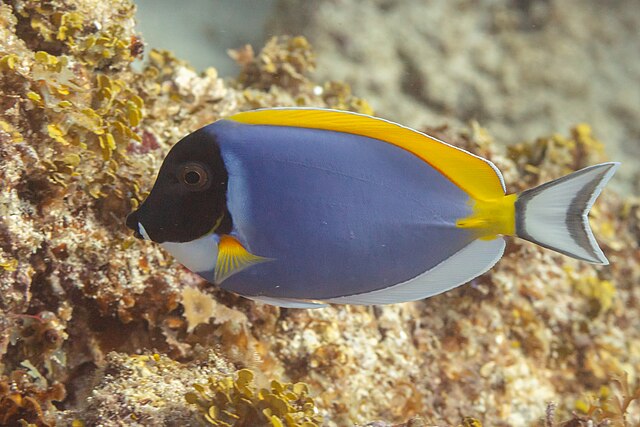
 © Diego Delso / CC BY-SA 4.0
Powder Blue Tang
The Powder Blue Tang is a striking surgeonfish from the Indian Ocean, known for its pale blue body, contrasting black face, and vivid yellow dorsal fin. Its sleek shape and bold coloring make it a standout centerpiece in a marine aquarium. Adults reach 18-23cm and typically live 5-10 years. It tends to do best alone or in a single pair rather than in groups, and its active swimming style brings constant motion to the tank. That said, this species is prone to ich and sensitive to shifts in water quality, so it's generally recommended for experienced aquarists who can maintain stable conditions. It readily accepts algae, seaweed, and prepared foods once settled in.
View Powder Blue Tang encyclopedia →0% commission on your first sales!Register by September 30, 2026 and your first 2 sales are commission-free!
Breeder Wanted!
List on BreederDirect and sell directly to customers nationwide!
BreederDirect's 6 Transparency Promises
Every Marine Fish listing shows Breeder's full disclosure. No wild-caught. Captive-bred priority, tank size guidance, temperament details—transparent aquaculture.
- Captive-bred
- WYSIWYG
- Reef-safe
- Care Info Included
- Origin Disclosed
- Temperament Listed
Browse all 175 breeds
Care Difficulty
Reef-safe
Temperament
No listings match your filters
Adjust your filters, or get notified when new listings arrive.
Getting alerts is free with a member account. When new listings match your saved search, we'll notify you by email and in-app.
Browse other categories
Verified breeders (preview)
Are you raising marine fish?
Register as a breeder and connect with buyers directly.
Apply as a breederAbout Powder Blue Tang
A popular Indian Ocean tang with pale blue coloring and a black face. Best suited to experienced keepers due to ich sensitivity. Grows to 18-23cm and lives 5-10 years.
7 things to know before welcoming a Powder Blue Tang
1Best for Experienced Keepers
The Powder Blue Tang is considered a challenging species, not ideal for first-time saltwater keepers. It reacts sensitively to sudden shifts in water quality or temperature, so a stable maintenance routine should be in place before bringing one home.
2Watch for Ich
This species is known for its susceptibility to ich (a common parasitic infection). Maintaining stable water quality and observing a proper quarantine period are key to keeping it healthy.
3Needs Room to Swim
Adults grow to 18-23cm and are naturally active swimmers. Provide plenty of open swimming space along with rockwork that offers places to retreat and rest.
4Best Kept Alone or in Pairs
Individuals of this species tend to be territorial toward one another, so keeping it alone or in a compatible pair generally works best. Tankmate selection should also be considered carefully.
5A Diet Centered on Algae
In the wild, this tang feeds mainly on algae and seaweed. In captivity, a balanced diet combining seaweed and prepared foods is recommended, with an emphasis on plant-based options.
6A Long-Term Companion
With a lifespan of around 5-10 years, this tang can be a long-term companion in your aquarium. When bringing one home, plan ahead for tank size and ongoing care over the years to come.
7Prepare the Tank in Advance
Since this species can be sensitive, it's best introduced only after the tank is fully cycled and water parameters are stable. Avoid abrupt environmental changes and allow ample time for acclimation.
Frequently asked questions about Powder Blue Tang
- Q.Can beginners keep this fish?
- A.The Powder Blue Tang is generally considered suitable for experienced keepers. It's prone to ich and sensitive to water quality changes, so it's best to gain some saltwater aquarium experience first.
- Q.Can it be kept with other fish?
- A.Individuals of this species tend to be territorial toward each other, so keeping it alone or in a pair is generally recommended. If housing it with other fish, choose tankmates carefully based on compatibility.
- Q.How large does it grow?
- A.Adults typically grow to about 18-23cm. It's important to provide a tank with enough open space for it to swim comfortably.
- Q.What should I feed it?
- A.In the wild it feeds mainly on algae and seaweed, so a diet centered on seaweed combined with prepared foods works well in captivity. It's reassuring to keep plenty of plant-based food on hand.
- Q.Is it subject to any legal restrictions?
- A.The Powder Blue Tang is not listed under CITES.
Useful tools for Powder Blue Tang care
Learn more about Powder Blue Tang in the encyclopedia
View Powder Blue Tang encyclopedia entry →
Care difficulty, lifespan, size and diet — all basics covered.
Powder Blue Tang related articles
See more Powder Blue Tang articles →More in this category
Can't find the one you're looking for?
Post your wishes for free and breeders with matching animals will contact you with introductions.