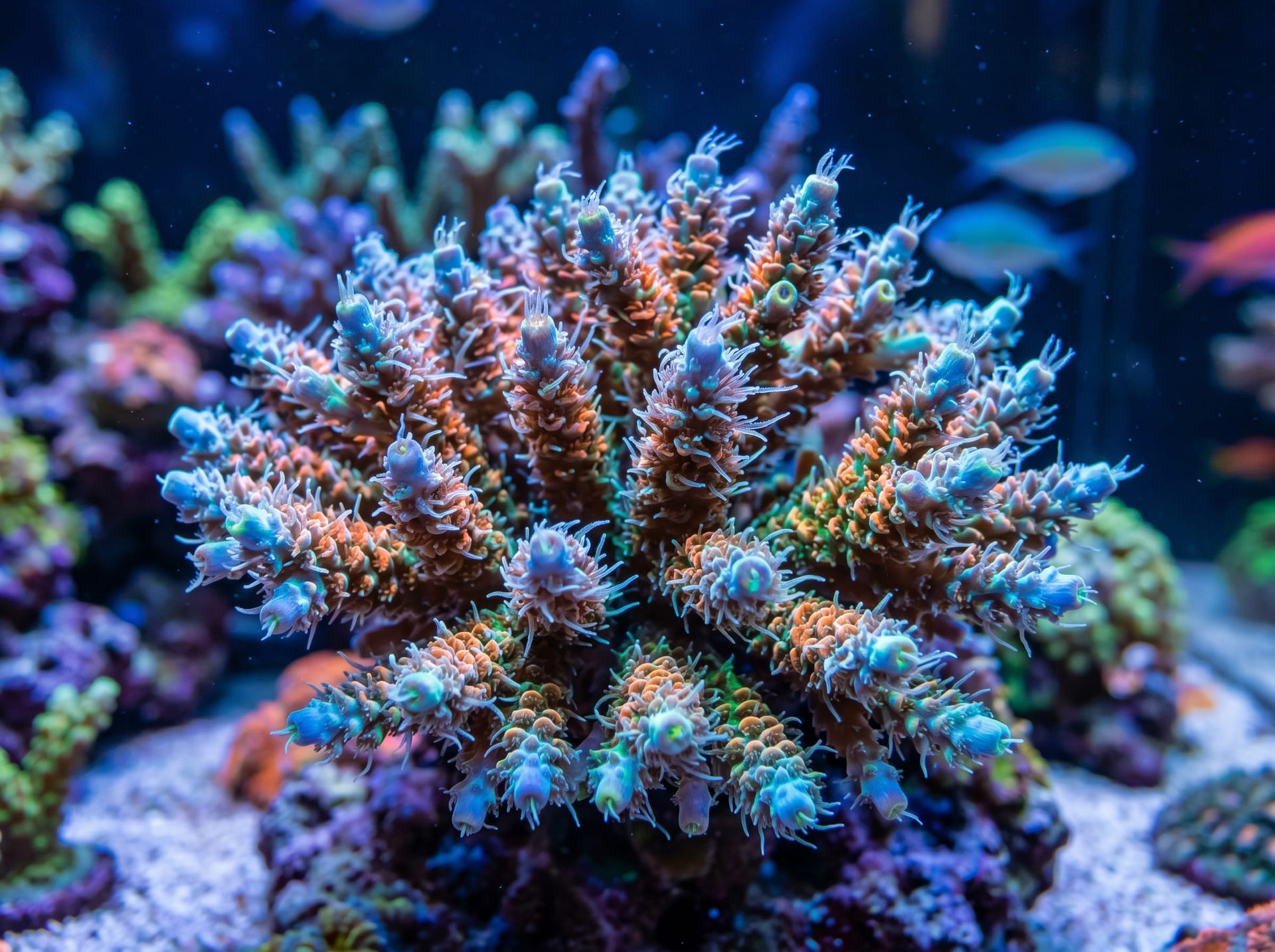
SPS (Acropora etc.)
SPS (Small Polyp Stony corals such as Acropora) are advanced reef-keeping corals prized for their delicate branching or table-like skeletons and vibrant fluorescent colors. They demand intense lighting and ultra-stable water parameters, but rewarding dedicated hobbyists with a breathtaking, world-class reef display.
0% commission on your first sales!Register by September 30, 2026 and your first 2 sales are commission-free!
Breeder Wanted!
List on BreederDirect and sell directly to customers nationwide!
BreederDirect's 6 Transparency Promises
Every Marine Fish & Coral listing shows Breeder's full disclosure. No wild-caught. Captive-bred priority, tank size guidance, temperament details—transparent aquaculture.
- Captive-bred
- WYSIWYG
- Reef-safe
- Care Info Included
- Origin Disclosed
- Temperament Listed
Browse all 42 breeds
Care Difficulty
Reef-safe
Temperament
No listings match your filters
Adjust your filters, or get notified when new listings arrive.
Getting alerts is free with a member account. When new listings match your saved search, we'll notify you by email and in-app.
Browse other categories
Verified breeders (preview)
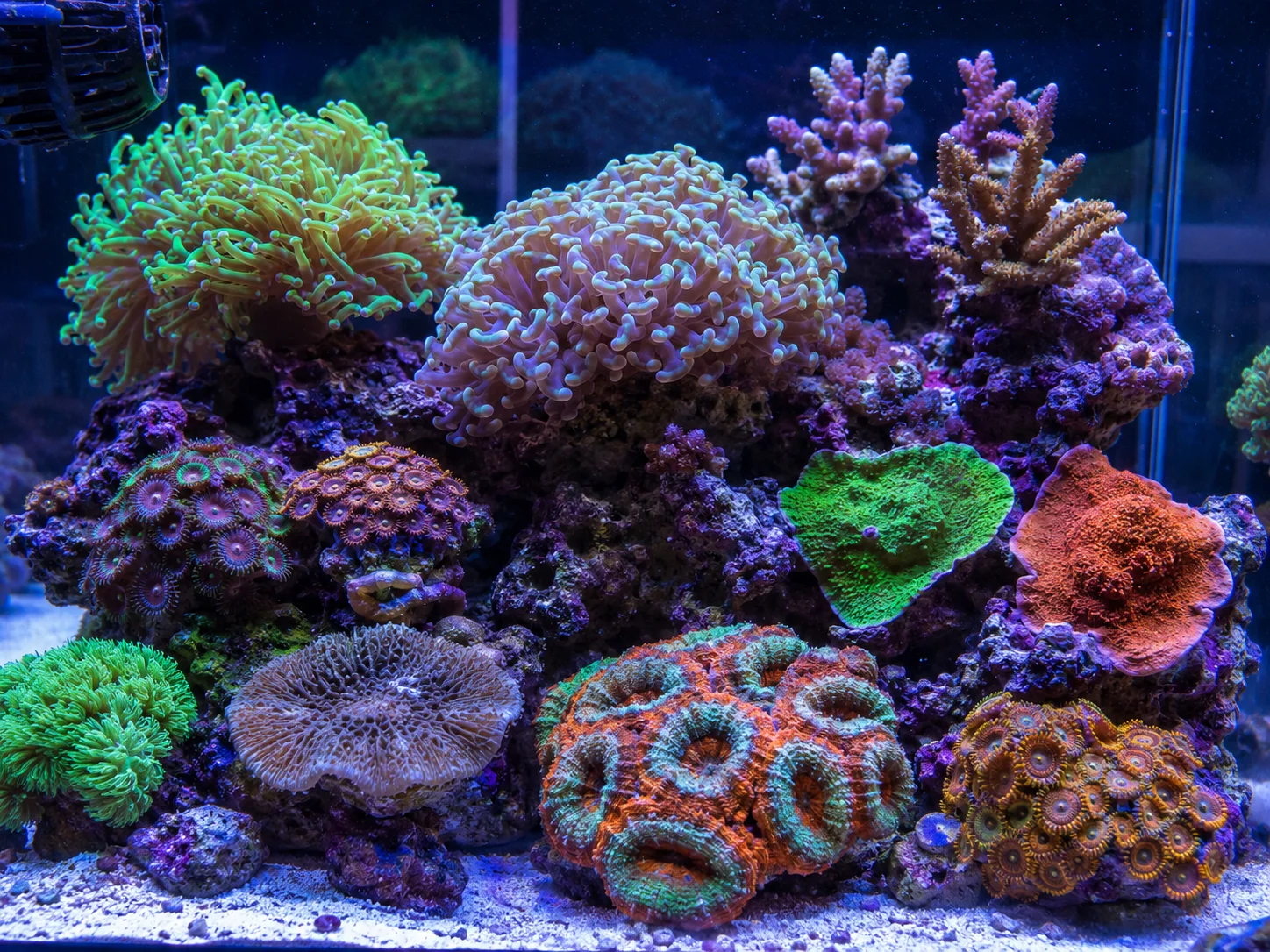
Are you raising marine fish & coral?
Register as a breeder and connect with buyers directly.
Apply as a breederAbout SPS (Acropora etc.)
SPS, or Small Polyp Stony corals, is a collective term for hard corals with tiny polyps, with Acropora being the most iconic genus. They are found across shallow tropical and subtropical reefs and are celebrated for the remarkable diversity of their skeletal architectures—branching, tabletop, plating, and encrusting forms among them. Their most striking visual feature is the intense fluorescent coloration—electric blues, vivid greens, deep purples, and fiery oranges—that glows brilliantly under actinic and UV lighting. Because individual specimens vary dramatically in color expression, a collector culture has grown around sourcing rare and unusual morphs. In the aquarium, SPS demand powerful lighting, ultra-low nutrient levels, and unwavering calcium and alkalinity stability; they are among the most parameter-sensitive organisms kept in the hobby. The reward, however, is tangible monthly growth and the eventual development of sweeping colonies that transform a reef tank into a breathtaking living sculpture. For dedicated reef keepers, mastering SPS represents the pinnacle of the craft.
7 things to know before welcoming a SPS (Acropora etc.)
1Intense Light Required
SPS corals rely heavily on zooxanthellae for energy and require high-intensity, reef-spectrum lighting — typically powerful LEDs. Insufficient light quickly leads to bleaching, making a quality reef-grade fixture a non-negotiable investment.
2Water Stability Is Critical
Calcium (~420 ppm), alkalinity (8–9 dKH), and magnesium (~1350 ppm) must remain consistently stable. Sudden swings cause polyp retraction; prolonged imbalances lead to bleaching and death.
3Ultralow Nutrients Needed
Elevated nitrates and phosphates cause zooxanthellae overgrowth, dulling coloration. Target nitrates below 5 ppm and phosphates below 0.05 ppm, typically maintained with a protein skimmer, activated carbon, and phosphate media.
4Strong Flow Is Essential
Detritus accumulation in branches triggers STN (slow tissue necrosis), so turbulent, multi-directional flow is essential. Multiple wavemakers placed to eliminate dead spots are strongly recommended.
5Act Fast on Bleaching/STN
STN/RTN (slow/rapid tissue necrosis) can spread from tip or base and kill a colony within days. Promptly frag affected areas, isolate them, and immediately re-evaluate water chemistry, flow, and lighting.
6High Setup and Running Costs
High-end lights, protein skimmers, wavemakers, and a calcium reactor or two-part dosing system can amount to hundreds of thousands of yen. Electricity costs are also significant — calculate monthly running costs before starting.
7Check Coral Compatibility
LPS and soft corals can release allelopathic compounds harmful to SPS. Aggressive LPS like Galaxea also have long sweeper tentacles — ensure adequate spacing between corals to prevent chemical and physical damage.
Frequently asked questions about SPS (Acropora etc.)
- Q.What is the difference between SPS and LPS corals?
- A.SPS refers to hard corals with small polyps and dense calcium carbonate skeletons (e.g., Acropora, Montipora), while LPS describes hard corals with large, fleshy polyps (e.g., Torch, Hammer corals). SPS are generally more sensitive to water quality changes and are considered harder to keep.
- Q.What tank size is recommended for SPS?
- A.A minimum tank size of 90–120 cm (200 L or more) is generally recommended. Larger water volumes buffer against sudden parameter swings and make stability easier to maintain. Smaller tanks are possible but significantly increase the difficulty of keeping parameters stable.
- Q.Can a bleached SPS coral recover?
- A.If caught early, bleached SPS can recover once water quality is corrected and light intensity is temporarily reduced, allowing zooxanthellae to re-colonize the tissue. However, if rapid or slow tissue necrosis (RTN/STN) has spread to expose bare skeleton, recovery is unlikely and fragging the remaining healthy tissue is often the best response.
- Q.Can SPS be kept with other corals and fish?
- A.LPS and soft corals can sting SPS with sweeper tentacles, causing necrosis, so adequate spacing between colonies is essential. Choose fish that do not nip at coral (e.g., gobies, clownfish) and avoid species known to bite skeletal tips or polyps.
Useful tools for SPS (Acropora etc.) care
SPS (Acropora etc.) related articles
Introduction to Mushroom Corals and LPS | Stepping Up from Soft Corals
An explanation of the characteristics, difficulty level, and management methods of mushroom corals and LPS as the ideal next step after soft corals. Selection criteria for species to choose as an intermediate step before beginners progress to SPS, and equipment requirements.
Complete Guide to Enhancing Hard (SPS) Coral Colors | Achieving Vibrant Hues Through Lighting, Feeding, and Water Quality Parameters
A detailed guide to illumination, nutritional supplementation, and water quality management for bringing out the vibrant colors of hard (SPS) corals, especially Acropora. Covers the mechanisms of pigment expression, the role of nutritional components, and a step-by-step color enhancement process with practical guidance.
Turbinaria (Cup Coral) Care Guide | Your First SPS Coral - Water Quality, Lighting & Placement
A comprehensive guide to raising Turbinaria (cup coral). Perfect for beginners, this guide covers essential water parameters, optimal PAR values and lighting spectra, water flow design, placement tips, feeding methods, and fragmentation procedures for easy-to-grow SPS corals.
Complete Guide to Water Flow Design for Acropora (SPS) Tanks: Wave Pump Selection, Placement & Flow Rate Optimization
A comprehensive guide to water flow design essential for long-term maintenance of Acropora (SPS). From wave pump selection and placement strategies to eliminating dead spots and optimal flow rates (20–50× per hour), this practical guide covers all aspects of SPS tank water circulation management, including flow controller settings.
Coral Tank PAR·PPFD Measurement and Light Spectrum Optimization Guide | Species-Specific LED Adjustment and Breeding Promotion
Practical protocol for PAR·PPFD measurement using quantum sensors, spectrum optimization for SPS·LPS·NPS categories, LED multi-channel adjustment procedures, photoperiod scheduling for breeding induction, and detailed explanation of continuous measurement data monitoring methods.
Advanced Acropora Color Enhancement Guide | Achieving Vibrant SPS Tanks Through Light, Water Flow, and Nutrient Optimization
An advanced guide to bringing out vibrant colors in acropora. This guide explains the mechanisms of zooxanthellae and chromoproteins, PAR values, spectrum, photoperiod settings, turbulent water flow configuration, optimal ranges for nitrates and phosphates, and calcium reactor operation.
More in this category
Can't find the one you're looking for?
Post your wishes for free and breeders with matching animals will contact you with introductions.