Complete Guide to Water Flow Design for Acropora (SPS) Tanks: Wave Pump Selection, Placement & Flow Rate Optimization
A comprehensive guide to water flow design essential for long-term maintenance of Acropora (SPS). From wave pump selection and placement strategies to eliminating dead spots and optimal flow rates (20–50× per hour), this practical guide covers all aspects of SPS tank water circulation management, including flow controller settings.
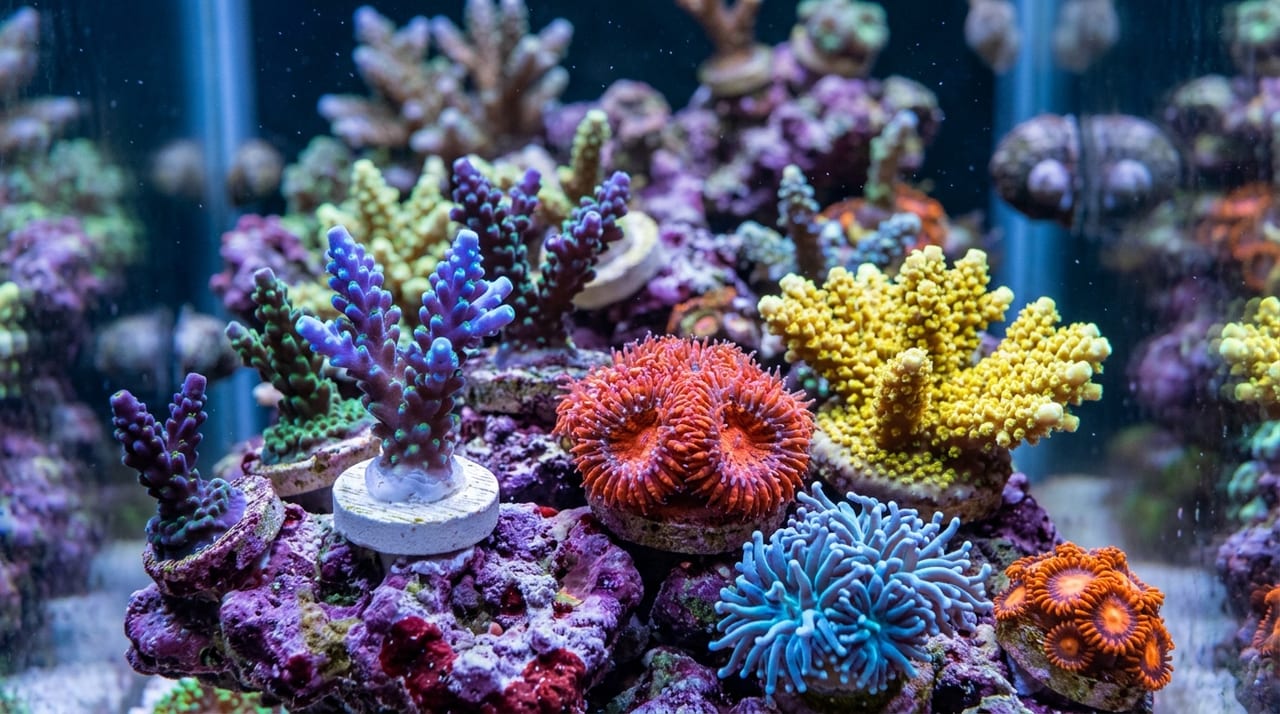
Key Takeaways
A comprehensive guide to water flow design essential for long-term maintenance of Acropora (SPS). From wave pump selection and placement strategies to eliminating dead spots and optimal flow rates (20–50× per hour), this practical guide covers all aspects of SPS tank water circulation management, including flow controller settings.
Related Species
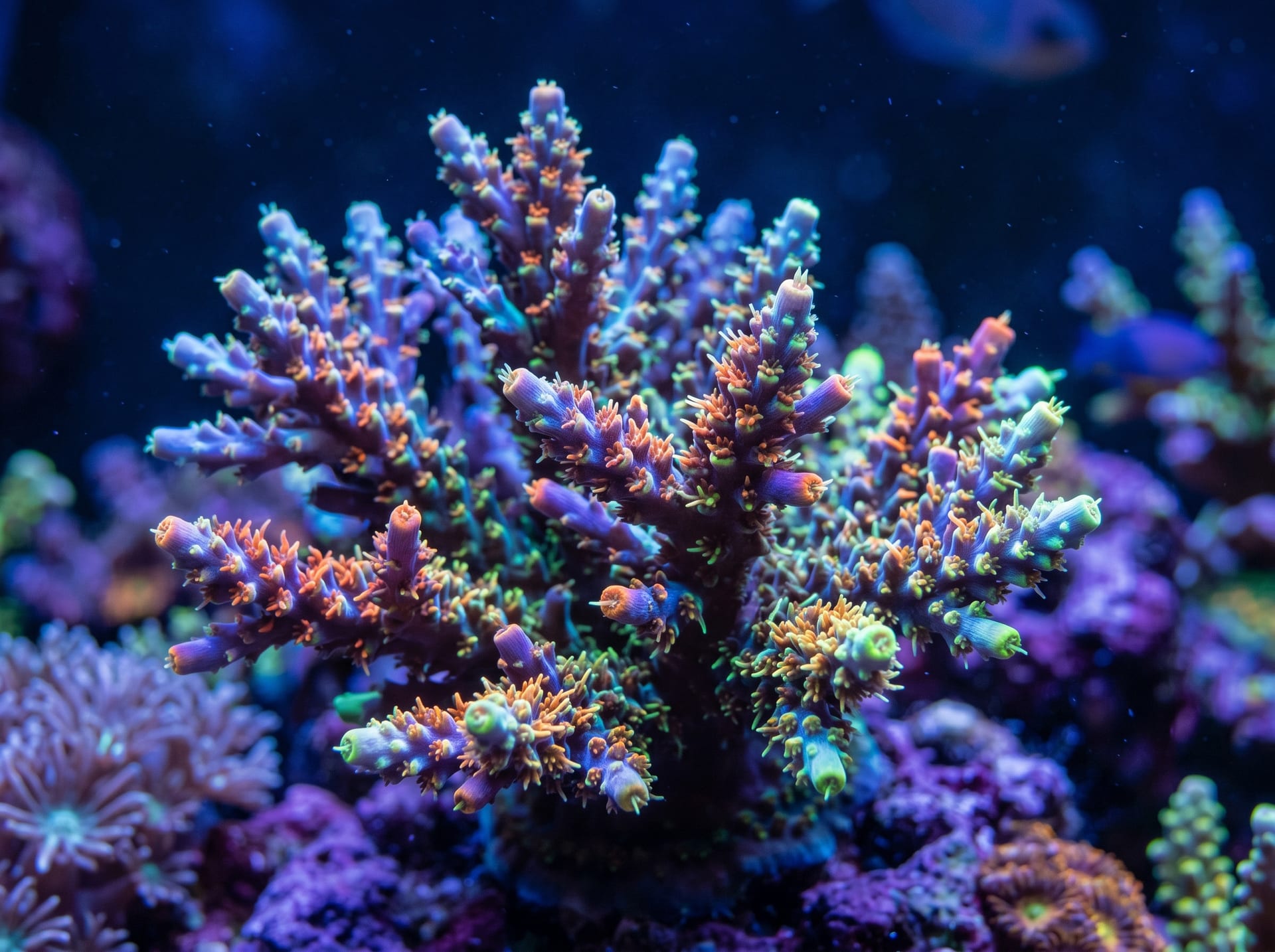
Water Flow Optimal for Acropora
Acropora (genus Acropora, commonly called SPS) inhabit shallow reefs in wave-exposed coral ecosystems in the wild. Water flow is not merely a means of oxygen supply—it directly impacts waste removal, feeding efficiency, and skeletal formation, making it a lifeline for the colony.
Insufficient flow causes mucus and detritus accumulation around polyps, dramatically increasing the risk of tissue necrosis (RTN/STN). Conversely, excessive flow causes polyps to remain perpetually contracted, leading to exhaustion, bleaching, and polyp loss. Acropora require turbulent flow with sustained velocity.
Flow Rate Guidelines
| Tank Size | Recommended Total Flow (per hour) |
|---|---|
| 60cm (~60L) | 1,200–3,000 L/h |
| 90cm (~200L) | 4,000–10,000 L/h |
| 120cm (~400L) | 8,000–20,000 L/h |
A general guideline is 20–50× tank volume per hour, but for Acropora-focused tanks, aiming for 30–50× is ideal.
Wave Pump Selection
Types and Characteristics
Propeller Type (Recommended) Examples: Maxspect Gyre, Jebao SLW, MP10/40 (EcoTech). These produce turbulent flow across a wide area and are optimal for Acropora. They generate minimal linear directional flow and are less likely to create dead spots.
Impeller Type (Supplementary) Examples: Tunze Turbelle, Koralia series. These excel at producing strong directional flow and work effectively as supplementary pumps.
Water Tumbler Type Designed to gently rock the entire tank, but often insufficient in large tanks as a standalone solution.
Selection Criteria
- Prioritize flow distribution over raw flow rate: Propeller-type pumps distribute flow more evenly across the tank face, even with identical maximum flow specifications.
- Ensure controller compatibility: Models with app control (EcoSmart Live by EcoTech, Gyruss by Maxspect) allow convenient night-mode and wave-simulation settings.
- Noise level: Since these operate continuously, impeller noise is critical. Ease of disassembly for cleaning matters significantly.
Water Flow Placement Design
Basic Principle: Opposing Placement
The simplest and most effective approach is to face pumps toward opposite walls of the tank.
Setting pumps A and B to alternate operation (pulse mode) creates natural turbulent flow that reaches Acropora polyps from all directions.
Eliminating Dead Spots
Dead spots (areas with insufficient flow) are detrimental to Acropora health. Watch for these locations:
- Behind and beneath live rock: Periodically brush the area clean, or angle the pump downward to create bottom-level flow.
- Tank corners: Install supplementary nano pumps, or arrange main pumps diagonally.
- Beneath frag racks: Replace solid frag racks with lattice-style ones that allow water to flow through.
Height-Based Placement Strategy
| Height | Recommended Action |
|---|---|
| Near Surface | Utilize protein skimmer flow. Surface agitation enhances gas exchange. |
| Mid-Water | Install primary wave pump at this height, adjusted to match coral placement. |
| Bottom | Use supplementary pumps to prevent bed and sump disturbance. |
Flow Controller Settings
Effects by Mode
Pulse Mode (Recommended) Pumps alternate ON/OFF at set intervals, creating wave-like turbulent flow that maximizes nutrient delivery to polyps. Cycles typically range from 2–10 seconds.
Night Mode Corals need rest at night, so flow is reduced to 30–50%. EcoTech MP40's night mode reportedly increases polyp extension time.
Feeding Mode Temporarily reduces flow during feeding. Plankton and solid foods reach corals more effectively. Typically set for 10–15 minutes.
Example Schedule
- 00:00–08:00 Night Mode (40%)
- 08:00–18:00 Pulse Mode (80–100%)
- 18:00–19:00 Feeding Mode (20%)
- 19:00–24:00 Pulse Mode (80–100%)
Fine-Tuning Flow Based on Acropora Response
Final adjustments are made by observing Acropora polyp extension.
Signs of Optimal Conditions
- Polyps extend fully in all directions (2–5mm)
- Skeletal color is vibrant, extending to the base
- Polyps sway gently in response to flow
Signs of Insufficient Flow
- Visible mucus and detritus around polyps
- Lower skeleton begins to bleach white
- Fish actively nip at corals (consuming excess detritus)
Signs of Excessive Flow
- Polyps remain constantly retracted
- Physical abrasion or breakage of coral tips
- Skeletal bleaching begins to occur
Common Water Flow Issues and Solutions
Impeller Clogged with Algae and Debris
Disassemble and clean the pump every two weeks. Cleaning around the impeller exterior with a magnetic algae scraper is also effective. Budget-friendly pumps like Maxijet are prone to this issue—keep spares on hand.
Pump Vibration Noise
Most commonly caused by contact with tank walls. Replacing rubber pads on magnetic mounts with new ones, or inserting thin silicone sheets, provides substantial improvement.
Uneven Flow Distribution
As live rock and corals shift over weeks, the original flow pattern changes. Review the tank's overall flow distribution every three months. Introducing a small amount of food coloring to visualize flow patterns is an effective technique.
Summary: Acropora Tank Water Flow Design Checklist
- Total flow rate: Maintain 30–50× tank volume per hour
- Wave pump: Primary reliance on propeller type
- Placement: Opposing configuration with corner supplementary pumps
- Dead spots: Check behind live rock and tank bottom
- Controller: Configure pulse mode and night mode
- Observation: Regularly fine-tune based on polyp extension
Water flow design is not a one-time task. Continuous optimization as corals grow is the key to long-term success.