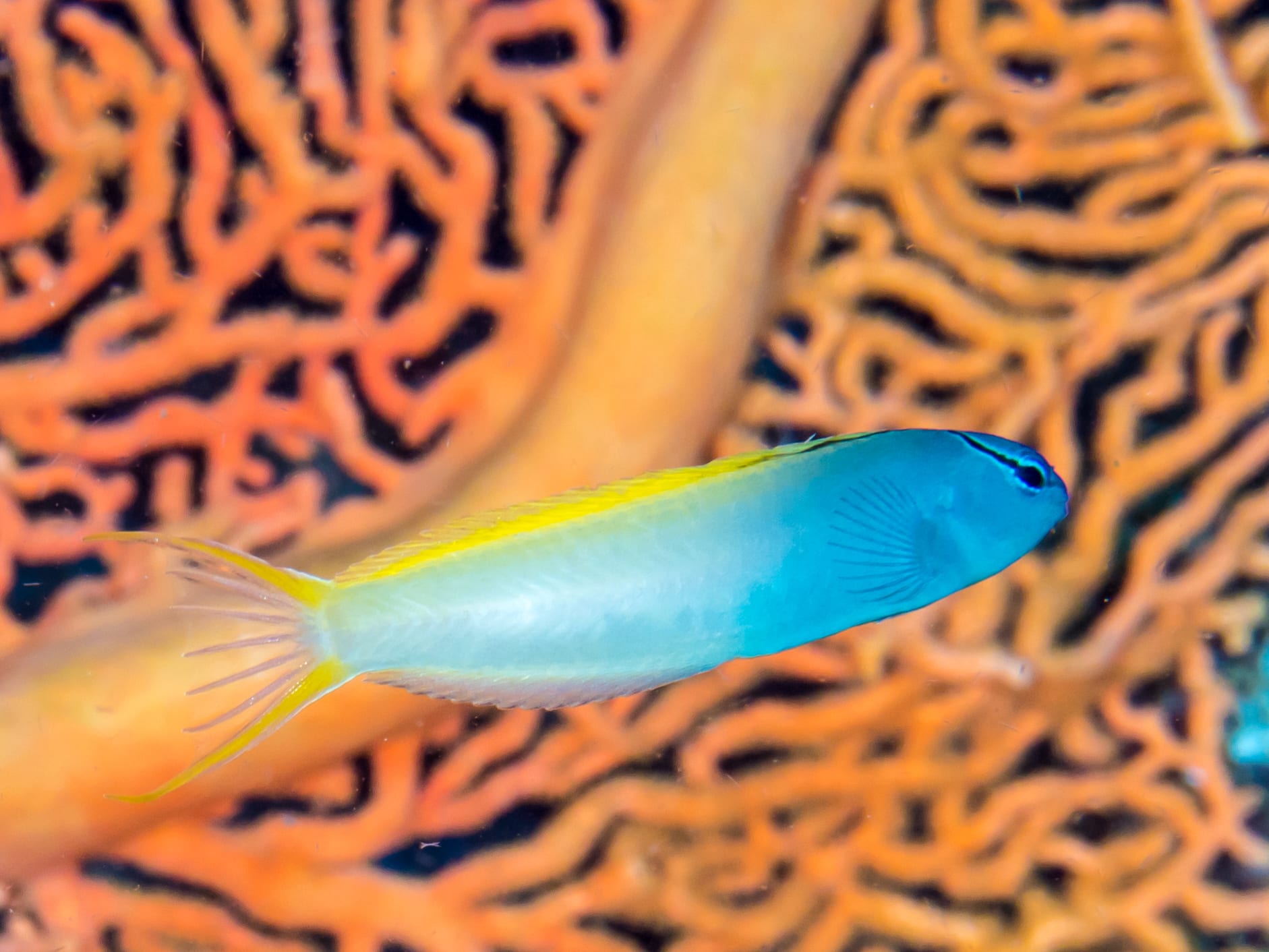
 © Rickard Zerpe / CC BY 2.0
Forktail Blenny
The Forktail Blenny is a striking reef fish whose body blends from pale blue at the front to yellow toward the tail, like a watercolor wash, finished off with a distinctive forked tail fin and a blue-edged black line running diagonally through the eye. Thanks to venomous fangs used for self-defense, it's rarely bothered by other fish and tends to hold its own even when kept alone. It loves darting among rock and live rock crevices, adding lively, colorful movement to a reef tank. While it calls for some intermediate-level husbandry knowledge, that makes it a rewarding species for aquarists looking to build their experience.
View Forktail Blenny encyclopedia →0% commission on your first sales!Register by September 30, 2026 and your first 2 sales are commission-free!
Breeder Wanted!
List on BreederDirect and sell directly to customers nationwide!
BreederDirect's 6 Transparency Promises
Every Marine Fish listing shows Breeder's full disclosure. No wild-caught. Captive-bred priority, tank size guidance, temperament details—transparent aquaculture.
- Captive-bred
- WYSIWYG
- Reef-safe
- Care Info Included
- Origin Disclosed
- Temperament Listed
Browse all 175 breeds
Care Difficulty
Reef-safe
Temperament
No listings match your filters
Adjust your filters, or get notified when new listings arrive.
Getting alerts is free with a member account. When new listings match your saved search, we'll notify you by email and in-app.
Browse other categories
Verified breeders (preview)

Are you raising marine fish?
Register as a breeder and connect with buyers directly.
Apply as a breederAbout Forktail Blenny
Forktail Blenny: a reef-friendly fish with a blue-to-yellow gradient body and forked tail, protected by venomous fangs. Care level, size, and traits explained.
7 things to know before welcoming a Forktail Blenny
1Provide Plenty of Hiding Spots
This fish favors gaps in rockwork and live rock, and having places to retreat to helps it settle in. Build a layout with complex rock structures that offer multiple hiding spots.
2Be Aware of Its Venomous Fangs
It carries venomous fangs for self-defense, which makes it less likely to be attacked by tankmates, but also means you should avoid handling it with bare hands. Take care when netting it as well.
3Best Kept Singly
Some individuals can be territorial, so keeping multiple specimens of the same or similarly shaped species together may lead to conflict. As a general rule, one per tank is the safest approach.
4Choose a Tank Sized for Its Adult Length
Adults can reach roughly 11 cm in length. Plan for a tank size that offers both swimming space and room for rockwork before bringing one home.
5Acclimate It to Meaty Foods
It tends to prefer meaty, animal-based foods, so it's worth asking the seller how well it has been trained to accept prepared feeds — this makes feeding much smoother after you bring it home.
6Guard Against Jumping Through Gaps
Blennies can sometimes leap when startled, so sealing gaps around the tank lid and pipe openings will give you extra peace of mind.
7Suited to a Stable Reef Environment
It's considered a good fit for reef tanks, though it's rated as an intermediate-level fish to keep. Make sure water quality and temperature are stable before introducing it.
Frequently asked questions about Forktail Blenny
- Q.Can the Forktail Blenny be kept with other fish?
- A.Because it defends itself with venomous fangs, it's rarely targeted by other fish and is generally considered easy to mix with tankmates. That said, it may compete territorially with the same species or similarly shaped fish, so keeping multiples is best avoided.
- Q.Is it safe to keep in a reef tank with corals?
- A.It's generally regarded as reef-safe. While it isn't known for attacking corals directly, individual behavior can vary, so it's a good idea to observe the tank closely after introducing one.
- Q.How difficult is it to care for?
- A.It's classified as suitable for intermediate keepers. Having some prior aquarium experience helps with tasks like providing adequate hiding spots and managing feeding.
- Q.How large does it eventually grow?
- A.Adults grow to roughly 11 cm at most. Use this as a guide when planning your tank size and layout.
- Q.Is it subject to any regulations?
- A.This species is not subject to CITES.
Useful tools for Forktail Blenny care
Learn more about Forktail Blenny in the encyclopedia
View Forktail Blenny encyclopedia entry →
Care difficulty, lifespan, size and diet — all basics covered.
More in this category
Can't find the one you're looking for?
Post your wishes for free and breeders with matching animals will contact you with introductions.