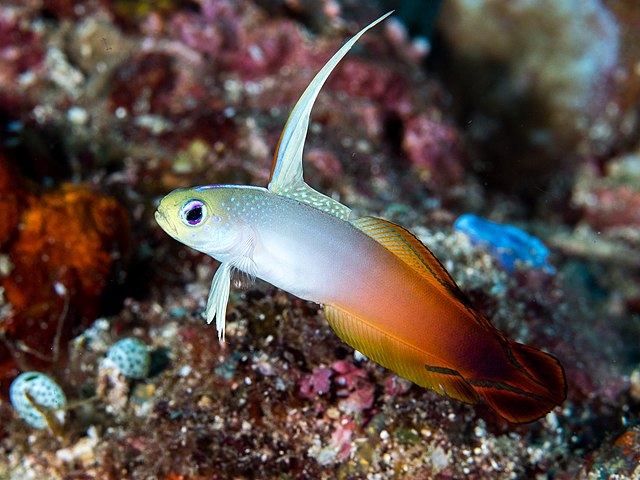
 © Rickard Zerpe / CC BY 2.0
Firefish
The Firefish gets its name from the tall, flag-like first dorsal fin it flicks above a body that shades from white to a warm orange-red. It's a shy fish, quick to dart into a burrow at any sudden movement or loud noise, but pairs tend to settle in over time, spending more of their day hovering just outside their hideaway. Because it leaves corals and tankmates alone, it fits naturally into a reef tank, and its beginner-friendly reputation makes it a great choice for anyone starting out in the marine hobby.
View Firefish encyclopedia →0% commission on your first sales!Register by September 30, 2026 and your first 2 sales are commission-free!
Breeder Wanted!
List on BreederDirect and sell directly to customers nationwide!
BreederDirect's 6 Transparency Promises
Every Marine Fish listing shows Breeder's full disclosure. No wild-caught. Captive-bred priority, tank size guidance, temperament details—transparent aquaculture.
- Captive-bred
- WYSIWYG
- Reef-safe
- Care Info Included
- Origin Disclosed
- Temperament Listed
Browse all 175 breeds
Care Difficulty
Reef-safe
Temperament
No listings match your filters
Adjust your filters, or get notified when new listings arrive.
Getting alerts is free with a member account. When new listings match your saved search, we'll notify you by email and in-app.
Browse other categories
Verified breeders (preview)
Are you raising marine fish?
Register as a breeder and connect with buyers directly.
Apply as a breederAbout Firefish
Firefish goby with a striking white-to-orange gradient and a flag-like dorsal fin. Calm in pairs, reef-safe, and well suited to beginner marine aquariums.
7 things to know before welcoming a Firefish
1Escape-Proof Lid Is a Must
Firefish are famous jumpers and will bolt straight out of the tank when startled. Make sure the lid or cover glass has no gaps, since a sudden noise or nighttime scare is often enough to send one flying.
2Provide a Hiding Spot
Rockwork or live rock with a burrow-like crevice gives it somewhere to retreat when it feels threatened. Without a safe hideout, it tends to stay tense, which can affect its appetite and coloring.
3Best Kept in Pairs
Keeping two together tends to calm them down more than housing one alone, and they spend more time out in the open as a result. Firefish are known to be able to change sex, so introducing two at once is a reliable way to end up with a settled pair.
4Avoid Aggressive Tankmates
Their calm, timid nature means fast or aggressive tankmates can push them into hiding and keep them from eating enough. Choosing peaceful neighbors helps them stay visible and well-fed.
5Feed Meaty Foods
In the wild they feed mainly on zooplankton, so pairing prepared foods with frozen brine shrimp or similar meaty foods helps keep their appetite steady in the aquarium. Offering small amounts several times a day works better than one large feeding.
6Sensitive to Water Changes
They're sensitive to sudden shifts in water quality or temperature and can decline quickly if conditions swing. Take extra care with a slow acclimation and keep water parameters stable day to day.
7Give It a Quiet Start
Firefish are especially skittish right after being introduced to a new tank. Keep lighting and disturbances low for a while and let it settle in on its own rather than searching it out or trying to interact right away.
Frequently asked questions about Firefish
- Q.Is the Firefish suitable for beginners?
- A.Yes, it's generally considered beginner-friendly once you understand its habits. The main thing to watch for is its tendency to jump when startled, so a secure lid is essential.
- Q.Can it be kept with other fish?
- A.It does fine alongside calm, peaceful tankmates, but fast or aggressive fish can push it into hiding and stress it out. Two Firefish of the same species may squabble over territory, so if you want more than one, introducing them as a pair works best.
- Q.Is it reef safe?
- A.Yes, it leaves corals and invertebrates alone, making it a good fit for a reef tank. Its calm swimming style also suits a rockscape aquascape well.
- Q.How big does it get?
- A.Adults reach around 6 to 8 cm. It stays small, so it doesn't need a particularly large tank.
- Q.How long does it live?
- A.In captivity it typically lives around 3 to 5 years. Stable water quality and consistent feeding play a big role in its long-term health.
Useful tools for Firefish care
Learn more about Firefish in the encyclopedia
View Firefish encyclopedia entry →
Care difficulty, lifespan, size and diet — all basics covered.
Firefish related articles
Complete Care Guide for Firefish Goby | Tank, Food, Compatibility, and Escape Prevention
Comprehensive beginner's guide to caring for Firefish Goby. Covers tank size, water quality, tank mate compatibility, feeding methods, and escape prevention strategies—everything you need to keep these beautiful gobies thriving long-term.
10 Beginner-Friendly Saltwater Fish | Hardy and Easy-to-Keep Starter Species
Introducing hardy starter species recommended for those starting saltwater fish keeping. We explain ranking-format easy-to-keep saltwater fish that are resistant to water quality changes, including Ocellaris Clownfish, Blue Damselfish, and Firefish.
More in this category
Can't find the one you're looking for?
Post your wishes for free and breeders with matching animals will contact you with introductions.