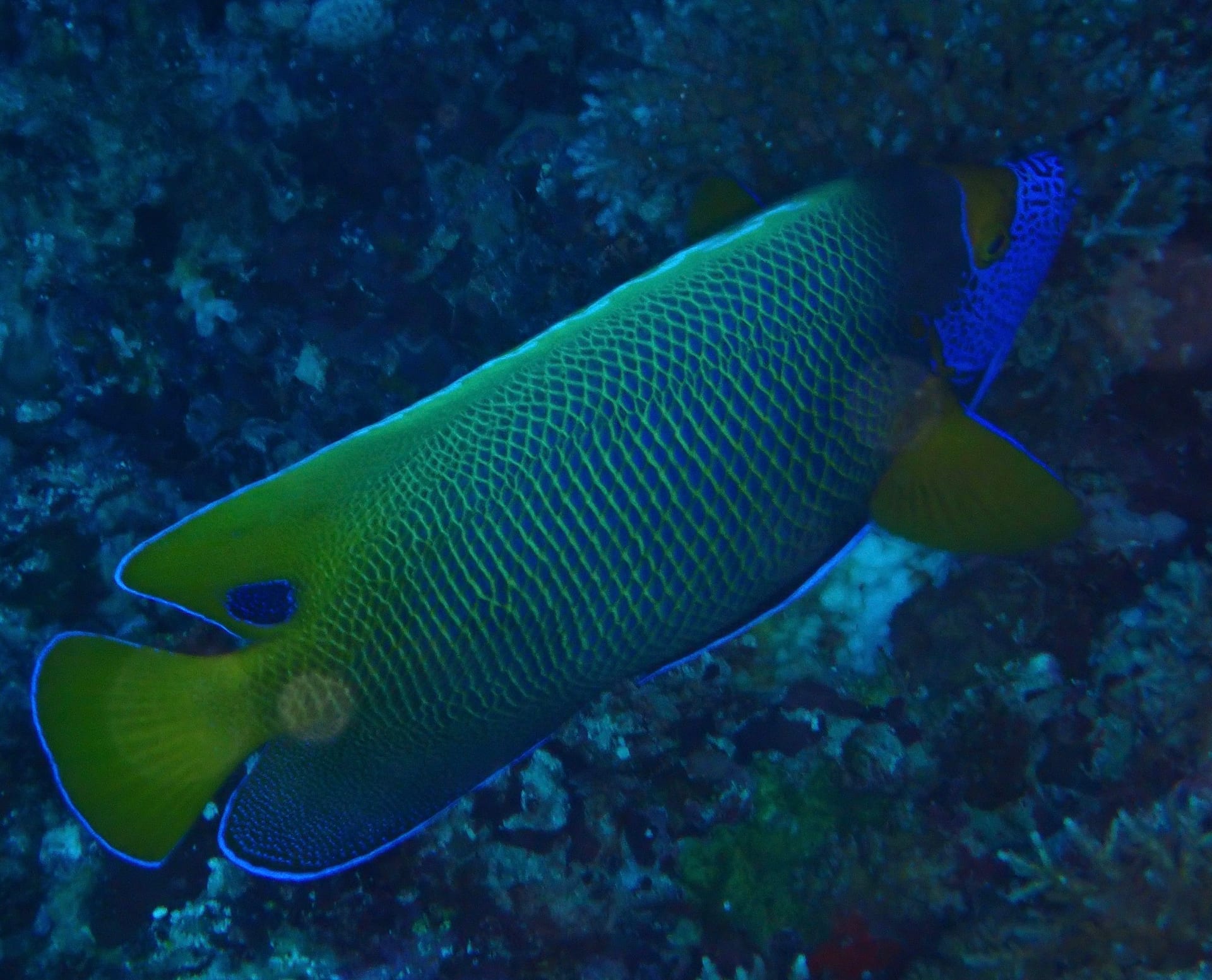
 © Jean-Paul Boerekamps / CC0 1.0
Blueface Angelfish
The Blueface Angelfish undergoes one of the most dramatic transformations in the reef aquarium hobby — juveniles display bold black bodies with white and blue stripes, while adults develop a striking blue mesh pattern across the face topped with a bright yellow mask. Growing to roughly 38cm at full size, it is considered one of the most beautiful large angelfish species once mature. This fish is best suited to intermediate-level aquarists. Individuals under 20cm tend to adapt more readily to a new tank environment, making them a popular choice for hobbyists looking to take on their first large angelfish.
View Blueface Angelfish encyclopedia →0% commission on your first sales!Register by September 30, 2026 and your first 2 sales are commission-free!
Breeder Wanted!
List on BreederDirect and sell directly to customers nationwide!
BreederDirect's 6 Transparency Promises
Every Marine Fish listing shows Breeder's full disclosure. No wild-caught. Captive-bred priority, tank size guidance, temperament details—transparent aquaculture.
- Captive-bred
- WYSIWYG
- Reef-safe
- Care Info Included
- Origin Disclosed
- Temperament Listed
Browse all 175 breeds
Care Difficulty
Reef-safe
Temperament
No listings match your filters
Adjust your filters, or get notified when new listings arrive.
Getting alerts is free with a member account. When new listings match your saved search, we'll notify you by email and in-app.
Browse other categories
Verified breeders (preview)
Are you raising marine fish?
Register as a breeder and connect with buyers directly.
Apply as a breederAbout Blueface Angelfish
Blueface Angelfish is a large marine fish whose coloration transforms dramatically from juvenile to adult, featuring a blue mesh-patterned face and yellow mask at maturity. Suited to intermediate keepers, it grows to about 38cm.
7 things to know before welcoming a Blueface Angelfish
1Plan for a Large Tank
Blueface Angelfish can grow to roughly 38cm at full size. Since it needs room to swim comfortably as it matures, plan ahead with a spacious tank rather than one sized only for a juvenile.
2Coloration Changes With Age
Juveniles show a black body with white and blue stripes, while the face gradually develops a blue mesh pattern and yellow mask as the fish matures. Watching this transformation unfold is one of the joys of keeping this species long-term.
3Territorial Behavior
Angelfish species tend to be territorial, and conflicts can arise with tankmates of similar shape or coloration. When adding tankmates, consider tank layout and introduction order carefully.
4Consider Smaller Individuals
Individuals under 20cm tend to adjust more readily to a new aquarium environment. Keeping this in mind when selecting a fish can make the settling-in period smoother.
5Omnivorous Feeding Habits
This species is omnivorous, feeding on algae and other attached matter in the wild. Getting it accustomed to prepared foods and offering a varied, balanced diet helps support long-term health.
6Watch for Ich Susceptibility
Angelfish are known to be prone to issues like white spot disease (ich). Keeping water quality and temperature stable, and observing the fish closely for changes in behavior or appearance, helps catch problems early.
7Caution With Coral Tanks
Large angelfish can sometimes nip at coral, so if you are considering a reef tank, it is worth researching compatibility beforehand. Planning the overall tankmate balance will help keep both fish and corals healthy.
Frequently asked questions about Blueface Angelfish
- Q.Can beginners keep a Blueface Angelfish?
- A.The Blueface Angelfish is considered suitable for intermediate-level aquarists. It's recommended to gain some basic marine fishkeeping experience before taking one on.
- Q.How different do juveniles and adults look?
- A.Juveniles have a black body with white and blue stripes, while adults develop a blue mesh pattern on the face along with a yellow mask. The appearance changes dramatically between life stages.
- Q.How large does it grow?
- A.It can reach roughly 38cm at maximum size, making it one of the larger angelfish species. Preparing a tank sized for its adult growth in advance is recommended.
- Q.Can it be kept with other fish?
- A.Angelfish tend to be territorial and may conflict with tankmates of similar shape. Careful attention to tank layout and fish combinations is needed when keeping it with others.
- Q.Is the Blueface Angelfish subject to CITES?
- A.The Blueface Angelfish is not subject to CITES. There are no special CITES-related considerations for this species.
Useful tools for Blueface Angelfish care
Learn more about Blueface Angelfish in the encyclopedia
View Blueface Angelfish encyclopedia entry →
Care difficulty, lifespan, size and diet — all basics covered.
More in this category
Can't find the one you're looking for?
Post your wishes for free and breeders with matching animals will contact you with introductions.