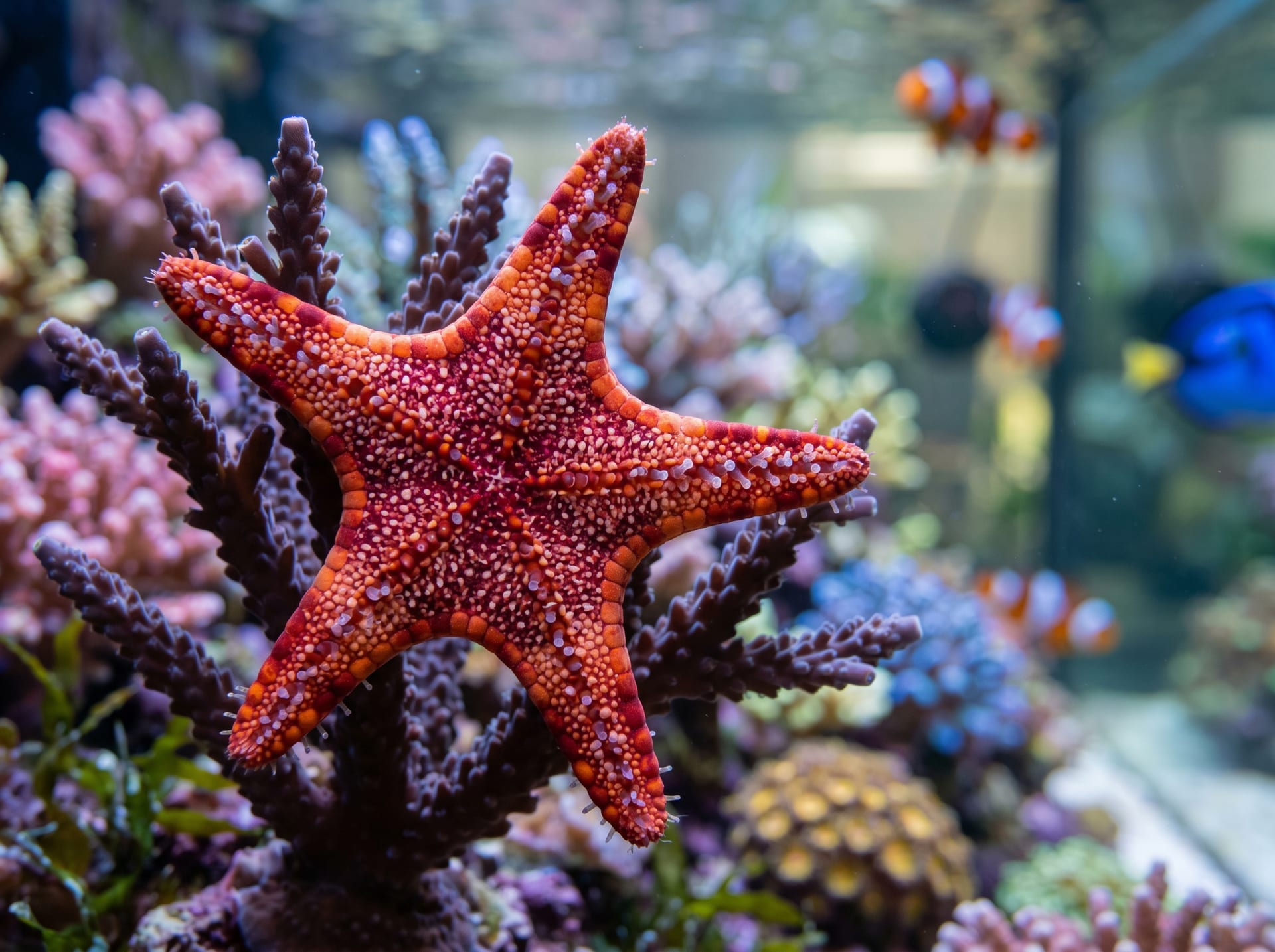
Nudibranch / Starfish / Sea Cucumber
Sea slugs, starfish, and sea cucumbers are fascinating invertebrates that add unique color and movement to marine aquariums. Their striking appearances and natural cleaning behaviors help maintain a healthy tank ecosystem. While water quality management can be challenging for beginners, proper preparation makes them rewarding long-term companions.
View Nudibranch / Starfish / Sea Cucumber encyclopedia →0% commission on your first sales!Register by September 30, 2026 and your first 2 sales are commission-free!
Breeder Wanted!
List on BreederDirect and sell directly to customers nationwide!
BreederDirect's 6 Transparency Promises
Every Marine Fish & Coral listing shows Breeder's full disclosure. No wild-caught. Captive-bred priority, tank size guidance, temperament details—transparent aquaculture.
- Captive-bred
- WYSIWYG
- Reef-safe
- Care Info Included
- Origin Disclosed
- Temperament Listed
Browse all 42 breeds
Care Difficulty
Reef-safe
Temperament
No listings match your filters
Adjust your filters, or get notified when new listings arrive.
Getting alerts is free with a member account. When new listings match your saved search, we'll notify you by email and in-app.
Browse other categories
Verified breeders (preview)
Are you raising marine fish & coral?
Register as a breeder and connect with buyers directly.
Apply as a breederAbout Nudibranch / Starfish / Sea Cucumber
Sea slugs, starfish, and sea cucumbers are marine invertebrates found in oceans worldwide. Sea slugs (nudibranchs) belong to the phylum Mollusca, and their vivid coloration evolved as a warning to predators. Starfish belong to the phylum Echinodermata and are renowned for their remarkable ability to regenerate lost limbs. Sea cucumbers share the same phylum and play a valuable role in reef ecosystems by consuming detritus around sandy substrates and live rock. In the aquarium, their unique textures and slow, deliberate movements add a natural depth that fish alone cannot provide. However, all three groups are highly sensitive to water quality deterioration and chemical exposure, making them better suited to experienced hobbyists with proper equipment. With adequate preparation and a well-maintained environment, they can thrive as captivating long-term residents of a marine tank.
7 things to know before welcoming a Nudibranch / Starfish / Sea Cucumber
1Water Quality is Critical
Sea slugs, starfish, and sea cucumbers are extremely sensitive to water quality changes. Elevated nitrates, phosphates, or sudden temperature swings can be fatal. Maintain a specific gravity of 1.023–1.025 and a stable temperature of 24–26°C, with regular water changes and a high-quality filtration system.
2Never Use Copper Treatments
These invertebrates are extremely vulnerable to copper ions and many common fish medications — even trace amounts can be lethal. Always use a separate quarantine tank when treating fish for disease. Verify that any additives and substrates used in the main tank are copper-free before introduction.
3Diet Varies by Species
Many sea slug species feed only on specific prey such as sponges, hydroids, or algae — purchasing without confirming diet often leads to starvation. Starfish range from omnivores to strict bivalve specialists, while sea cucumbers primarily eat detritus. Before buying, ensure appropriate food sources are available in your tank.
4Acclimate Slowly and Carefully
Drip acclimation over 1–2 hours or more is strongly recommended. Sudden changes in salinity, pH, or temperature can cause osmotic shock and death shortly after introduction. Sea cucumbers in particular may expel their internal organs when stressed, so gentle handling throughout the process is essential.
5Watch for Escape and Tipping Risks
Starfish can climb aquarium walls and escape through small gaps in the lid. Sea cucumbers are active at night and may become trapped between rocks, leading to injury or death. Use a secure-fitting lid and arrange your rockwork to minimize dangerous gaps where animals could become wedged.
6Choose Tankmates Carefully
Angelfish and butterflyfish may peck at starfish and sea slugs. Conversely, large sea cucumber species can release toxins (holothurin) that endanger all fish in the tank. Research compatibility between species thoroughly before making any introductions to your aquarium.
7Understand Upfront and Running Costs
Setting up a quality marine tank including a protein skimmer and live rock typically requires at least 30,000–50,000 yen. The animals themselves range from roughly 1,000–5,000 yen for sea slugs and 500–3,000 yen for starfish, but equipment costs are the larger investment. Factor in ongoing monthly expenses for electricity, salt mix, and additives.
Frequently asked questions about Nudibranch / Starfish / Sea Cucumber
- Q.Can beginners keep sea slugs?
- A.Most sea slug species have very specific dietary requirements and demand high water quality, making them challenging for beginners. It is generally advisable to start with more resilient species like sea cucumbers or certain starfish, and attempt sea slugs only once your tank is well-established and stable.
- Q.Why do my starfish keep dying quickly?
- A.The most common causes are osmotic shock from insufficient acclimation and deteriorating water quality — particularly elevated nitrates. Residual copper from previous treatments and stress from aggressive tankmates are also contributing factors. Thorough drip acclimation over 1–2 hours and regular water quality testing are essential preventive measures.
- Q.My sea cucumber expelled its organs. Is it okay?
- A.This is called evisceration — a defense mechanism unique to sea cucumbers, triggered by severe stress or poor water quality. While organs can sometimes regenerate over several weeks, the expelled material can significantly pollute the tank. Perform an immediate water change and identify and remove the source of stress as quickly as possible.
- Q.Can sea slugs and starfish be kept with fish?
- A.It depends on the species combination. Peaceful fish like tangs and clownfish generally coexist well with these invertebrates, but butterflyfish and angelfish may peck at starfish and sea slugs. Large sea cucumbers also pose a toxin-release risk. Always research species compatibility carefully before combining them in the same tank.
- Q.What tank size is needed for these animals?
- A.Medium-sized starfish and sea cucumbers can be kept in a 60 cm tank (approximately 60 liters), though a 90 cm tank or larger is ideal for more stable water conditions. Sea slugs are often small-bodied, but since water quality management is inherently demanding, a larger water volume generally provides a more stable and forgiving environment.
Useful tools for Nudibranch / Starfish / Sea Cucumber care
Learn more about Nudibranch / Starfish / Sea Cucumber in the encyclopedia
View Nudibranch / Starfish / Sea Cucumber encyclopedia entry →
Care difficulty, lifespan, size and diet — all basics covered.
Nudibranch / Starfish / Sea Cucumber related articles
Sea Slug (Nudibranch) Care Guide | Species Selection, Feeding, Lifespan, and Tank Compatibility Considerations
A comprehensive guide to caring for sea slugs suitable for marine aquariums (such as bent sea slugs and tall sea slugs). We explain their feeding habits, diet methods, lifespan, cohabitation with anemones, and important notes on isolation care.
Starfish Care Guide | Species-by-Species Difficulty Levels, Acclimation, and Feeding Methods
Explains the basics of keeping starfish in saltwater aquariums. Covers species-by-species difficulty levels and suitability—from Red Banded Starfish and Chocolate Chip Starfish to Blue Starfish and Sand-Shifting Starfish—plus drip acclimation procedures, detritus and carnivorous feeding methods, and important notes on cohabitation with corals.
Coral Pest Identification and Removal Guide | How to Distinguish Flatworms, Nudibranches, and Red Bugs
A guide to identifying and removing parasitic pests on corals. Preventive dipping procedures are also included.
Coral Pest Encyclopedia | Identifying and Controlling Flatworms, Nudibranchs, and Red Bugs
Explains the types of pests that parasitize corals, how to identify them, and control methods. We have compiled the characteristics and countermeasures for AEFW, Zoanthid Spider, Montipora Nudibranch, Red Bugs, and more.
More in this category
Can't find the one you're looking for?
Post your wishes for free and breeders with matching animals will contact you with introductions.