Starfish Care Guide | Species-by-Species Difficulty Levels, Acclimation, and Feeding Methods
Explains the basics of keeping starfish in saltwater aquariums. Covers species-by-species difficulty levels and suitability—from Red Banded Starfish and Chocolate Chip Starfish to Blue Starfish and Sand-Shifting Starfish—plus drip acclimation procedures, detritus and carnivorous feeding methods, and important notes on cohabitation with corals.
Key Takeaways
Explains the basics of keeping starfish in saltwater aquariums. Covers species-by-species difficulty levels and suitability—from Red Banded Starfish and Chocolate Chip Starfish to Blue Starfish and Sand-Shifting Starfish—plus drip acclimation procedures, detritus and carnivorous feeding methods, and important notes on cohabitation with corals.
The Appeal of Keeping Starfish in Saltwater Aquariums
Starfish (Sea Stars) are echinoderms that bring unique movement and beauty to reef tanks and FOWLR aquariums. Their radial body structure, distinctive slow movements, and vibrant coloration in some species serve as striking accents in the aquarium. They also function as cleaners by eating detritus (accumulated organic matter) and algae.
However, starfish are delicate creatures and quickly decline in unsuitable conditions. It is important to thoroughly understand the specific characteristics and care requirements of your species before purchase.
Main Starfish Species and Suitability for Care
Species-by-Species Suitability Chart
| Species | Difficulty | Diet | Coral Compatibility |
|---|---|---|---|
| Red Banded Starfish | Beginner (Japanese species, hardy) | Omnivorous (carrion, mollusks, leftovers) | ✓ Not tolerant of high temperatures |
| Chocolate Chip Starfish | Beginner (hardy) | Omnivorous (sponges, etc.) | ✓ May eat polyps |
| Sand-Shifting Starfish | Intermediate (delicate) | Detritus-feeding | ● Relatively safe |
| Blue Starfish | Advanced (extremely delicate) | Detritus and algae | ● |
| Red Starfish (Fromia) | Intermediate | Detritus, algae, sponges | ◎ Safe |
| Basket Starfish | Expert only | Live plankton only | — |
| Spiny Starfish | Advanced | Carnivorous (other echinoderms) | ✗ |
※Acclimation (drip method) and water stability are universally key. Rapid changes in salinity and temperature are strictly forbidden.
Species that are Easier to Keep
Red Banded Starfish (Patiria pectinifera)
One of the most commonly encountered Japanese starfish in rocky shore habitats, widely distributed along coastlines from Hokkaido to Kyushu. Its surface displays dark blue-green coloring with red mottled patterns, and it grows to approximately 7 cm in radius (from center to arm tip). In the wild it scavenges carrion and mollusks; in the aquarium it readily eats krill, fish strips, and fallen leftover food, making it a hardy beginner species. However, as a temperate-zone species, high summer temperatures are its greatest enemy, and it is better suited to aquariums with cooling fans or chillers rather than heated tropical tanks—particularly rocky shore biotope setups. If you collect wild individuals from the shore, be sure to perform the drip acclimation method described later.
Chocolate Chip Starfish (Protoreaster nodosus)
A popular species characterized by its prominent bumps. It crawls across the sand bed and feeds on sponges and invertebrates. Use caution with corals (it may eat polyps). Relatively hardy and popular for beginners.
Sand-Shifting Starfish (Archaster typicus)
A sand-bed dweller that burrows in white sand. It acts as a cleaner by eating detritus. Relatively safe in reef tanks, but delicate and requires careful acclimation.
Blue Starfish (Linckia laevigata)
A popular species with striking blue coloration. However, it is extremely delicate and difficult to keep. If acclimation is not thorough, it may dissolve within a few days.
Red Starfish (Fromia indica and others)
A medium-sized starfish with beautiful red coloring and spotted patterns. Slightly hardier than Blue Starfish. It feeds on detritus, algae, and sponges.
Advanced Species (Challenging to Keep)
- Basket Starfish (Astropecten spp.):Extremely difficult; feeds only on live plankton
- Spiny Starfish (Solaster sp.):Highly carnivorous and preys on other echinoderms
Setting Up the Care Environment
Tank Size
Depending on the starfish size, a minimum of 120 L (60 cm tank or larger) is recommended. Smaller tanks experience more dramatic water parameter fluctuations, which is detrimental to starfish.
Water Parameters (Extremely Important)
Starfish are extremely sensitive to water parameter changes. Pay special attention to the following:
- Specific Gravity (Salinity):1.023–1.025 (maintain precisely; sudden changes are forbidden)
- Water Temperature:24–26°C (avoid sudden changes)
- pH:8.1–8.3
- Ammonia and Nitrite:0 (starfish are highly sensitive to organic matter)
- Nitrate:20 mg/L or less (lower is better)
Substrate
For sand-burrowing species (like Sand Shifters), it is important to provide fine aragonite sand (grain size 0.5–1 mm) at a depth of 5–10 cm. The microbial fauna inhabiting the sand layer also serves as a food source.
Acclimation (Most Important)
Improper acclimation at purchase is one of the leading causes of starfish death.
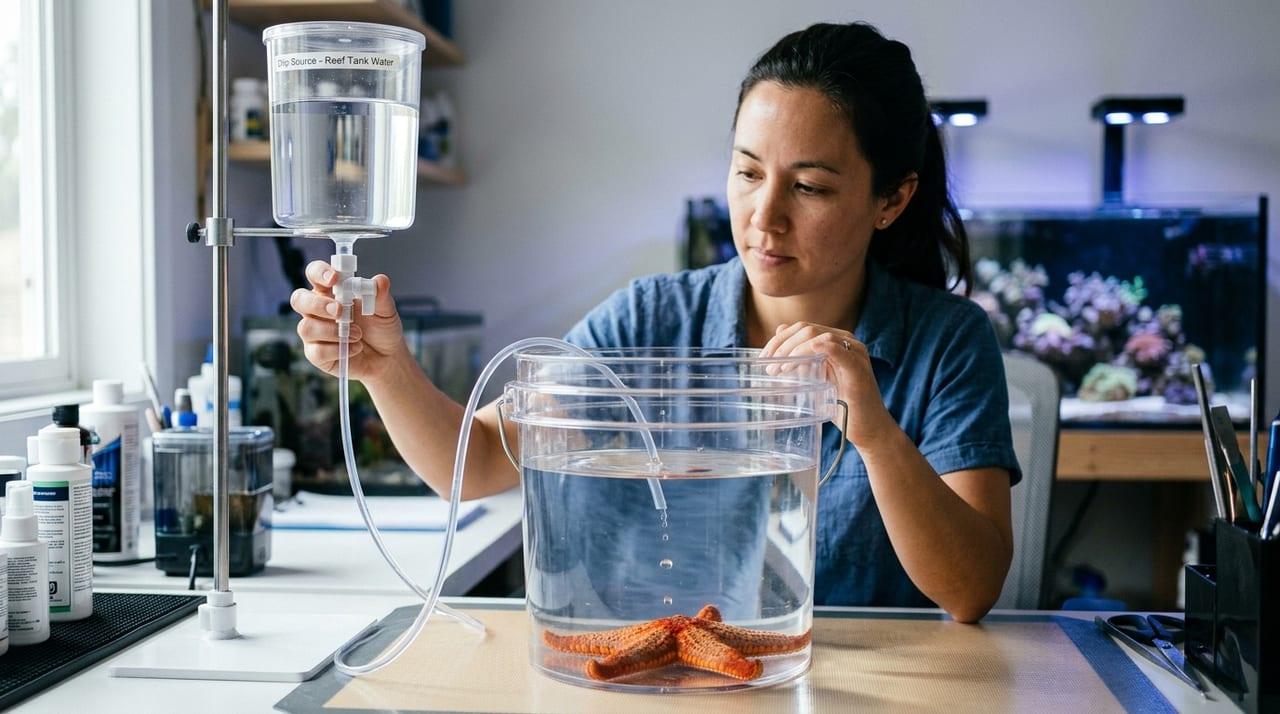
Drip Acclimation (Recommended)
- Transfer the starfish and its bag water into a bucket
- Using an air tube, drip tank water slowly (1–2 drops per second) into the bucket
- Continue until the water volume is three times the original (2–3 hours)
- Adding too quickly causes osmotic shock and death
Absolutely Don't:Do not open the bag and add to tank suddenly or dump directly into the water
Oxygen Management
Oxygen levels may become depleted during transport. Supplement oxygen during acclimation by using an airstone and air pump for aeration.
Feeding Methods
Feeding varies greatly by species.
Detritus and Algae Feeders (Relatively Easy)
Sand Shifters, Fromia species, etc.: No direct feeding is required as they forage throughout the tank. However, they will starve if the tank lacks sufficient microbial life and organic matter. Ensure adequate food by periodically adding thin broth-like water and minimizing substrate vacuuming.
Omnivorous and Carnivorous Species (Such as Chocolate Chip)
Feed 2–3 times per week with thin slices of mussel, clam, or squid offered with tweezers. Once it starts feeding, remove any uneaten portions immediately.
Signs of Starvation
- Tube feet contract, movement becomes sluggish
- Body turns pale, arms break or curl
- Body begins to "dissolve" or disintegrate (end-stage symptom)
Diseases and Problems
Arm Loss and Damage
Starfish may autotomize (self-sever) their arms due to stress, poor water quality, or infection. While regeneration may occur if water quality improves, identifying the underlying cause is essential.
Bleaching and Wasting Syndrome (Sea Star Wasting Disease)
A viral infection (attributed to aquatic animal viruses) in which starfish rapidly dissolve and die. Isolate infected individuals and thoroughly improve the water quality of the entire tank.
UV Sterilization
Installing a UV sterilizer is an effective preventive measure for pathogen control.
Important Notes on Cohabitation with Corals
Most starfish may feed on corals and invertebrates (sea urchins, sea cucumbers, bivalves).
- Safe with Corals:Fromia species (small, primarily detritus-feeding)
- Dangerous to Corals:Chocolate Chip and large carnivorous starfish
- May Consume Live Rock Sponges:Many starfish feed on sponges
Starfish bring color and cleaning power to the aquarium with their unique presence. With careful attention to water quality management and acclimation, long-term success is entirely achievable.