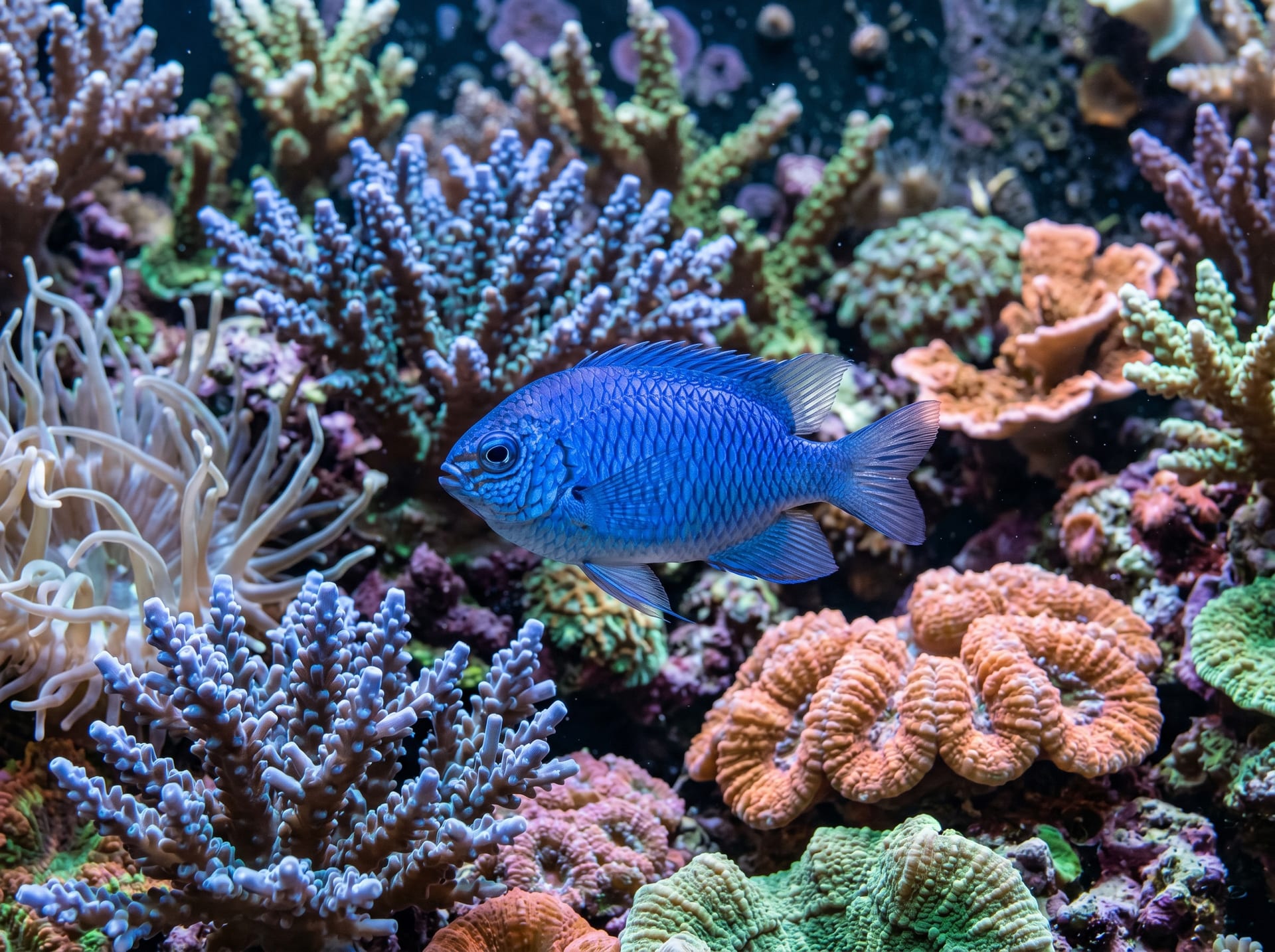
Damselfish
Hardy small fish with vivid blue or neon colors. Used as pilot fish for tank cycling.
View Damselfish encyclopedia →0% commission on your first sales!Register by September 30, 2026 and your first 2 sales are commission-free!
Breeder Wanted!
List on BreederDirect and sell directly to customers nationwide!
BreederDirect's 6 Transparency Promises
Every Marine Fish & Coral listing shows Breeder's full disclosure. No wild-caught. Captive-bred priority, tank size guidance, temperament details—transparent aquaculture.
- Captive-bred
- WYSIWYG
- Reef-safe
- Care Info Included
- Origin Disclosed
- Temperament Listed
Browse all 42 breeds
Care Difficulty
Reef-safe
Temperament
No listings match your filters
Adjust your filters, or get notified when new listings arrive.
Getting alerts is free with a member account. When new listings match your saved search, we'll notify you by email and in-app.
Browse other categories
Verified breeders (preview)
Are you raising marine fish & coral?
Register as a breeder and connect with buyers directly.
Apply as a breederDamselfish key facts
- Care level
- Beginner-friendly
- Lifespan
- 3-8 years
- Size
- 5-10cm
- Diet
- Artificial feed, Frozen food
- Housing
- Can be kept in small tanks
- Feeding
- Eats almost anything, very hardy
- Compatibility
- Some species are territorial, use caution
- Notes
- Cheap and hardy but some become aggressive with age
About Damselfish
Damselfish belong to the family Pomacentridae within the order Perciformes, with over 350 species distributed across the tropical and subtropical waters of the Indo-Pacific and Atlantic oceans. Species such as the Blue Green Chromis and Neon Damselfish have long been favorites among hobbyists. Adults typically reach 5–10 cm, displaying a spectacular range of colors—from electric cobalt blue to vivid yellow and orange—depending on the species. They are energetic and curious by nature, though their strong territorial instincts can lead to squabbles in the aquarium. Renowned as an ideal "starter marine fish," they adapt well to prepared foods and tolerate fluctuations in water parameters better than many other marine species, making them a popular choice as pilot fish for cycling new tanks. Their dazzling coloration and lively swimming bring lasting vibrancy to any saltwater setup.
7 things to know before welcoming a Damselfish
1Ideal Cycling Fish
Damselfish are widely used as pilot fish to help establish beneficial bacteria during the aquarium cycling process. They tolerate ammonia fluctuations better than most marine species. Plan to keep them long-term rather than treating them as temporary tools.
2Territorial by Nature
Despite their small size, damselfish are notably territorial and may harass tankmates, especially similar species. Introducing them last and providing ample live rock as refuge can reduce conflict. They generally coexist better with larger, docile fish.
3Tank Size Matters
A 60-liter tank can house one or two damselfish, but more space reduces territorial aggression. Equip the tank with a protein skimmer and robust filtration, maintaining specific gravity 1.020–1.025 and temperature 24–26°C. Stable water parameters bring out the best color and health.
4Enthusiastic, Easy Feeder
Damselfish accept a wide variety of foods including flakes, pellets, frozen brine shrimp, and copepods. Feed small amounts twice daily, removing uneaten food promptly to prevent water quality decline. Their eager appetite makes feeding time straightforward for beginners.
5Watch for White Spot
Marine ich (white spot disease) is the most common illness to watch for in damselfish. Quarantining new fish for 2–4 weeks before adding them to the display tank is the best prevention. Early treatment with hyposalinity or medication helps prevent spread.
6Cost to Get Started
Damselfish themselves are affordable at roughly 500–2,000 yen per fish. However, budget 60,000–150,000 yen for initial equipment including a tank, protein skimmer, live rock, and lighting. Investing in quality hardware pays off through stable water conditions and lower long-term maintenance costs.
7Species Vary in Temperament
The "damselfish" group includes many species such as the Blue Damsel, Azure Damsel, and Blue Devil, each with different temperaments. The Blue Damsel is relatively peaceful and can be kept in groups, while the Blue Devil is more aggressive. Research the specific species before purchase to match your stocking plan.
Frequently asked questions about Damselfish
- Q.Can damselfish be kept with other marine fish?
- A.It depends on the species and tank size. Damselfish can be territorial, making cohabitation with large or aggressive fish challenging. Providing ample hiding spots and choosing peaceful tank mates of similar size improve the chances of a harmonious community.
- Q.Are damselfish safe for reef tanks?
- A.Most damselfish are considered reef-safe and coexist well with soft corals and LPS corals. However, some species cultivate algae patches near corals, which can cause minor damage. Always research the specific species before adding it to a reef tank.
- Q.What should I do with pilot fish after cycling?
- A.Most hobbyists simply keep them as permanent residents. Since they will have established territory, introduce new fish gradually using a divider or acclimation box to reduce the risk of aggression.
- Q.How should I treat marine ich (white spot disease)?
- A.Upon spotting white spots, transfer the affected fish to a quarantine tank promptly. Freshwater dips or marine ich treatments can be effective. Avoid adding medication to the main display tank, as it can harm corals and beneficial bacteria.
- Q.Is it okay to keep just one damselfish?
- A.Yes, damselfish do well when kept alone. Even shoaling species rarely show stress when solitary, and the absence of territorial rivals often results in calmer behavior. Base your decision on tank size and the compatibility of any planned tank mates.
Useful tools for Damselfish care
Learn more about Damselfish in the encyclopedia
View Damselfish encyclopedia entry →
Care difficulty, lifespan, size and diet — all basics covered.
Damselfish related articles
Cobalt Blue Damselfish Care Guide | How to Keep Beginner Saltwater Fish, Tank Mates & Tank Management
A guide explaining how to care for Cobalt Blue Damselfish. From tank setup and water quality management to feeding methods, tank mate compatibility, and treatment of white spot disease—comprehensive tips for long-term care of this beginner-friendly saltwater species.
Comparison Guide to Keeping Blue Damselfish (Chrysiptera cyanea) and Yellow-tail Blue Damselfish (Chrysiptera parasema) | Appearance Differences, Aggression, and Tank Compatibility
A detailed comparison of the appearance, temperament, aggression, and tank compatibility of the often-confused Blue Damselfish and Yellow-tail Blue Damselfish. This guide covers selection tips for beginners, layout techniques to minimize territorial behavior, and important considerations when using damselfish to establish a new aquarium.
Damselfish Care Guide: Popular Species Beyond Sergeant Major Damselfish and Mixed-Tank Considerations
Introducing popular species of the damselfish family (Pomacentridae), which includes numerous types beyond the common sergeant major damselfish. Learn the care methods, territorial management, and reef tank compatibility of colorful species such as blue damselfish, black damselfish, and yellow-tailed blue damselfish.
Marine Fish Guide | Characteristics and Care of Popular Species
A curated guide to popular species in marine aquarium keeping, including Ocellaris Clownfish, Palette Surgeonfish, Yellow Tang, and Blue Damselfish. Detailed explanations of each species' characteristics, care difficulty, compatibility with tank mates, and recommended tank sizes.
[2026 Edition] 15 Beginner-Friendly Saltwater Fish | How to Choose and Care Tips
15 carefully selected species recommended for saltwater fish-keeping beginners. Detailed explanations of difficulty level, equipment, and costs for Ocellaris Clownfish, Azure Damselfish, and more.
5 Beginner-Friendly Saltwater Fish | Carefully Selected Easy-to-Care Species
5 recommended saltwater fish species for beginners starting their journey. Learn about beginner-friendly species like Clownfish and Blue Devil Damselfish.
More in this category
Can't find the one you're looking for?
Post your wishes for free and breeders with matching animals will contact you with introductions.