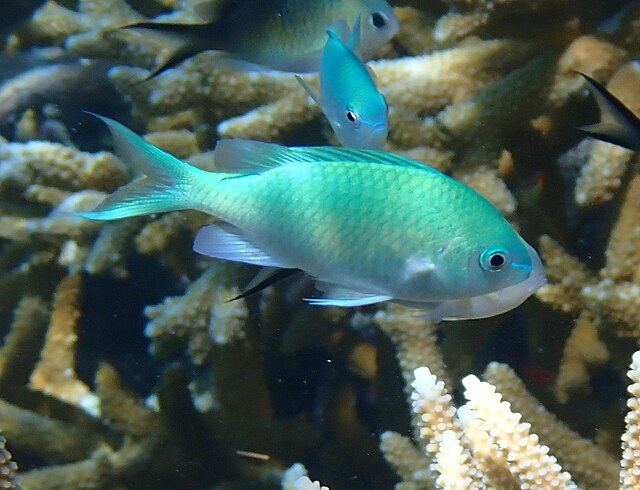
Comparison Guide to Keeping Blue Damselfish (Chrysiptera cyanea) and Yellow-tail Blue Damselfish (Chrysiptera parasema) | Appearance Differences, Aggression, and Tank Compatibility
A detailed comparison of the appearance, temperament, aggression, and tank compatibility of the often-confused Blue Damselfish and Yellow-tail Blue Damselfish. This guide covers selection tips for beginners, layout techniques to minimize territorial behavior, and important considerations when using damselfish to establish a new aquarium.
Key Takeaways
A detailed comparison of the appearance, temperament, aggression, and tank compatibility of the often-confused Blue Damselfish and Yellow-tail Blue Damselfish. This guide covers selection tips for beginners, layout techniques to minimize territorial behavior, and important considerations when using damselfish to establish a new aquarium.
About Blue Damselfish and Yellow-tail Blue Damselfish
The Pomacentridae family (damselfish) is the most popular group of fish in marine aquariums. Among them, the Blue Damselfish (Chrysiptera cyanea) and Yellow-tail Blue Damselfish (Chrysiptera parasema / related species included) are particularly popular with beginners due to their affordable price and vibrant blue coloration.
Although these two species have similar names and are often confused, they differ in body characteristics, temperament, and care requirements. This guide compares the characteristics of both species and explains how to choose between them and key points for their care.
Characteristics of Blue Damselfish
Appearance
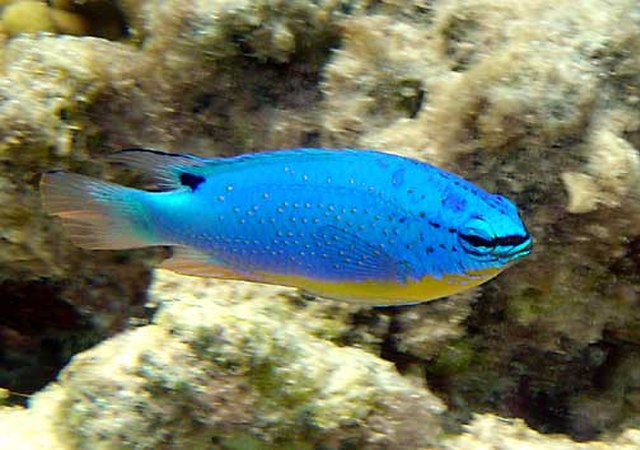
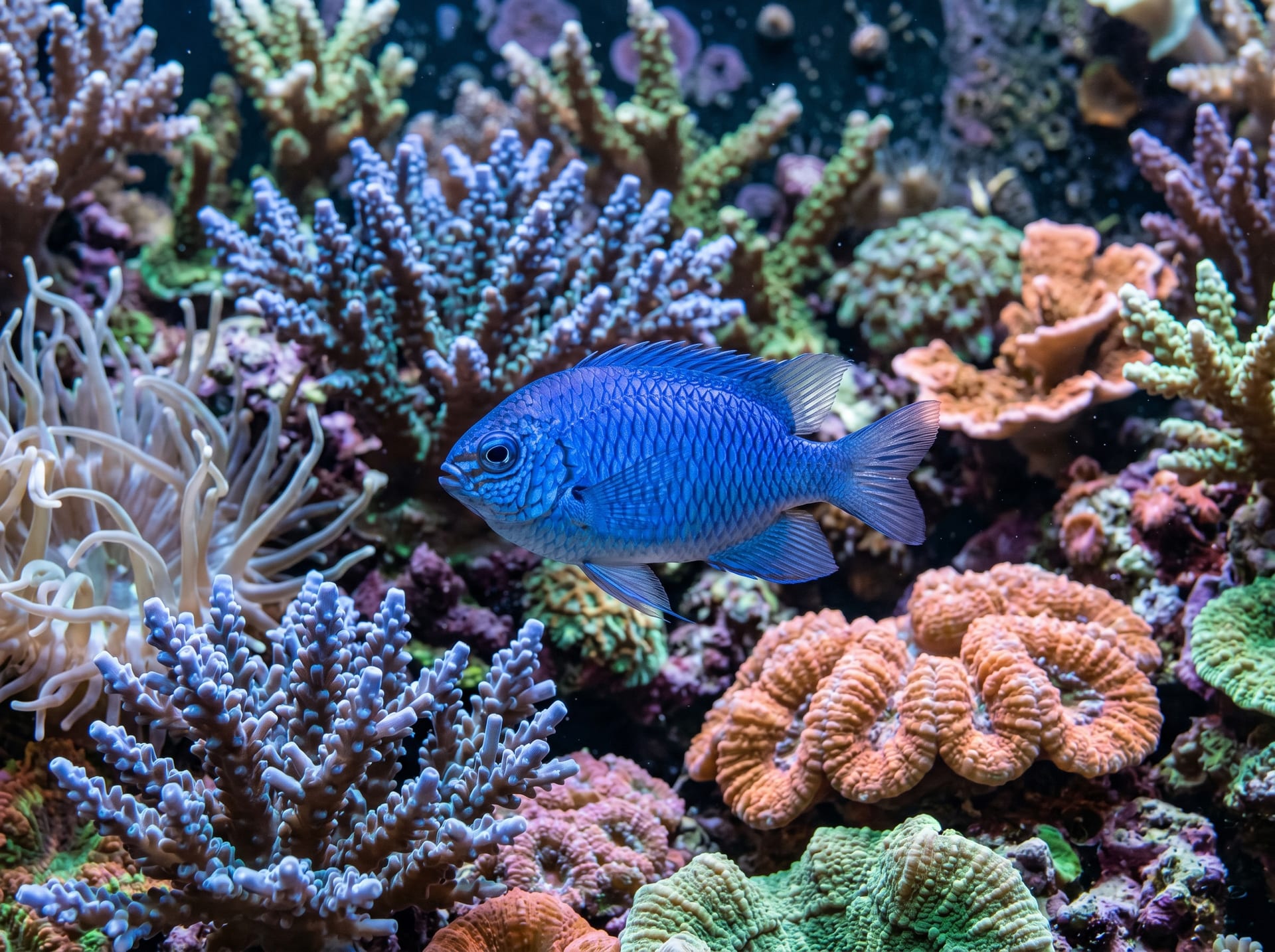
Approximately 8cm in body length. The entire body is covered in bright cobalt blue, with males displaying a yellowish tint on their tail fin (varies by individual). Females tend to have less yellow on their tail fin. They are widely distributed in coral reefs throughout the Indian and Pacific Oceans.
Temperament and Care
Item
Details
Aggression
Moderate to slightly high among damselfish
Territorial behavior
Strong (especially toward same species and similar colored fish)
Ideal water temperature
23–27°C
Ideal specific gravity
1.025–1.026
✍️
BreederDirect Editorial
The BreederDirect editorial team specializes in care information for animals, covering veterinary care and breeding to deliver beginner-friendly guides.
Find Marine Fish on BreederDirect
Buy directly from verified breeders
Browse Related Listings
Find Marine Fish listings related to this article on BreederDirect. Buy directly from verified breeders.
Blue Damselfish are most stable when kept singly or in small numbers rather than in groups. When multiple individuals of the same species are kept together, territorial conflicts intensify, and weaker individuals may be chased and stressed to the point of decline.
Diet and Feeding
They are omnivorous and readily accept frozen brine shrimp, pellet food, and flake food. They adapt well to artificial foods and are easy for beginners to feed.
Characteristics of Yellow-tail Blue Damselfish
Appearance
Approximately 6–7cm in body length. Slightly smaller than the Blue Damselfish, this species is characterized by a "yellow tail"—the tail fin, dorsal fin, and pelvic fins are colored yellow to orange. Due to the striking contrast between the blue body and yellow tail fins, it is also called the "Blue Demoiselle."
Temperament and Care
Item
Details
Aggression
Lower than Blue Damselfish (with high individual variation)
Territorial behavior
Present but individuals tend to be relatively docile
Ideal water temperature
23–27°C
Ideal specific gravity
1.025–1.026
Recommended tank size
45cm or larger
Lifespan
5–7 years (in captivity)
Yellow-tail Blue Damselfish tend to be slightly less aggressive than Blue Damselfish and are often chosen for smaller tanks or as beginner fish. However, individual personality varies greatly, so it is ideal to observe the fish at the shop before purchase.
Comparison Chart of Both Species
Feature
Blue Damselfish
Yellow-tail Blue Damselfish
Body length
Approximately 8cm
Approximately 6–7cm
Body color
Cobalt blue overall (yellow tail)
Blue with yellow/orange tail fins
Aggression
Moderate to slightly high
Low to moderate
Tank compatibility difficulty
Somewhat challenging
Relatively easy
Suitable tank size
60cm or larger
45cm or larger
Artificial food adaptability
Easy to adapt
Easy to adapt
Price range (approximate)
500–1,500 yen
500–1,200 yen
Which One Should You Choose?
Beginners / Small tanks (45–60cm)
→ Yellow-tail Blue Damselfish is recommended. Their smaller size and relatively low aggression make them easier to keep with other small fish.
Tanks 60–90cm or larger / Priority on visual impact
→ Blue Damselfish are larger and more impressive. Tank compatibility requires attention to their aggression, but both species are robust.
Want to enjoy schooling
→ Both species can be kept in small groups if a large tank (120cm or larger) and multiple hiding places are provided, but Green Chromis (Chromis viridis) have higher schooling compatibility, making them another option to consider.
Important Considerations for Tank Compatibility
For either damselfish species, care must be taken with the following combinations:
Same species or similarly colored fish: Territorial conflicts occur frequently, with weaker individuals being cornered
Small, timid fish (small gobies, dartfish, etc.): Risk of being chased and dying from stress
Fish with similar coloration (housing Yellow-tail and Blue Damselfish together): May be mistaken for the same species and attacked aggressively
Tank compatibility with medium to large, gentle fish such as tangs (surgeonfish), gouramies, and anthias is relatively stable.
Important Considerations When Establishing a New Tank
Damselfish are sometimes used when introducing fish to newly established tanks; however, their resistance to ammonia and nitrite should not be overestimated. In modern marine aquariums, fishless cycling using bacterial additives (such as Dr. Tim's) is recommended. Using damselfish as "cycling fish" causes significant stress to the fish and is not recommended.
Summary
Both Blue Damselfish and Yellow-tail Blue Damselfish are beautiful, hardy beginner species with vibrant blue coloration; however, they differ in aggression, body size, and tank compatibility. The Yellow-tail Blue Damselfish is better for small tanks and when prioritizing tank compatibility, while the Blue Damselfish is better if visual impact is a priority. Both adapt well to artificial foods and have low care difficulty if water quality is adequately maintained. However, understanding their strong territorial nature and carefully planning tank layout and fish selection is key to long-term success.