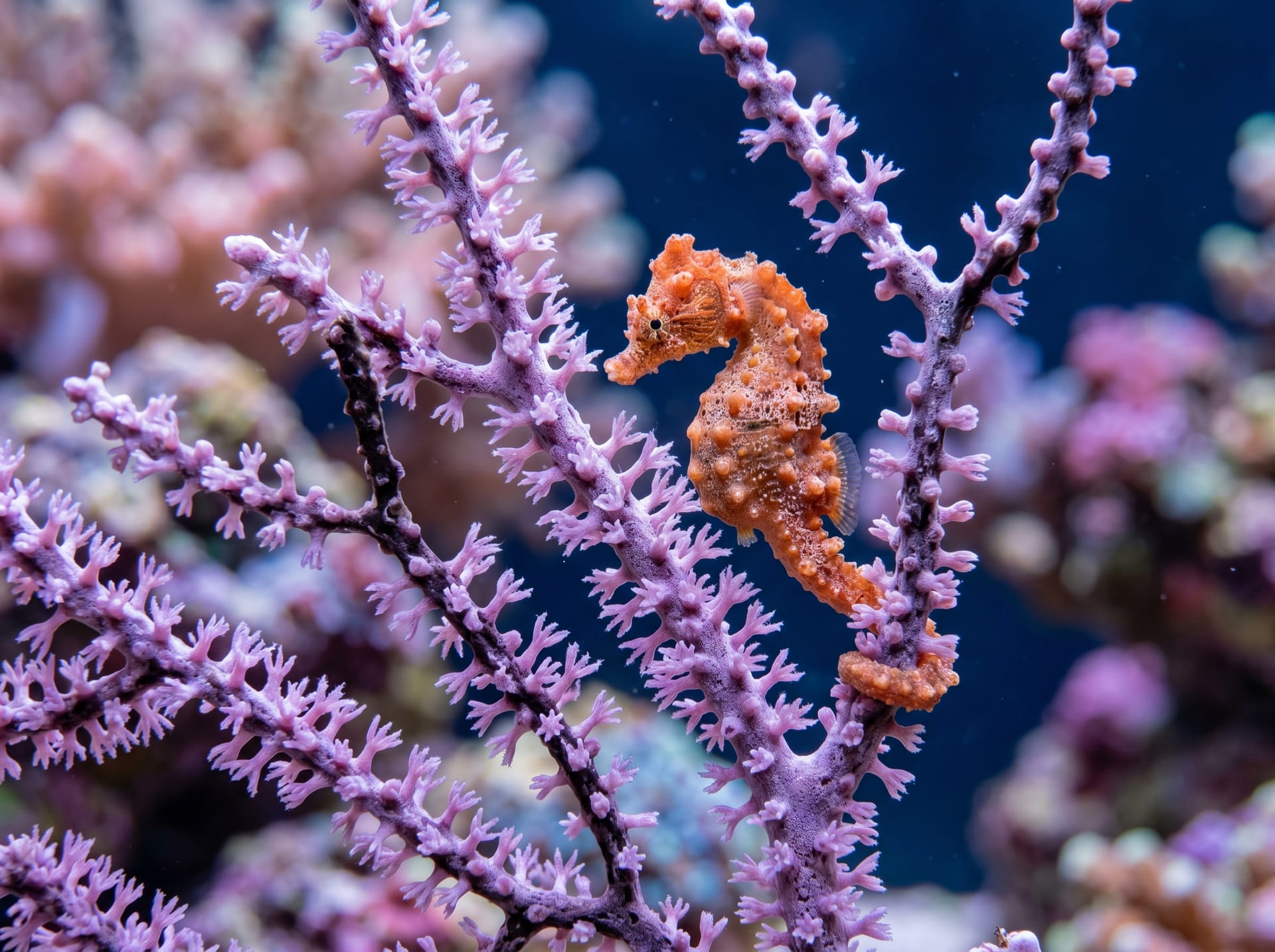
Seahorse / Pipefish

Seahorse / Pipefish

Mysterious upright posture and unique body. Males brood young in pouch — rare reproductive strategy. Requires dedicated tank.

View Seahorse / Pipefish encyclopedia →
Limited Time Offer

0% commission on your first sales!Register by September 30, 2026 and your first 2 sales are commission-free!

Breeder Wanted!

List on BreederDirect and sell directly to customers nationwide!

Free registrationNo monthly feesCommission on sales only
Register Now for Free

BreederDirect's 6 Transparency Promises

Every Marine Fish & Coral listing shows Breeder's full disclosure. No wild-caught. Captive-bred priority, tank size guidance, temperament details—transparent aquaculture.

  • Captive-bred
  • WYSIWYG
  • Reef-safe
  • Care Info Included
  • Origin Disclosed
  • Temperament Listed

Recommended Tank Size

0 items

No listings match your filters

Adjust your filters, or get notified when new listings arrive.

Getting alerts is free with a member account. When new listings match your saved search, we'll notify you by email and in-app.

Browse other categories

Verified breeders (preview)

Are you raising marine fish & coral?

Register as a breeder and connect with buyers directly.
Apply as a breeder

Seahorse / Pipefish key facts

Care level
Advanced
Lifespan
3-5 years
Size
10-20cm (varies by species)
Diet
Frozen mysis shrimp, brine shrimp
Housing
Lives in shallow coastal seagrass beds and reefs, swimming upright and wrapping its tail around objects. Provide a quiet dedicated tank where it can settle.
Flow & Placement
Set a gentle flow and provide hitching posts such as seaweed or pipes it can grip with its tail.
Feeding
2-3 times daily. Frozen mysis as staple
Tank Mates & Compatibility
Fast-moving fish will steal its food, so a dedicated tank or only calm bottom-dwellers is recommended.
Notes
Choose captive-bred. Wild-caught difficult to feed
TraitsMysteriousMale broods youngDedicated tankAdvanced

About Seahorse / Pipefish

Seahorses belong to the family Syngnathidae within the order Gasterosteiformes, with roughly 50 species distributed across shallow coastal waters worldwide. Their Japanese name—"child of the dragon"—reflects the awe their appearance has long inspired: a horse-like head, bony armor-plated body, and a prehensile tail used to anchor to corals and seagrass. Their most celebrated trait is a reversed pregnancy: females deposit eggs into the male's specialized brood pouch, where he fertilizes, nourishes, and ultimately births the young. Despite their slow, drifting movement, seahorses are ambush predators of remarkable precision, vacuuming up tiny crustaceans with a rapid snap of the snout. In captivity, they reward attentive keepers with deeply engaging behavior, visible bonding between pairs, and—for the experienced hobbyist—the unforgettable sight of a male in labor releasing dozens of miniature juveniles into the water.

7 things to know before welcoming a Seahorse / Pipefish

  1. 1Dedicated Tank Required

    Seahorses are poor swimmers and suffer greatly from strong currents or tank mates that are fast or aggressive. Use a tall tank of at least 60 cm height, dedicated to seahorses alone or conspecifics, and provide hitching posts such as coral branches or artificial perches for them to grip.

  2. 2Live Foods Are Essential

    The staple diet is frozen mysis or brine shrimp, but wild-caught individuals often refuse frozen food initially. Start with live brine shrimp and gradually transition to frozen over weeks. This process requires patience and consistent feeding schedules two to three times daily.

  3. 3Sensitive to Water Quality

    Seahorses are more sensitive to water quality fluctuations than many other marine fish, and are particularly vulnerable to nitrate buildup and bacterial infections. A protein skimmer is strongly recommended alongside weekly partial water changes to maintain stable salinity, pH, and temperature.

  4. 4Prefer Cooler Temperatures

    Most species thrive between 22–26°C, and elevated temperatures accelerate bacterial growth, increasing disease risk. A dedicated aquarium chiller or cooling fan is advisable in warmer months to keep the water below 28°C consistently.

  5. 5Males Give Birth

    In seahorses, the male receives eggs in his brood pouch and carries the developing young for 2–4 weeks before giving birth. If you plan to breed them, establish a stable pair and prepare a separate rearing tank stocked with live brine shrimp nauplii for the tiny fry.

  6. 6Choose Tank Mates Carefully

    Seahorses lose out to fast-feeding fish and can be harassed by shrimp or hermit crabs that nip at their fins. Suitable companions include pygmy gobies and other small, peaceful fish. Predatory invertebrates such as octopus or nudibranchs must be avoided entirely.

  7. 7Higher Setup and Ongoing Costs

    Initial costs include a dedicated tall tank, protein skimmer, and temperature control equipment, while individual seahorses range from a few thousand to tens of thousands of yen depending on species. Ongoing expenses include regular purchases of frozen mysis and live brine shrimp. Estimating monthly maintenance costs before committing is strongly advisable.

Frequently asked questions about Seahorse / Pipefish

Q.Can beginners keep seahorses?
A.Seahorses can be kept by beginners who already understand basic marine tank management—cycling, water changes, and parameter testing. However, their sensitivity to water quality and need for frequent feeding make them more demanding than many starter marine fish. Gaining some experience with hardier saltwater species first is generally advisable.
Q.Can I feed only frozen mysis shrimp?
A.Frozen mysis shrimp is nutritionally well-suited as a primary diet and supports long-term health on its own. Supplementing with enriched frozen brine shrimp or other small crustaceans adds dietary variety and can help maintain overall condition, but mysis alone is a solid foundation.
Q.How difficult is breeding seahorses?
A.Given a healthy pair in stable conditions, spawning occurs relatively readily, making seahorses one of the more reproducible groups among tropical marine fish. The real challenge lies in raising the fry, which require live food—rotifers and newly hatched brine shrimp—from birth and need careful management to survive.
Q.What is the lifespan of a seahorse?
A.Captive lifespan varies by species but generally falls in the range of 3–5 years. With consistently good water quality and regular feeding, some individuals have been reported to exceed 5 years. Because captive seahorses face no predators, they often outlive their wild counterparts under proper care.
Q.What tank size do seahorses need?
A.A tank with at least 30–45 cm of height is the recommended minimum, as vertical swimming space is critical. The water depth should ideally be at least three times the body length of the adult fish. For a pair or small group, a 60 cm or taller aquarium provides the stability and space needed for comfortable long-term keeping.

Useful tools for Seahorse / Pipefish care

💧Aquarium Volume CalculatorCalculate water volume, weight, and heater wattage from tank dimensions🧪Water Quality CheckerFind compatible fish, shrimp, plants & corals based on pH, temperature & hardness🍽️Feeding GuideCheck feeding frequency, portion sizes & supplements by species and growth stage🤝Compatibility CheckerCheck compatibility between two species on a 5-level scale📊Fish Compatibility MatrixCheck fish compatibility at a glance with our matrix chart🔄Nitrogen Cycle GuideAuto-calculate bacteria colonization timeline for new tank cycling🗓️Seasonal Care CalendarMonthly care events and seasonal management tips at a glance🚿Water Change CalculatorAuto-calculate optimal water change frequency and volume by tank size and fish count🐠Stocking CalculatorCalculate max fish capacity for your tank size with overstocking alerts🏞️Tank Layout PlannerGet substrate, plant & hardscape suggestions based on tank size and style🧮Care Cost SimulatorEstimate initial, monthly & annual costs by category, care level and quantity⚖️Species Comparison ToolCompare two species side by side: care difficulty, size, lifespan & temperature🎯Pet Match DiagnosticAnswer 7 questions to find your top 3 perfect pets🚚Transport Safety CheckerCheck transport safety score and precautions by category, season, method and distance⏱️Quarantine & Acclimation TimerManage quarantine periods and acclimation steps with countdown timers. Includes recommended durations by species

Learn more about Seahorse / Pipefish in the encyclopedia

View Seahorse / Pipefish encyclopedia entry →

Care difficulty, lifespan, size and diet — all basics covered.

Seahorse / Pipefish related articles

See more Seahorse / Pipefish articles →

More in this category

Can't find the one you're looking for?

Post your wishes for free and breeders with matching animals will contact you with introductions.