Seahorse Care Guide | Complete Manual from Species Selection to Breeding
Explains seahorse care methods. Introduces species selection, dedicated tank setup, feeding, and breeding techniques.
Key Takeaways
Explains seahorse care methods. Introduces species selection, dedicated tank setup, feeding, and breeding techniques.
Related Species
What Kind of Creature Is a Seahorse?
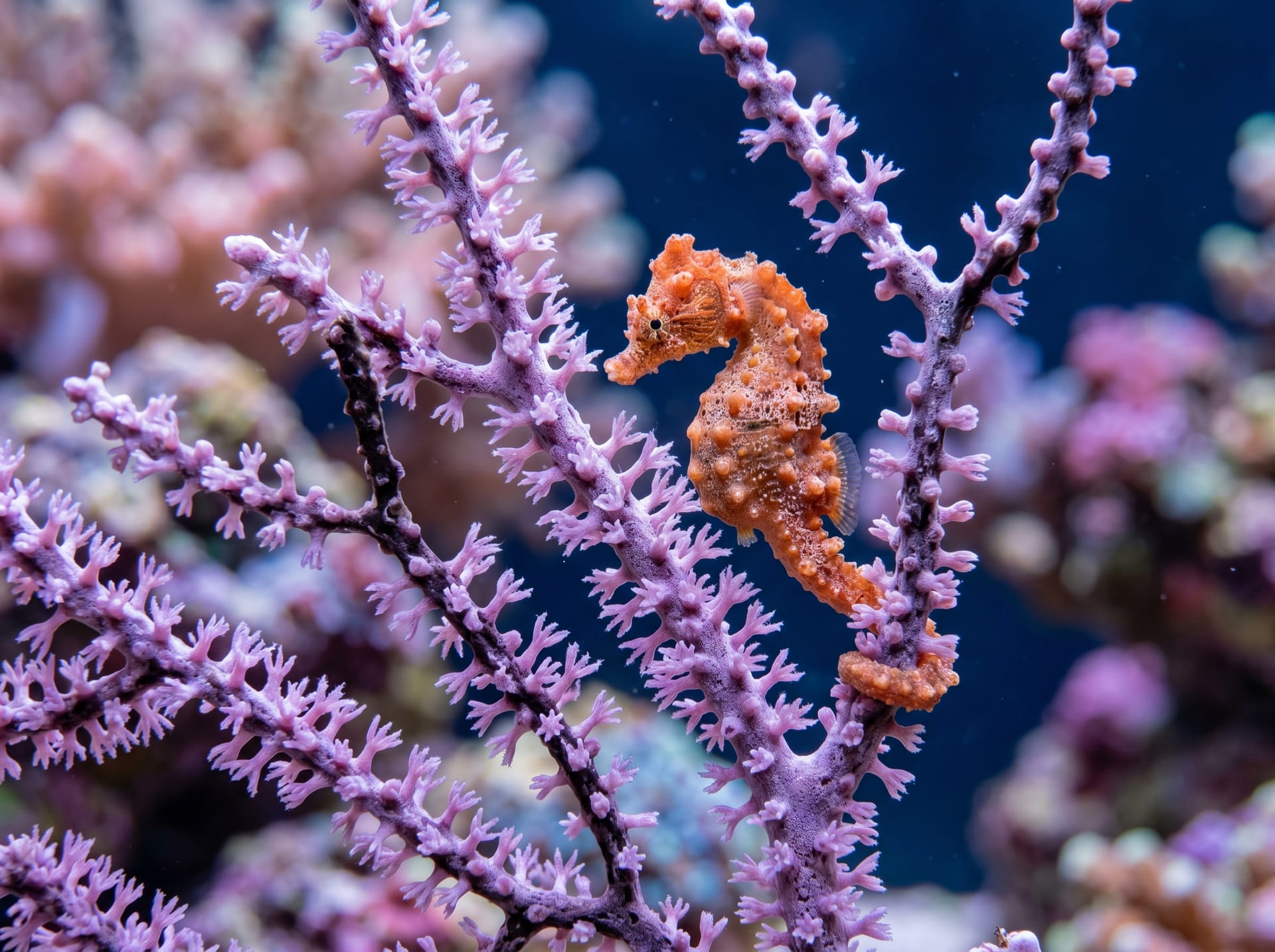
Seahorses are mysterious creatures that continue to captivate saltwater fish enthusiasts around the world with their distinctive upright swimming style and dragon-like appearance. Despite being classified as "fish," they possess features entirely different from other fish—a body covered with bony plates instead of scales, a prehensile tail for grasping objects, and the ability to move their eyes independently.
They are also known as one of the few animals in nature where males "give birth," making the observation of their breeding behavior one of the greatest joys for breeders. However, the difficulty of keeping them is far from low, and without proper preparation and knowledge, they often have short lifespans. This article provides step-by-step information for everyone, from first-time seahorse keepers to those interested in attempting breeding.
Individual Selection Determines Success or Failure in Care
The first and most important decision in seahorse care is selecting captive-bred individuals. While both wild-caught and captive-bred specimens are available in shops, there is a significant difference in the difficulty of keeping them.
Why You Should Choose Captive-Bred Specimens
- Adaptation to Frozen Foods: Wild-caught specimens often eat only live food and struggle to accept frozen mysid shrimp. Captive-bred individuals are accustomed to frozen foods from early age, allowing stable feeding immediately upon acquisition.
- Disease Resistance: Wild-caught specimens are prone to immune decline from transport stress and environmental changes, making them more susceptible to diseases like white spot disease. Captive-bred individuals are more robust.
- Adaptability to Environment: They are accustomed to artificial seawater and tank conditions, adapting quickly to water quality changes and lighting cycles.
- Conservation Perspective: Choosing captive-bred individuals helps prevent overharvesting of wild seahorses in coral reefs and contributes to ecosystem protection.
Species such as Hippocampus erectus (H. erectus) and Hippocampus reidi (H. reidi) are widely available through captive breeding and are considered beginner-friendly. They offer abundant variation in coloration and body shape, making selection enjoyable.
Setting Up the Tank Environment
Seahorses require unique setup different from typical reef tanks. We strongly recommend dedicating a dedicated seahorse tank.
Tank Size and Shape
A minimum 60cm tank with a height of at least 40cm is required. Since seahorses swim vertically and rest by holding onto things with their tails, height is more important than width. For multiple specimens, 90cm or larger is ideal.
Water Flow and Equipment Setup
Weak water flow is essential. Strong current depletes energy and causes food to drift away, preventing proper feeding. If using a wave pump, reduce the flow rate and position it to avoid direct impact. Always attach foam guards to pump and filter intakes, as seahorse tails or bodies getting sucked in can be fatal.
Water Temperature and Quality
The ideal temperature range is 22-24°C, which is lower than typical reef tanks (25-26°C). High temperature can trigger illness and disease, making a chiller essential during summer. Maintain a specific gravity of 1.020-1.025 and pH of 8.1-8.3.
Installing Hitching Posts (Holding Surfaces)
Seahorses rest by holding onto branching structures with their tails. Provide multiple hitching posts using artificial corals, macroalgae (such as Halimeda), or commercially available seahorse decorations. Insufficient hitching posts cause constant swimming, leading to stress.
Feeding and Feeding Tips
Feeding is the most labor-intensive aspect of seahorse care. Since they have a short digestive tract and cannot consume large amounts at once, small portions must be given multiple times daily.
Primary and Supplementary Foods
| Food Type | Role | Feeding Frequency |
|---|---|---|
| Frozen Mysid Shrimp | Primary food, balanced nutrition | 2x daily |
| Frozen Brine Shrimp | Supplement, high palatability | Several times weekly |
| Copepods (Live Food) | Nutritional supplement, fry food | As needed |
Feeding Station Method
The "feeding station" method—placing a small dish or tray at the tank bottom and dropping food there—is very effective. Since seahorses only eat food directly in front of them and cannot pursue drifting food, concentrating the food in one spot greatly improves feeding efficiency.
Managing Uneaten Food
Remove uneaten food promptly, as decomposition rapidly degrades water quality. Develop the habit of removing any remaining food with a pipette or net 15-20 minutes after feeding.
The Mysterious Breeding Cycle: Males Give Birth
Seahorse breeding involves the rare phenomenon of "male parental care" even in nature. Understanding this unique ecology makes observing their reproduction even more rewarding.
Breeding Process
- Courtship: Males and females swim side by side, performing courtship dances over several days while changing color.
- Egg-laying and Transfer: Females deposit eggs into the male's brood pouch located on his abdomen.
- Incubation Period: The male fertilizes and incubates the eggs in the pouch, with juveniles developing over 2-4 weeks depending on species.
- Birth: Before dawn through early morning, the male releases juveniles by contracting his pouch muscles. Dozens to hundreds of babies are born at once.
Rearing Juveniles
Newborn juveniles begin swimming independently immediately but are extremely small and risk being eaten in the parent tank. Transfer them to a dedicated nursery tank (a breeder net works), and feed them live copepods or freshly hatched brine shrimp nauplii. Juvenile rearing is the most challenging phase; stable feeding and water quality management are key to improving survival rates.
BreederDirect's Safe and Secure System
BreederDirect is a platform where you can purchase seahorses and other aquatic animals directly from breeders. By eliminating intermediaries, you can directly verify detailed information about an individual's care history, feeding condition, and the breeder's water temperature and quality management practices.
Breeders handling captive-bred seahorses provide clear information such as "what generation of captive breeding," "what food the specimen accepts," and "current maintenance temperature." You can also message questions before purchase, allowing first-time keepers to confidently prepare to welcome their seahorse.
The direct-shipping system minimizes transport time, reducing stress on the animal. You also have support in place to consult directly with the breeder about any issues after arrival.
The first step in seahorse care is choosing a trustworthy individual. Find your healthy captive-bred seahorse on BreederDirect.