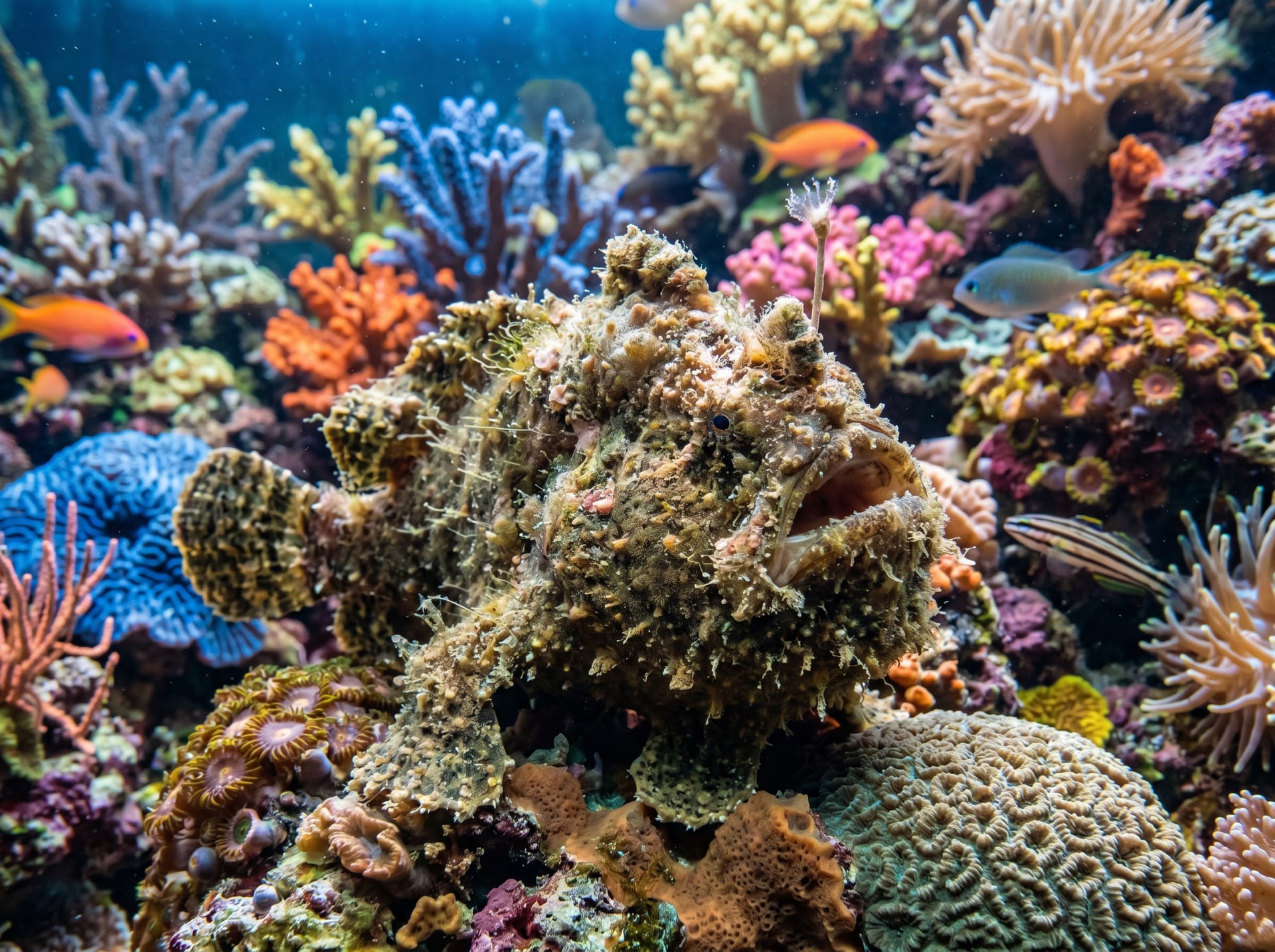
Frogfish
Frogfish captivate marine hobbyists with their remarkable camouflage, warty textures, and a stunning range of colors and patterns. Their sit-and-wait hunting style — paired with comically expressive faces — gives them a personality unlike any other saltwater fish. While they require some dedicated care, their one-of-a-kind presence makes them a true showpiece in any aquarium.
View Frogfish encyclopedia →0% commission on your first sales!Register by September 30, 2026 and your first 2 sales are commission-free!
Breeder Wanted!
List on BreederDirect and sell directly to customers nationwide!
BreederDirect's 6 Transparency Promises
Every Marine Fish & Coral listing shows Breeder's full disclosure. No wild-caught. Captive-bred priority, tank size guidance, temperament details—transparent aquaculture.
- Captive-bred
- WYSIWYG
- Reef-safe
- Care Info Included
- Origin Disclosed
- Temperament Listed
Browse all 42 breeds
Care Difficulty
Reef-safe
Temperament
No listings match your filters
Adjust your filters, or get notified when new listings arrive.
Getting alerts is free with a member account. When new listings match your saved search, we'll notify you by email and in-app.
Browse other categories
Verified breeders (preview)
Are you raising marine fish & coral?
Register as a breeder and connect with buyers directly.
Apply as a breederFrogfish key facts
- Care level
- Intermediate
- Lifespan
- Typically 1-2 years in captivity (up to 4-5 years)
- Diet
- Carnivorous: weaned from live prey onto frozen foods
About Frogfish
Frogfish belong to the family Antennariidae and are found in shallow tropical and subtropical seas around the world. Their stocky, frog-like bodies are covered in fleshy warts and skin folds that allow them to blend seamlessly with rocks, corals, and sponges — a camouflage that is among the most convincing in the animal kingdom. Body color varies enormously, from vivid yellow and orange to white, red, and jet black, with significant variation even within the same species. The first dorsal spine has evolved into a lure called the esca, which frogfish wiggle to attract unsuspecting prey before striking with one of the fastest bites recorded in nature. Too clumsy to swim efficiently, they walk along the seafloor using their pectoral and pelvic fins like stubby limbs — a quirky locomotion that only adds to their charm. Keeping frogfish healthy centers on consistent feeding management and stable water quality, but those who take on the challenge are rewarded with one of the most captivating and conversation-starting fish in the hobby.
7 things to know before welcoming a Frogfish
1Powerful Carnivore
Frogfish are ambush predators capable of engulfing prey nearly their own size with a lightning-fast strike. Any tankmates must be significantly larger than the frogfish's mouth to avoid being eaten. Solo housing is generally the safest approach.
2Live Food Preferred
In the wild, frogfish feed exclusively on live prey, so newly acquired specimens often require live feeder fish or shrimp. Some individuals can be trained to accept frozen or stick-fed food over time, though this varies by fish. Plan a reliable feeder supply before purchasing.
3Feed Just 2–3 Times Weekly
Frogfish have a slow metabolism and only need feeding two to three times per week. Overfeeding leads to digestive issues and rapid water quality decline, so remove any uneaten food promptly. Obesity-related health problems are a real risk if fed too frequently.
4Water Quality Is Critical
Their carnivorous diet produces significant waste, making robust filtration and regular water changes essential. Maintain specific gravity at 1.020–1.025, temperature at 24–27°C, and keep ammonia and nitrite at zero. Poor water quality is a leading cause of stress and disease.
5Provide Hiding Spots
Frogfish rely on camouflage among rocks and corals, so provide ample liverock or artificial structures to hide against. A secure hiding spot reduces stress and encourages natural behavior. Rock-heavy aquascaping suits them far better than open, sandy layouts.
6Choosing Tankmates Carefully
Even two frogfish of the same species may cannibalize each other, making single-specimen tanks the standard recommendation. If mixing is necessary, choose only large fish the frogfish cannot swallow, or size-matched conspecifics with close monitoring. They are not aggressive, but predation risk is always present.
7Cost to Buy and Maintain
Frogfish are not always easy to find and typically cost between 3,000 and 15,000 yen depending on species and size. Ongoing expenses include live feeder prey, along with the standard saltwater setup costs — filtration, a refractometer, and a heater. Overall maintenance costs are similar to, or slightly above, typical marine fish.
Frequently asked questions about Frogfish
- Q.Can frogfish be kept in a reef tank?
- A.Frogfish do not eat corals, so they can technically be kept in a reef aquarium. However, small fish and shrimp in the same tank are at constant risk of being eaten. Carefully consider the size of all tankmates before adding a frogfish to a reef setup.
- Q.Can frogfish be trained to eat prepared foods?
- A.Some individuals can be trained to accept frozen fish or shrimp presented on a feeding stick to mimic live prey movement. However, this process can take considerable time and some frogfish never accept anything other than live food. Patience and consistency are key.
- Q.What tank size do frogfish need?
- A.Smaller species can be kept in tanks from around 60 liters, but given their messy carnivorous diet, a tank of 60–90 liters or larger with strong filtration is recommended. Smaller volumes make stable water quality much harder to maintain.
- Q.How long do frogfish live?
- A.In captivity, frogfish have been reported to live approximately 5 to 10 years. Stable water conditions and a proper feeding routine are the main factors supporting longevity. Records are limited and individual variation exists, so treat these figures as a general guide.
- Q.Are frogfish prone to jumping out of the tank?
- A.Frogfish are poor swimmers, so the risk of jumping is lower than with many other fish. That said, a tight-fitting lid remains essential, as they can occasionally move around — especially at night or when hungry. Gaps in the cover are best avoided.
Useful tools for Frogfish care
Learn more about Frogfish in the encyclopedia
View Frogfish encyclopedia entry →
Care difficulty, lifespan, size and diet — all basics covered.
Frogfish related articles
See more Frogfish articles →More in this category
Can't find the one you're looking for?
Post your wishes for free and breeders with matching animals will contact you with introductions.