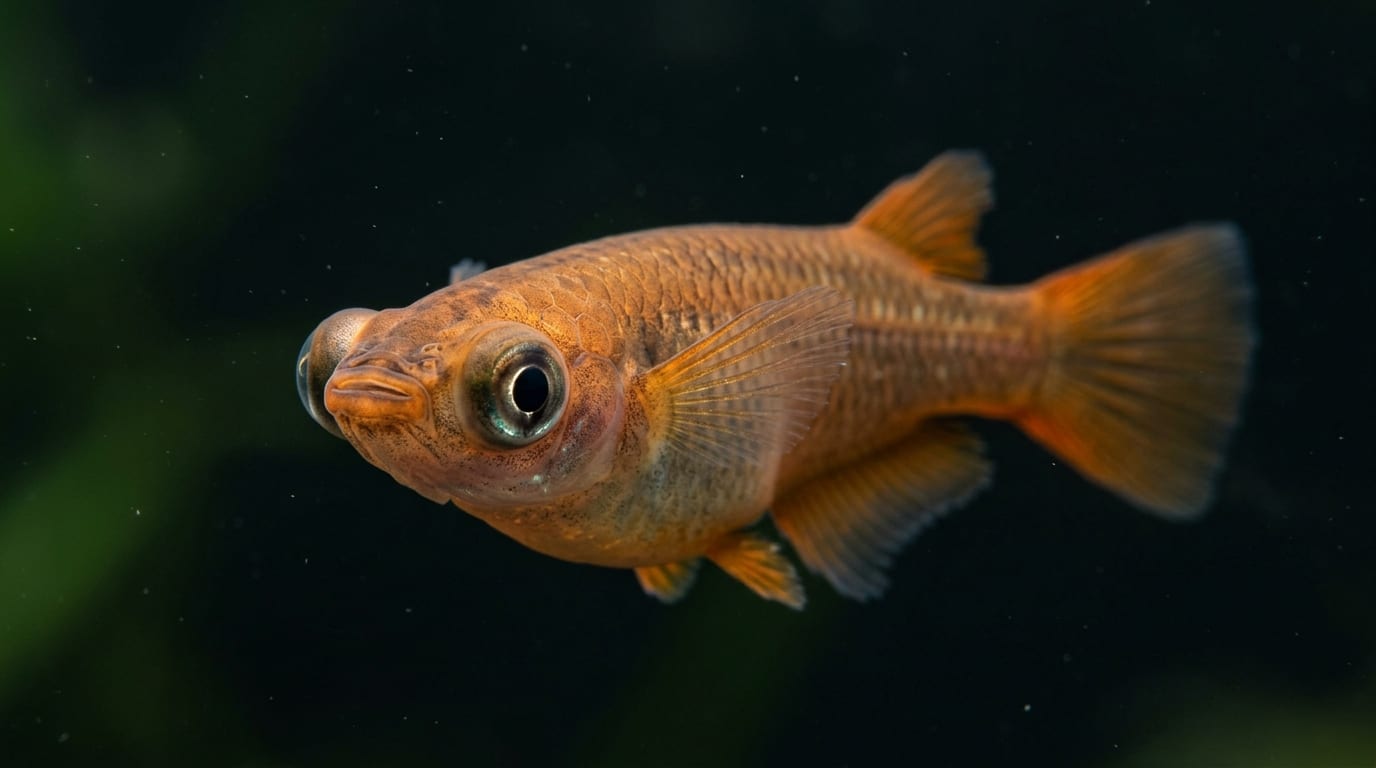
Deme (Telescope-Eye) Medaka
Deme Medaka — also known as Telescope-Eye Medaka — are a selectively bred variety whose skull shape causes both eyes to protrude outward, sometimes sideways and sometimes angled upward, with plenty of individual variation between fish. The trait was discovered and established by breeder Ohno in 2006, and gives each fish a distinctively expressive face thanks to the shortened distance between the eyes and mouth. Their temperament tends to be calm, making them easy to keep alongside other medaka. Because their protruding eyes are somewhat delicate, they do best in gentle water flow without sharp decorations, which is why this variety is generally considered suited to intermediate keepers rather than complete beginners.
View Deme (Telescope-Eye) Medaka encyclopedia →0% commission on your first sales!Register by September 30, 2026 and your first 2 sales are commission-free!
Breeder Wanted!
List on BreederDirect and sell directly to customers nationwide!
9 Transparency Commitments from Br-Choku
Each Medaka listing includes the following from Breeder. Full transparency on color variations (Yokihi/Miyuki/Lame) and lineage guaranteed.
- Variety Name
- Lineage
- Actual Photos
- Color Classification
- Body Type
- Scale Type
- Size
- Origin
- Age/Generation
Browse all 145 breeds
Color
Scale Type
Verified breeders wanted for Medaka
Breeders are signing up now ahead of launch. Subscribe to be notified when new listings go live.
Getting alerts is free with a member account. When new listings match your saved search, we'll notify you by email and in-app.
Browse other categories
Verified breeders (preview)

Deme (Telescope-Eye) Medaka key facts
- Care level
- Intermediate
- Lifespan
- 2-3 years
- Size
- Up to about 4cm SL
- Temperature
- 18〜28℃
- Diet
- Prepared medaka food, green water
- Lighting
- Because the eyes protrude, the trait reads from above and from the side alike. The Medaka Web Encyclopedia recommends outdoor keeping, noting that summer sun raises water temperature sharply and suggesting shade such as a reed screen over half the container.
- Diet & Nutrition
- Commercial prepared medaka food is the staple, given in an amount finished within a few minutes. Leftovers decay and foul the water, so adjust the quantity. Green water rich in phytoplankton suits fry rearing.
- Water Temperature & Quality
- Slightly acidic to slightly alkaline water is considered ideal, and the water drifts toward acidic as keeping continues. Around one water change per week is the guideline, and because sudden shifts in temperature or pH cause stress, acclimatise new fish by floating the bag. FishBase records the wild water chemistry of this species as pH 7.0-8.0 and hardness 9-19 dH.
- Tank Mates & Compatibility
- A peaceful schooling fish, normally kept as a group of the same variety. One litre of water per fish is the guideline against overcrowding; overstocking causes poor growth, reduced breeding, oxygen shortage and water fouling.
- Breeding
- Outdoors the spawning season runs from about April to October, once water reaches 18C or above with 12-13 hours of daylight. For year-round indoor breeding, 25-28C water and over 13 hours of lighting are the guideline. Eggs hatch at a cumulative 250 degree-days, about 10 days at 25C.
- Health & Notes
- Since the eyes stand out from the body, take care not to injure them against container walls, decor or a net when handling. The degree of protrusion varies, and fish with the two eyes projecting evenly are considered the better specimens.
About Deme (Telescope-Eye) Medaka
Deme Medaka are a selectively bred variety with eyes that protrude outward due to a skull-shape trait discovered in 2006. Their striking, expressive face and calm temperament make them a distinctive intermediate-level medaka to keep.
7 things to know before welcoming a Deme (Telescope-Eye) Medaka
1Eye Angle Varies by Fish
Deme Medaka's protruding eyes result from a skull-shape trait, but exactly how they angle — sideways or upward — differs from fish to fish. The trait typically becomes more pronounced as the fish matures, so it isn't always obvious in young fry.
2Wide Vision, Easily Startled
With eyes set out to the sides, these fish have a wide field of view and notice movement or shadows quickly. This can make them prone to darting or jumping at sudden noises or motion, so place the tank somewhere calm.
3Keep Water Flow Gentle
Because their protruding eyes are more exposed to physical contact, strong currents and sharp-edged decorations should be avoided. Give them a calm environment and keep filter intakes positioned where they won't bump against them.
4A Genetic, Not Medical, Trait
The eye protrusion comes from a skull-shape variation, not an illness — it's a fixed genetic characteristic. The variety was discovered and established by the breeder Ohno in 2006.
5Best Paired With Calm Tankmates
Deme Medaka are generally calm and can be kept with other medaka, but their exposed eyes can be nipped by more boisterous tankmates. Pairing them with equally gentle fish, such as other medaka, is the safer choice.
6Young Fry Look Different
The eye protrusion is often barely noticeable in fry and becomes clearer as the fish grows. Don't expect newly acquired young fish to already show the full adult look.
7Watch for Eye Injury or Clouding
Because the eyes sit further outside the body, they can be more vulnerable to scrapes or irritation. Regular observation for clouding or injury around the eyes, along with consistent water quality maintenance, helps keep them healthy.
Frequently asked questions about Deme (Telescope-Eye) Medaka
- Q.Does eye protrusion mean Deme Medaka can't see well?
- A.The protrusion comes from the skull shape rather than a vision problem itself. To prevent physical injury or irritation, avoid sharp-edged decorations in the tank.
- Q.Can Deme Medaka live with regular medaka?
- A.Yes, their calm temperament generally allows for mixed keeping. Just keep an eye out for any boisterous tankmates that might nip at their exposed eyes.
- Q.Can you tell the eye shape when they're still fry?
- A.Not always — the protrusion is often subtle in young fry and becomes more defined as they grow. The adult look isn't always predictable from their appearance as juveniles.
- Q.How difficult is it to keep Deme Medaka?
- A.They require a bit more care than standard medaka due to their delicate eyes, placing them at an intermediate level. With gentle water flow and careful tank layout, they aren't especially hard to keep.
- Q.How big do Deme Medaka get?
- A.They grow to about 4 cm in standard length at most. Their overall body size is similar to that of ordinary medaka.
Useful tools for Deme (Telescope-Eye) Medaka care
Learn more about Deme (Telescope-Eye) Medaka in the encyclopedia
View Deme (Telescope-Eye) Medaka encyclopedia entry →
Care difficulty, lifespan, size and diet — all basics covered.
More in this category
Can't find the one you're looking for?
Post your wishes for free and breeders with matching animals will contact you with introductions.