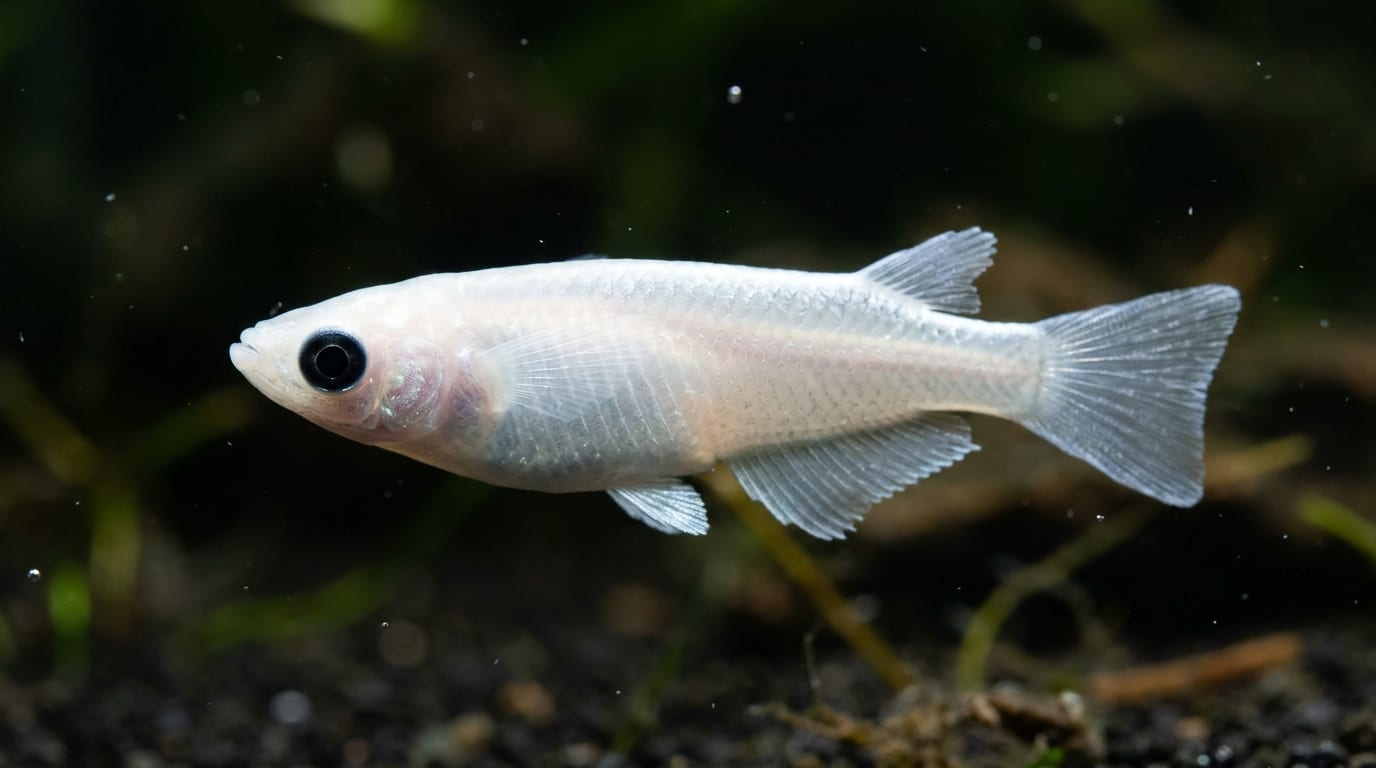
Hitomi (Albino Panda) Medaka
Hitomi (Albino Panda) Medaka is a distinctive ornamental variety known for its striking contrast between a white body and eyes that appear black. It was created in 2013 by Megumi Fukunaga and became the second new variety officially certified by the Japan Medaka Association. It is notable as the first medaka confirmed to develop black melanophores despite being albino, giving it an unusual and eye-catching appearance among panda-type medaka. This variety is considered suited to intermediate keepers rather than complete beginners. Adults reach roughly 4cm in standard length, making their expressive dark eyes easy to appreciate in a tank or outdoor container setup. For medaka enthusiasts looking to explore the depth of Japan's improved-variety breeding culture, this is a variety worth knowing.
View Hitomi (Albino Panda) Medaka encyclopedia →0% commission on your first sales!Register by September 30, 2026 and your first 2 sales are commission-free!
Breeder Wanted!
List on BreederDirect and sell directly to customers nationwide!
9 Transparency Commitments from Br-Choku
Each Medaka listing includes the following from Breeder. Full transparency on color variations (Yokihi/Miyuki/Lame) and lineage guaranteed.
- Variety Name
- Lineage
- Actual Photos
- Color Classification
- Body Type
- Scale Type
- Size
- Origin
- Age/Generation
Browse all 116 breeds
Color
Scale Type
Verified breeders wanted for Medaka
Breeders are signing up now ahead of launch. Subscribe to be notified when new listings go live.
Getting alerts is free with a member account. When new listings match your saved search, we'll notify you by email and in-app.
Browse other categories
Verified breeders (preview)

Hitomi (Albino Panda) Medaka key facts
- Care level
- Intermediate
- Lifespan
- 2-3 years
- Size
- Up to about 4cm SL
- Temperature
- 18〜28℃
- Diet
- Prepared medaka food, green water
- Lighting
- The contrast between the white body and dark eyes reads well both from above and from the side. Outdoor keeping is recommended, but shade over half the container helps avoid summer overheating.
- Diet & Nutrition
- Commercial prepared medaka food is the staple, given in an amount finished within a few minutes. Leftovers decay and foul the water, so adjust the quantity. Green water rich in phytoplankton suits fry rearing.
- Water Temperature & Quality
- Slightly acidic to slightly alkaline water is considered ideal, and the water drifts toward acidic as keeping continues. Around one water change per week is the guideline, and because sudden shifts in temperature or pH cause stress, acclimatise new fish by floating the bag. FishBase records the wild water chemistry of this species as pH 7.0-8.0 and hardness 9-19 dH.
- Tank Mates & Compatibility
- A peaceful schooling fish, normally kept as a group of the same variety. One litre of water per fish is the guideline against overcrowding; overstocking causes poor growth, reduced breeding, oxygen shortage and water fouling.
- Breeding
- Outdoors the spawning season runs from about April to October, once water reaches 18C or above with 12-13 hours of daylight. For year-round indoor breeding, 25-28C water and over 13 hours of lighting are the guideline. Eggs hatch at a cumulative 250 degree-days, about 10 days at 25C.
- Health & Notes
- Albino fish carry no melanin, so body colour is limited to white, pink, yellow and orange lines. Outdoors the fish become inactive and overwinter near the bottom as water cools, resuming activity in spring once daytime water exceeds 10C. A 0.3-0.5% salt bath is used for ailing fish, with water raised to no more than about 28C.
About Hitomi (Albino Panda) Medaka
Hitomi (Albino Panda) Medaka features a white body with striking black-appearing eyes. Learn about this Japan Medaka Association-certified variety before bringing one home.
7 things to know before welcoming a Hitomi (Albino Panda) Medaka
1Black-appearing eyes are the signature trait
The combination of a white body with eyes that appear black creates a striking, panda-like expression. It is known as a rare type where black melanophores appear despite the fish being albino.
2Suited to intermediate keepers
This variety is rated as suitable for intermediate keepers rather than absolute beginners. Some prior experience with water quality and temperature management will help you care for it confidently.
3Adults grow to about 4cm
Adults reach a maximum standard length of about 4cm. Keep this in mind when choosing container size and stocking density with tankmates.
4Be mindful of direct sunlight
As an albino-type variety, it has less pigmentation, which can make its skin and eyes more sensitive to strong light. When keeping it outdoors, using shade netting to soften direct sunlight is a good precaution.
5Avoid sudden changes in water conditions
As with medaka in general, sudden shifts in temperature or water chemistry can cause stress. It's best to perform water changes gradually, in small amounts over time.
6Easy to distinguish among tankmates
Thanks to its distinctive white body and dark eyes, it's easy to pick out even when kept alongside other medaka varieties. It tends to stand out within a group.
7Prepare the container and environment beforehand
Setting up the tank or outdoor container—along with plants and hiding spots—before bringing your medaka home makes the transition smoother. Careful acclimation to new water reduces stress on the fish.
Frequently asked questions about Hitomi (Albino Panda) Medaka
- Q.Can beginners keep Hitomi (Albino Panda) Medaka?
- A.This variety is rated for intermediate keepers. It suits those with some basic knowledge and experience in medaka care. First-time keepers may want to gain experience with more common varieties first.
- Q.Why is it called "Panda"?
- A.The name comes from its appearance—a white body with eyes that appear black, reminiscent of a panda's face. It is a rare type in which black melanophores appear despite the fish being albino.
- Q.How large does it grow?
- A.It reaches a maximum standard length of about 4cm. Use this as a guide when choosing an appropriately sized container.
- Q.Is this variety subject to any regulations?
- A.This variety is not subject to CITES. There is no need to consider related procedures when acquiring it.
- Q.Can it be kept in an outdoor biotope?
- A.Outdoor keeping is possible, but since albino-type varieties have less pigmentation and can be more sensitive to strong sunlight, using shade netting to soften direct light is a reasonable precaution.
Useful tools for Hitomi (Albino Panda) Medaka care
Learn more about Hitomi (Albino Panda) Medaka in the encyclopedia
View Hitomi (Albino Panda) Medaka encyclopedia entry →
Care difficulty, lifespan, size and diet — all basics covered.
More in this category
Can't find the one you're looking for?
Post your wishes for free and breeders with matching animals will contact you with introductions.