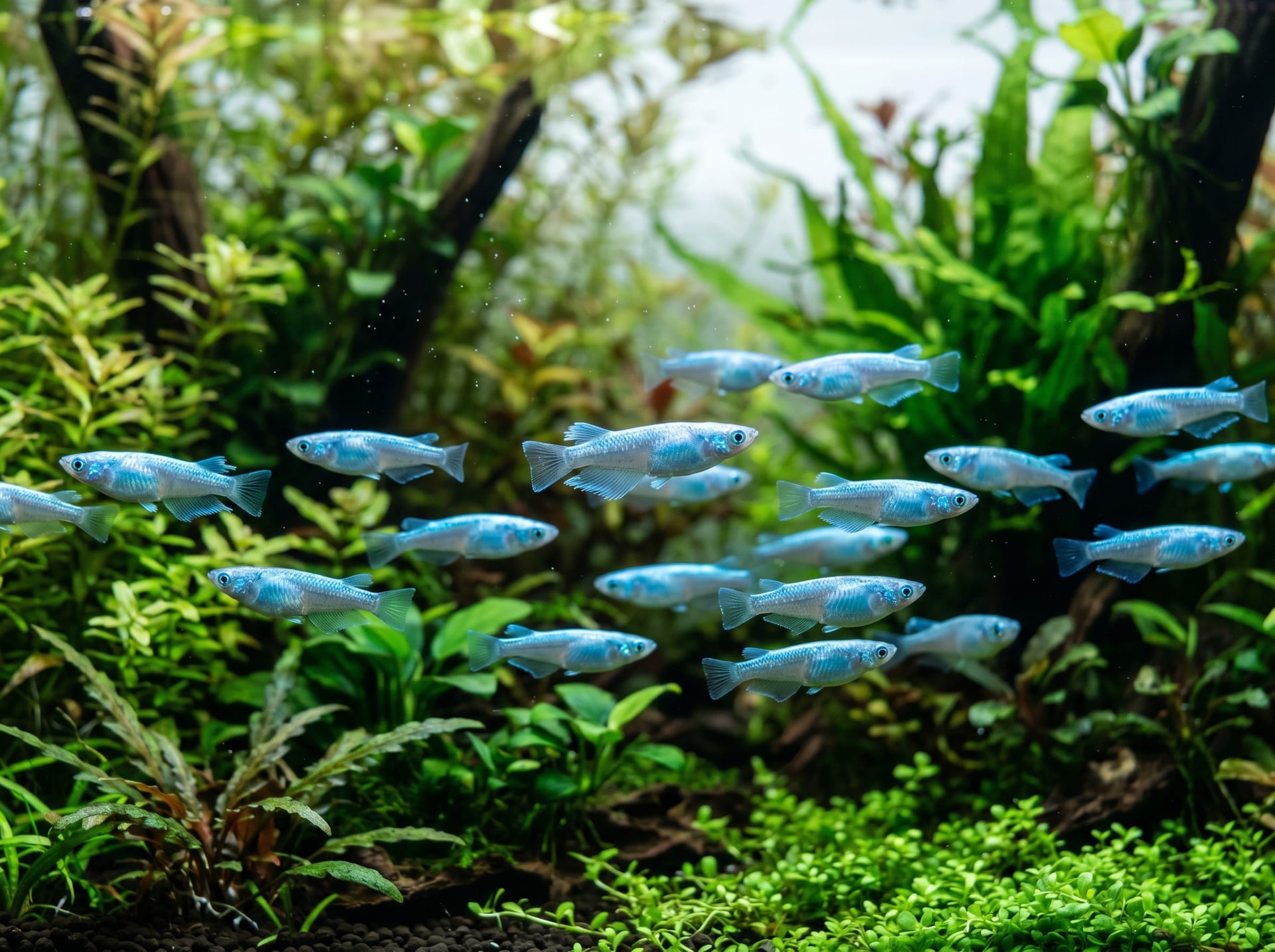
Blue / White Basic
Blue and white medaka are a foundational group of varieties prized for their cool blue-tinted bodies and clean, luminous white sheen. Calm by nature and happiest in groups, they move through the water in a relaxed, effortless way that is endlessly soothing to watch. Hardy enough for both indoor tanks and outdoor containers, they suit beginners and experienced keepers alike.
View Blue / White Basic encyclopedia →0% commission on your first sales!Register by September 30, 2026 and your first 2 sales are commission-free!
Breeder Wanted!
List on BreederDirect and sell directly to customers nationwide!
9 Transparency Commitments from Br-Choku
Each Medaka listing includes the following from Breeder. Full transparency on color variations (Yokihi/Miyuki/Lame) and lineage guaranteed.
- Variety Name
- Lineage
- Actual Photos
- Color Classification
- Body Type
- Scale Type
- Size
- Origin
- Age/Generation
Browse all 116 breeds
Color
Scale Type
Verified breeders wanted for Medaka
Breeders are signing up now ahead of launch. Subscribe to be notified when new listings go live.
Getting alerts is free with a member account. When new listings match your saved search, we'll notify you by email and in-app.
Browse other categories
Verified breeders (preview)

Blue / White Basic key facts
- Care level
- Beginner-friendly
- Lifespan
- 2-3 years
- Size
- 3-4cm
- Diet
- Prepared foods (fry powder to adult flakes) plus live foods such as daphnia and infusoria
- Container & Tank
- Thrives anywhere from an outdoor biotope to an indoor tank. Blue looks best in a black container, white in a light one.
- Water Temperature & Quality
- Adapts to a wide range of about 5-30°C and prefers neutral to slightly alkaline water. Hardy and good for beginners.
- Diet & Feeding
- Feed mainly prepared food suited to the growth stage, from fry powder to adult flakes, plus live food such as daphnia and paramecium.
- Tank Mates & Compatibility
- Gentle in temperament and fine with peaceful varieties of similar size. Avoid housing it with aggressive fish.
- Breeding & Egg-laying
- Easy to breed and multiply, and the foundation of many improved varieties. A good starting point for learning medaka breeding.
About Blue / White Basic
Blue and white medaka represent the quiet origins of medaka keeping in Japan, a group refined from the pale blue-grey sheen found in wild populations. Through selective breeding, breeders established lines that combine a clear, cool blue tone with a luminous white clarity that is understated yet captivating. The body shape follows the classic spindle form; the focus of appreciation here is the transparency and cool elegance of the coloration rather than elaborate fin development. Temperamentally gentle and slightly shy, these fish come alive when kept in groups, painting a soothing, refreshing scene across a tank or outdoor container. Their resilience is a defining strength: adaptable to Japan's four distinct seasons and straightforward enough for complete beginners. Simple in appearance yet rich in quiet beauty, blue and white medaka tend to grow more beloved the longer they are kept.
Featured breeders for Blue / White Basic
See all Blue / White Basic breeders (2) →7 things to know before welcoming a Blue / White Basic
1Water Temperature Matters
Blue and white medaka tolerate a wide range of 5–30°C, but sudden temperature swings can stress them. In outdoor settings during winter, take care that the water surface does not freeze completely. During seasonal transitions, change water temperatures gradually to keep the fish comfortable.
2Light Enhances Blue Color
The blue and white coloration shifts noticeably depending on lighting. Natural sunlight or white LED light brings out the blue tone, while dim conditions emphasize the white. Using a dark-colored container bottom, such as black or navy, makes the blue hue appear more vivid and striking.
3Peaceful Community Fish
These medaka are gentle and well-suited for community setups with other medaka varieties or small, peaceful species. Avoid housing them with fin-nipping or larger fish that may see them as prey. Keeping the same variety together also creates a visually cohesive display that highlights their coloration.
4Breeding and Fry Care
Spawning begins when water temperature exceeds 18°C, with eggs attached to aquatic plants or spawning mops. Since adults may eat their own eggs, it is safer to transfer the eggs to a separate container for hatching. Fry are tiny and fragile; feed them a dedicated powdered food designed for medaka larvae.
5Relatively Low Running Costs
Blue and white medaka are widely available and generally affordable to purchase. Basic equipment needs are modest: a small tank or container, an air pump, and quality food keep running costs low. That said, high-grade specimens from specialist breeders with excellent body shape and coloration can command higher prices.
6Watch for Water Quality
Like many medaka, blue and white varieties are susceptible to white spot disease and fin rot when water quality declines. Performing a partial water change of about one-third of the volume once a week, along with regular filter cleaning, helps prevent problems. Early detection and prompt action are key to keeping them healthy.
7Great for Outdoor Keeping
Blue and white medaka thrive in outdoor Japanese environments and pair beautifully with biotope setups in lotus pots or tub containers. Natural sunlight enhances their coloration, and pairing them with aquatic plants creates an elegant, nature-inspired display. Be mindful of summer heat causing water temperatures to spike, and protect the fish from predators such as cats and birds.
Frequently asked questions about Blue / White Basic
- Q.When does the blue coloration fully develop?
- A.Juveniles often appear white or translucent, with blue tones gradually emerging around one to two months after hatching. Coloration stabilizes most clearly by around three months when they reach adulthood. Lighting and container bottom color also significantly affect how the hue appears.
- Q.How many should I start with?
- A.Starting with at least five or six fish is recommended, as medaka are schooling animals that feel more secure and behave more naturally in groups. Avoid overcrowding, which degrades water quality quickly; a rough guideline is one fish per liter of water as a maximum.
- Q.Can they be kept with other medaka varieties?
- A.Cohabiting with other medaka varieties is generally fine. However, if you allow mixed varieties to breed together, offspring will show blended characteristics and coloration. To maintain the purity of a specific line, it is best to house each variety in its own dedicated tank.
- Q.Can they overwinter outdoors?
- A.Blue and white medaka can overwinter outdoors in Japan. As water temperature drops below 10°C, they become largely inactive and rest near the bottom. Ensure sufficient water depth (at least 20 cm) to prevent complete freezing, and stop feeding during this dormant period as their metabolism is too slow to digest food effectively.
- Q.Why has my fish's color faded?
- A.Common causes include stress, poor water quality, insufficient lighting, or natural aging. Start by performing a water change and reviewing the overall tank conditions. Switching to a darker-colored substrate or container can help coloration appear more vivid. If fading is severe and persistent, it may indicate an underlying health issue worth investigating.
Useful tools for Blue / White Basic care
Learn more about Blue / White Basic in the encyclopedia
View Blue / White Basic encyclopedia entry →
Care difficulty, lifespan, size and diet — all basics covered.
More in this category
Can't find the one you're looking for?
Post your wishes for free and breeders with matching animals will contact you with introductions.