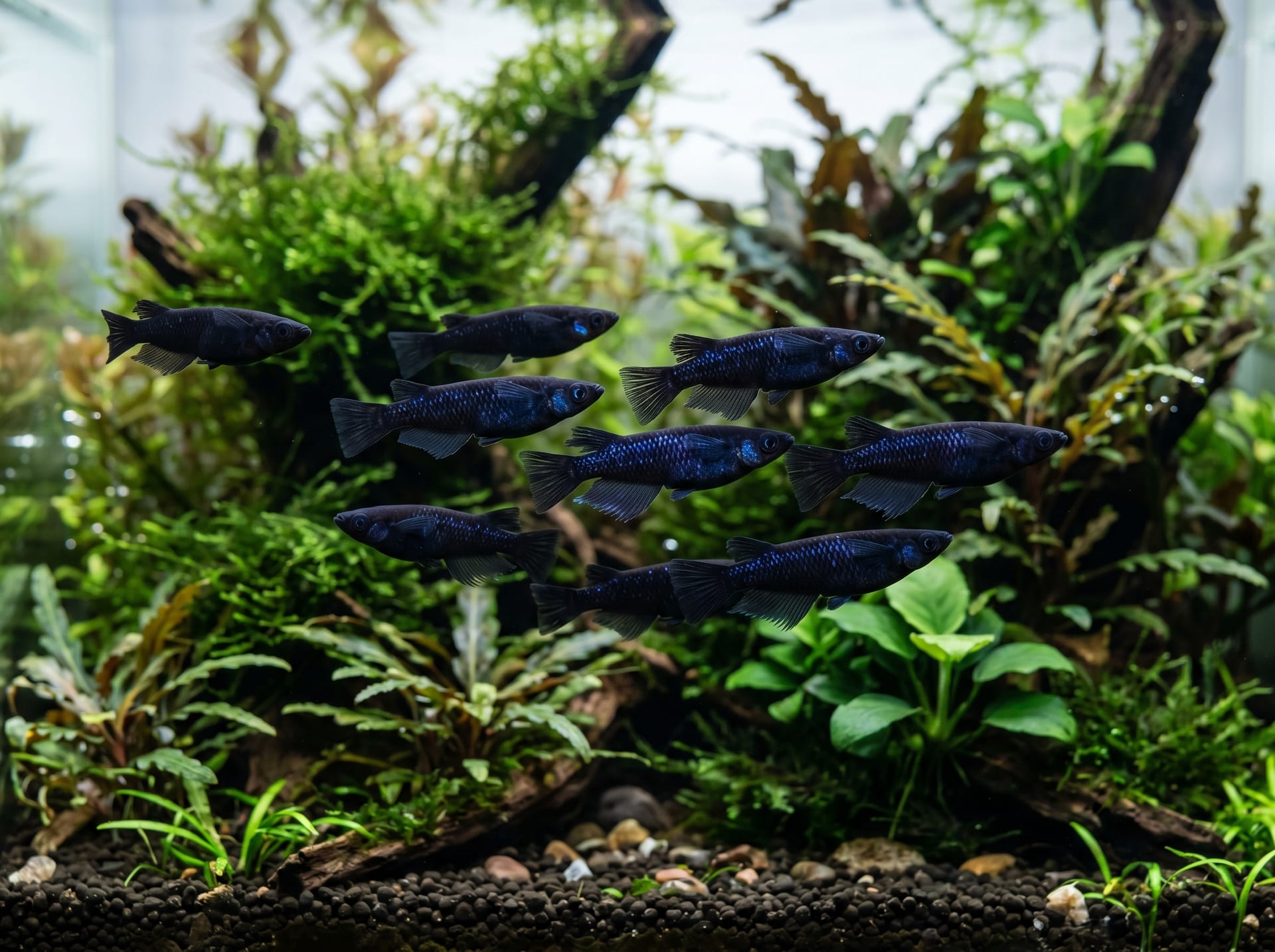
Satan (Black)
Satan (Black) is a striking medaka variety renowned for its deep, jet-black coloration that commands attention in any setting. Its bold appearance looks stunning in both aquariums and outdoor containers, offering simple yet captivating beauty. Hardy and easy to keep, it is an excellent choice for beginners.
View Satan (Black) encyclopedia →- Price Range
- ¥4,000〜¥4,000
0% commission on your first sales!Register by September 30, 2026 and your first 2 sales are commission-free!
Breeder Wanted!
List on BreederDirect and sell directly to customers nationwide!
9 Transparency Commitments from Br-Choku
Each Medaka listing includes the following from Breeder. Full transparency on color variations (Yokihi/Miyuki/Lame) and lineage guaranteed.
- Variety Name
- Lineage
- Actual Photos
- Color Classification
- Body Type
- Scale Type
- Size
- Origin
- Age/Generation
Browse all 20 breeds
Color
Scale Type
Verified breeders wanted for Medaka
Breeders are signing up now ahead of launch. Subscribe to be notified when new listings go live.
Getting alerts is free with a member account. When new listings match your saved search, we'll notify you by email and in-app.
Browse other categories
Verified breeders (preview)

About Satan (Black)
Satan (Black) is one of the defining black-variety medaka to emerge from Japan's improved medaka breeding movement. True to its name, it features a deep, uniform jet-black body that gives it a commanding presence unlike any other variety. This striking coloration is achieved through a high-density distribution of melanophores, the pigment cells responsible for black color. Satan medaka have a calm temperament and are known for their hardiness, making them well-suited to beginners. Setting up the tank with dark containers and a dark substrate brings out the depth of their color to full effect. They are also fairly easy to breed, and watching the black pigmentation intensify as fry mature into adults is one of the rewarding aspects of keeping this variety. Their high ornamental quality and collectible appeal continue to drive their popularity.
Featured breeders for Satan (Black)
See all Satan (Black) breeders (2) →7 things to know before welcoming a Satan (Black)
1Black Color Varies by Environment
The intensity of Satan's black coloration can shift depending on the environment. Using dark-colored containers or substrate enhances pigmentation, bringing out a deeper, richer black. Light-colored containers may cause the color to appear less vivid.
2Outdoor Keeping Enhances Color
Natural sunlight outdoors stimulates black pigment development, making Satan's coloration more vivid. Balance sun exposure with shaded areas, and watch for sudden spikes in water temperature. Shade management is especially important during summer.
3Ideal Temperature: 16–28°C
Like other improved medaka varieties, Satan thrives in water temperatures between 16°C and 28°C. Extreme heat above 30°C or rapid drops in winter can cause stress and disease, so seasonal management is essential. In some regions, winterizing measures may be needed for outdoor fish.
4Peaceful and Community-Friendly
Satan medaka are non-aggressive and do well in community setups with similarly-sized medaka or other peaceful small fish. Avoid housing them with much larger fish or fin-nipping species. Keeping them as a single-variety group also makes it easy to appreciate their coloration.
5Watch for Water Quality Decline
While Satan medaka are relatively hardy, they are sensitive to ammonia and nitrite buildup. Maintain water quality with weekly partial water changes of about one-third volume and adequate filtration. Avoid overcrowding, as high fish density quickly degrades water conditions.
6Easy Breeding and Spawning
Satan medaka breed readily, with active spawning from spring through summer under suitable conditions. Moving laid eggs to a separate container before adults can eat them significantly improves hatch rates. Raising fry on finely powdered dedicated food improves their survival rate.
7Relatively Affordable to Start
Satan medaka are widely available and generally affordably priced among improved varieties. Starter costs for a container, aeration, filtration, and substrate typically range from a few thousand to around 10,000 yen. Ongoing costs—mainly food and electricity—run roughly a few hundred yen per month.
Frequently asked questions about Satan (Black)
- Q.Can Satan's black color fade over time?
- A.The color can fade depending on environment and health. Using dark containers, maintaining good water quality, and providing balanced nutrition can help enhance coloration. Stress and illness also cause fading, so a stable environment is key.
- Q.Can Satan medaka be kept with other medaka varieties?
- A.Mixed keeping is possible given their peaceful nature, but crossbreeding between varieties can dilute Satan's distinctive coloration over generations. Single-variety keeping is recommended if you want to preserve and breed true to type. For purely ornamental purposes, mixed tanks work fine.
- Q.Is outdoor or indoor keeping easier for Satan medaka?
- A.Both environments are suitable. Outdoors offers natural sunlight for color enhancement and microorganism growth for supplemental nutrition. Indoors allows stable temperature control and good viewing under LED lighting. Choose based on your lifestyle and space.
- Q.How long do Satan medaka typically live?
- A.With proper care, Satan medaka typically live around 2 to 3 years. Maintaining clean water, feeding appropriately, and minimizing stress all contribute to a longer, healthier life. While they are an improved variety, following basic husbandry practices supports a good lifespan.
- Q.What should I watch for when raising Satan fry?
- A.Newly hatched fry have very small mouths, so feed them fine-particle fry food in small amounts. Keep them separate from adults to prevent predation. When doing water changes, replace small amounts at a time to avoid sudden shifts in water quality, which is critical for improving survival rates.
Useful tools for Satan (Black) care
Learn more about Satan (Black) in the encyclopedia
View Satan (Black) encyclopedia entry →
Care difficulty, lifespan, size and diet — all basics covered.
Satan (Black) related articles
See more Satan (Black) articles →More in this category
Can't find the one you're looking for?
Post your wishes for free and breeders with matching animals will contact you with introductions.