Tarumi Longfin Medaka
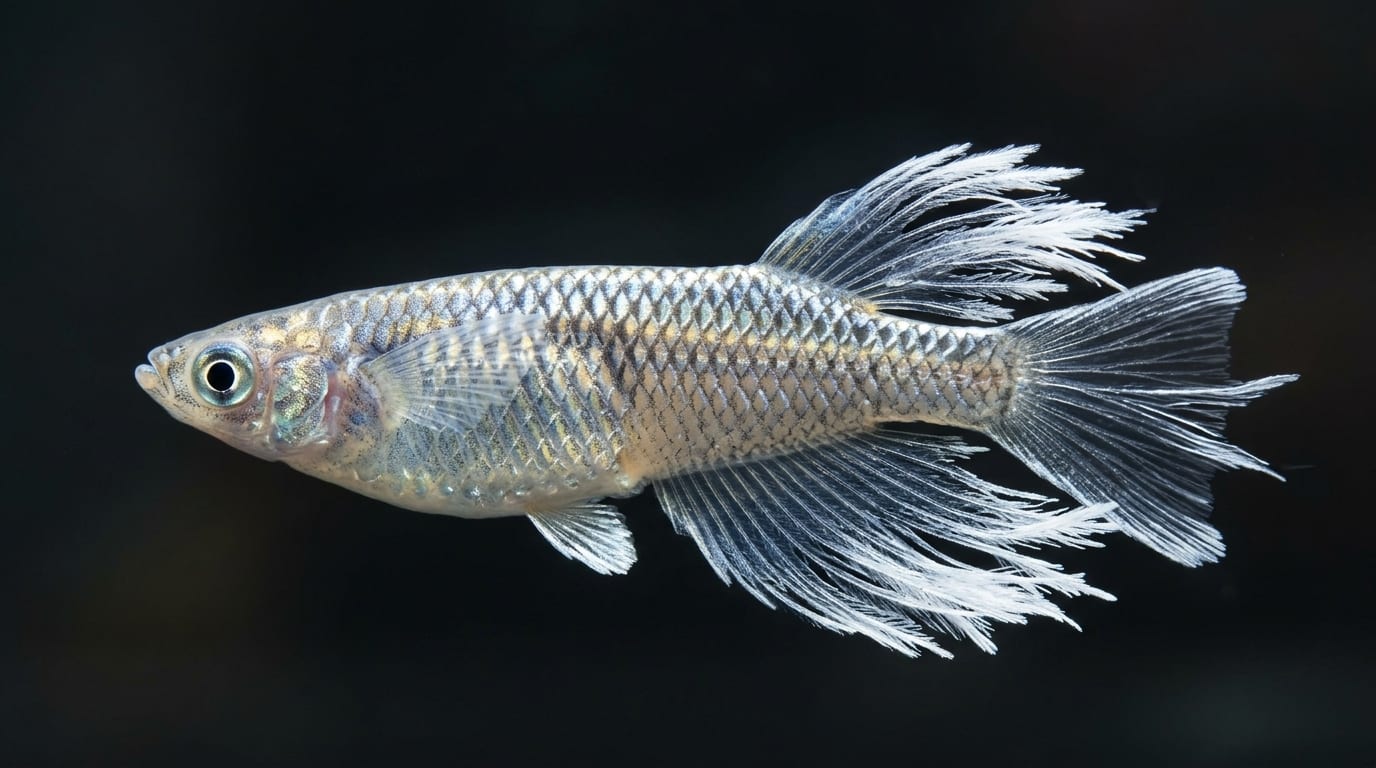
The Tarumi Longfin Medaka is prized for a shimmering, net-like luster (a scale-based "extrabody" sheen) that spreads across its body, giving it an elegant glow. Its most striking trait is the dorsal and anal fins: the rays grow unusually long and branch out into soft, white, fluffy tufts that flutter gracefully with every stroke. This strain traces back to 2019, when breeder Seiji Tarumi first established it as the founding line of the "fusa-hire" (fluffy-fin) lineage, and its fin beauty becomes more striking with age. Because its fins and condition reward attentive care, it's generally considered a better fit for intermediate keepers.
View Tarumi Longfin Medaka encyclopedia →0% commission on your first sales!Register by September 30, 2026 and your first 2 sales are commission-free!
Breeder Wanted!
List on BreederDirect and sell directly to customers nationwide!
BreederDirect's 9 Transparency Commitments
Each Medaka listing includes the following from Breeder. Full transparency on color variations (Yokihi/Miyuki/Lame) and lineage guaranteed.
- Variety Name
- Lineage
- Actual Photos
- Color Classification
- Body Type
- Scale Type
- Size
- Origin
- Age/Generation
Browse all 145 breeds
Color
Scale Type
Verified breeders wanted for Medaka
Breeders are signing up now ahead of launch. Subscribe to be notified when new listings go live.
Getting alerts is free with a member account. When new listings match your saved search, we'll notify you by email and in-app.
Browse other categories
Verified breeders (preview)

Tarumi Longfin Medaka key facts
- Care level
- Intermediate
- Lifespan
- 2-3 years
- Size
- Up to about 4cm SL
- Temperature
- 18〜28℃
- Diet
- Prepared medaka food, green water
- Lighting
- The net-like sheen appears on the back and suits viewing from above, while the white, feathery fins read best from the side at an angle. Outdoors, summer sun raises water temperature sharply, so shade half the container with something such as a reed screen.
- Diet & Nutrition
- Commercial prepared medaka food is the staple, given in an amount finished within a few minutes. Leftovers decay and foul the water, so adjust the quantity. Green water rich in phytoplankton suits fry rearing.
- Water Temperature & Quality
- Slightly acidic to slightly alkaline water is considered ideal, and the water drifts toward acidic as keeping continues. Around one water change per week is the guideline, and because sudden shifts in temperature or pH cause stress, acclimatise new fish by floating the bag. FishBase records the wild water chemistry of this species as pH 7.0-8.0 and hardness 9-19 dH.
- Tank Mates & Compatibility
- Elongated fins are easily damaged by obstructions or crowding, so keep the container uncluttered and the stocking light. A peaceful schooling fish, normally kept as a group of the same variety. One litre of water per fish is the guideline against overcrowding; overstocking causes poor growth, reduced breeding, oxygen shortage and water fouling.
- Breeding
- The Medaka Web Encyclopedia states that crossing this line with morpho to make Marriage Longfin both strengthened the fusahire expression and raised its heritability. Outdoors the spawning season runs from about April to October, once water reaches 18C or above with 12-13 hours of daylight. For year-round indoor breeding, 25-28C water and over 13 hours of lighting are the guideline. Eggs hatch at a cumulative 250 degree-days, about 10 days at 25C.
- Health & Notes
- The Medaka Web Encyclopedia describes Marriage Longfin, bred from this line, as a fish whose finish depends on its environment. Generous stocking room and a steady water temperature are the guideline for drawing out the fusahire expression. The extended, branching fins damage easily, so keep the container uncluttered. Outdoors the fish become inactive and overwinter near the bottom as water cools, resuming activity in spring once daytime water exceeds 10C. A 0.3-0.5% salt bath is used for ailing fish, with water raised to no more than about 28C.
About Tarumi Longfin Medaka
Tarumi Longfin Medaka features a net-like body luster and long, fluffy white dorsal and anal fins. Established in 2019, it's the founding strain of the fusa-hire lineage, suited to intermediate keepers.
7 things to know before welcoming a Tarumi Longfin Medaka
1Branching Fluffy Fins
The dorsal and anal fin rays don't just grow longer — they branch and fan out into soft, white, fluffy tufts, which is this strain's signature trait. As the founding line of the fusa-hire lineage, it shows a more delicate fin texture than typical longfin medaka, fluttering gracefully as it swims. Because the fins are so delicate, keep sharp decorations and rough edges out of the tank.
2Net-Like Body Luster
A net-like sheen (an "extrabody" scale luster) spreads across the body, giving this strain its elegant shimmer. How it catches the light shifts with the angle, making it rewarding to simply watch. Each fish shows its own individual pattern in how the netting develops.
3Best Suited to Intermediate Keepers
The Tarumi Longfin is generally considered suited to intermediate keepers who already have some experience managing water quality. Because its fins are especially long, extra attention to water flow and conditions helps keep it healthy. First-time medaka keepers may want to build experience with a standard strain before taking this one on.
4Grows to About 4cm
Adults reach a maximum standard length of about 4cm. With its fins included, the overall impression is a bit larger, giving it a noticeably graceful presence as it swims. Make sure its tank or outdoor container gives it enough open space to move freely.
5Protecting the Fins
The elongated fin rays are delicate and can tear easily, so sharp decorations or coarse nets are best avoided in the tank. Use a soft, fine-mesh net when scooping it out to minimize stress on the fins. If keeping it with other fish, choose calm tankmates that won't nip at its long fins.
6Stable Water Conditions
Like other medaka strains, sudden shifts in temperature or water quality can be stressful. Regular water changes and a spot away from direct sun or temperature swings help keep it in good condition. If you use a filter, pick one with gentle flow to avoid putting strain on the long fins.
7Know Its Origin
The Tarumi Longfin was established in 2019 by breeder Seiji Tarumi as the founding strain of the fusa-hire lineage. Knowing this background adds depth to appreciating the strain's characteristics. It's also interesting to compare it with other fusa-hire strains that descended from this line.
Frequently asked questions about Tarumi Longfin Medaka
- Q.Is the Tarumi Longfin suitable for beginners?
- A.It's generally considered suited to intermediate keepers, so it's best to gain some medaka-keeping experience first. A handle on basic water quality and temperature management makes it easier to keep successfully.
- Q.How is it different from a standard medaka?
- A.Its biggest difference is that the dorsal and anal fin rays grow long and branch into soft, white, fluffy tufts. It also has an elegant net-like body luster, and it's the founding strain of the fusa-hire lineage.
- Q.How large does it grow?
- A.It reaches a maximum standard length of about 4cm. Including its fins, it looks noticeably larger and more striking.
- Q.How can I keep its fins from getting damaged?
- A.Avoid sharp decorations and coarse nets, and use a soft, fine-mesh net when scooping it out. If keeping it with other fish, choose calm tankmates that won't nip at its fins.
- Q.When was this strain first developed?
- A.It was established in 2019 by breeder Seiji Tarumi. It's the historic founding strain of the fusa-hire lineage.
Useful tools for Tarumi Longfin Medaka care
Learn more about Tarumi Longfin Medaka in the encyclopedia
View Tarumi Longfin Medaka encyclopedia entry →
Care difficulty, lifespan, size and diet — all basics covered.
More in this category
Can't find the one you're looking for?
Post your wishes for free and breeders with matching animals will contact you with introductions.