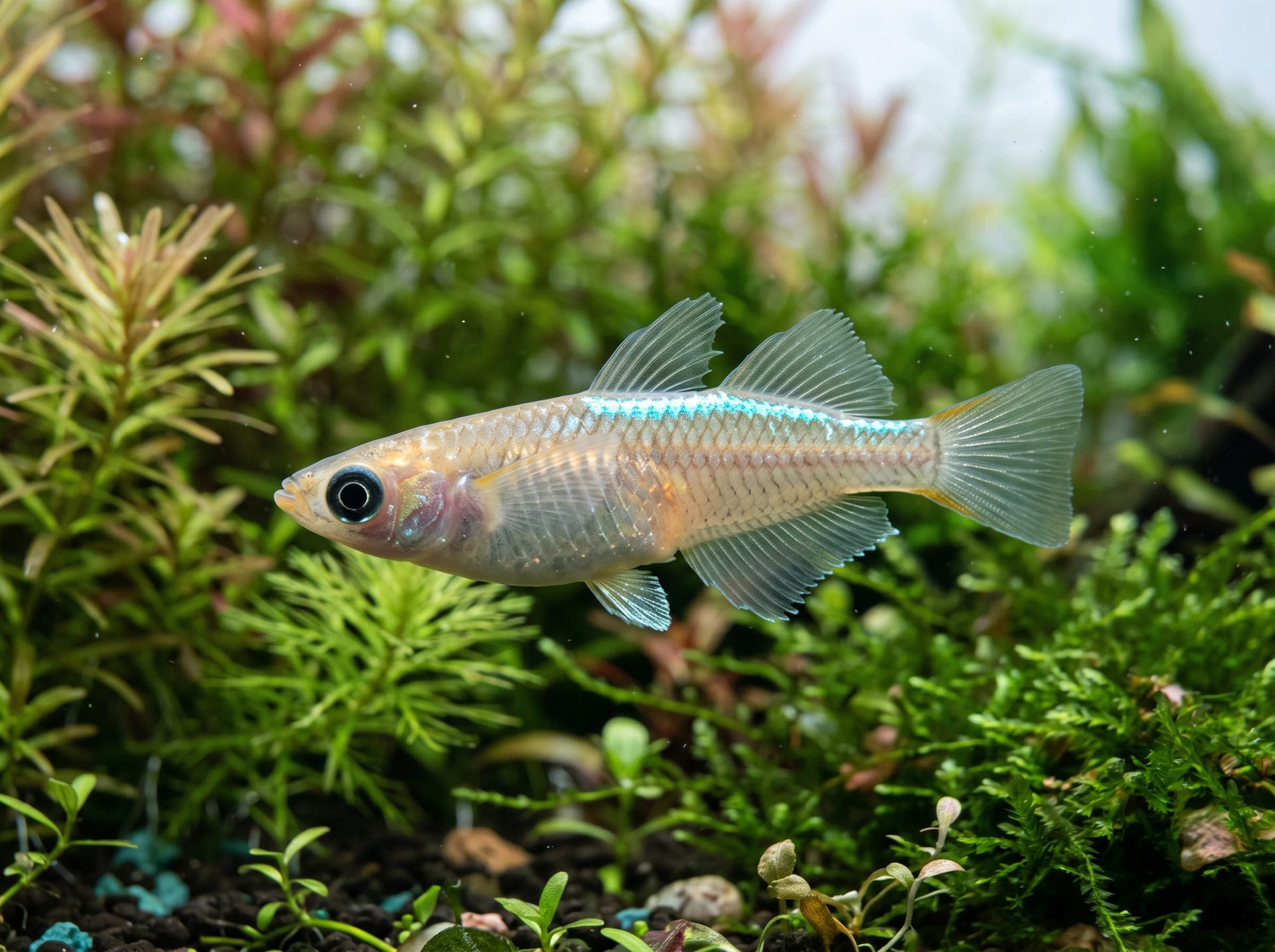
Samurai
Samurai medaka are prized for a striking fin mutation: the dorsal fin splits into two blades, evoking the sharp edge of a Japanese sword — hence the name. Rather than body color, this strain is all about fin shape, so it's best appreciated from above as the twin dorsal blades sway with each stroke. Samurai are calm, easygoing fish that get along well in mixed tanks. Because the split-fin trait is a delicate feature to maintain, keeping true Samurai lines calls for some prior experience with water quality and selective breeding, making it a variety best suited to intermediate keepers. It's a fish to watch closely and appreciate over time, rather than a quick, casual pick.
View Samurai encyclopedia →0% commission on your first sales!Register by September 30, 2026 and your first 2 sales are commission-free!
Breeder Wanted!
List on BreederDirect and sell directly to customers nationwide!
9 Transparency Commitments from Br-Choku
Each Medaka listing includes the following from Breeder. Full transparency on color variations (Yokihi/Miyuki/Lame) and lineage guaranteed.
- Variety Name
- Lineage
- Actual Photos
- Color Classification
- Body Type
- Scale Type
- Size
- Origin
- Age/Generation
Browse all 116 breeds
Color
Scale Type
Verified breeders wanted for Medaka
Breeders are signing up now ahead of launch. Subscribe to be notified when new listings go live.
Getting alerts is free with a member account. When new listings match your saved search, we'll notify you by email and in-app.
Browse other categories
Verified breeders (preview)

Samurai key facts
- Care level
- Intermediate
- Lifespan
- 2-3 years
- Size
- Body length 3-4cm
- Temperature
- 15〜28℃
- Diet
- Mainly prepared feed, supplemented with live food (brine shrimp, daphnia); fine powdered food for fry.
- Coloration & Traits
- Part of the dorsal fin membrane or rays is missing, splitting the dorsal into two blades likened to swords; combined with various color lines such as miyuki or yellow.
- Care Tips
- Care is like any improved medaka and it grows outdoors; combined with the light (hikari) body type, it is best appreciated viewed from above.
- Water Quality & Temperature
- Keep around 15-28°C; avoid summer overheating and sudden changes, and keep water stable.
- Breeding
- It rarely appears from the normal body type, arising instead from the light or light-daruma types; select parents with a clean split to line-breed.
- Cautions
- The split-fin trait is not highly fixed, so selection is needed to retain it; the divided fin damages easily, so avoid overcrowding.
About Samurai
Samurai medaka are known for a striking split dorsal fin resembling a samurai sword blade. Reaching 3–4cm and living 2–3 years, this intermediate-level variety is best appreciated for its fin shape from a top-down view.
7 things to know before welcoming a Samurai
1All About the Fins
Samurai medaka aren't about body color — their signature feature is a dorsal fin split into two blades. Viewing them from directly above (the traditional "top view") is the best way to appreciate this fin shape.
2Suited to Experienced Keepers
Because the split-fin trait is a delicate feature, some individuals can be more sensitive to sudden shifts in water quality. Getting comfortable with basic medaka care first will help you enjoy their fins for the long run.
3A 2–3 Year Lifespan
Samurai typically live around 2 to 3 years. Actual lifespan varies with water temperature and overall care, so keep an eye on each fish's condition day to day.
4Adults Reach 3–4cm
Fully grown, Samurai reach about 3 to 4cm in length. Their compact size makes it easy to plan for keeping several together.
5Calm and Community-Friendly
Samurai have a mild temperament and rarely show aggression. That said, their well-developed fins can be damaged if nipped by tankmates, so keep an eye on fin condition.
6Keep Water Conditions Stable
Sudden temperature swings can be stressful for fin-variant strains like this one. Keeping sunlight exposure and water-change timing consistent helps maintain a calm environment.
7Prepare the Tank First
Before bringing Samurai home, set up a space for gradual water acclimation and some aquatic plants for cover. Keep new arrivals somewhere quiet while they settle in.
Frequently asked questions about Samurai
- Q.Is Samurai medaka suitable for beginners?
- A.Because the split-fin trait is a delicate feature, Samurai is generally considered better suited to intermediate keepers. Getting comfortable with basic medaka care first will help you enjoy their fins for the long term.
- Q.Where does the name "Samurai" come from?
- A.The name comes from the fish's split dorsal fin, which resembles the blade of a Japanese sword. This strain is valued for that fin shape rather than for body color.
- Q.Can Samurai be kept with other medaka?
- A.Yes, their calm temperament makes mixed-tank keeping possible. That said, well-developed fins can be nipped and damaged by tankmates, so watch how they get along and adjust groupings as needed.
- Q.How large do Samurai medaka grow?
- A.Adults reach roughly 3 to 4cm in length. Plan your tank space and group size with that size in mind.
- Q.What is the typical lifespan?
- A.Samurai typically live around 2 to 3 years. Actual lifespan varies with water temperature and overall care, so keeping an eye on each fish's condition is important.
Useful tools for Samurai care
Learn more about Samurai in the encyclopedia
View Samurai encyclopedia entry →
Care difficulty, lifespan, size and diet — all basics covered.
More in this category
Can't find the one you're looking for?
Post your wishes for free and breeders with matching animals will contact you with introductions.