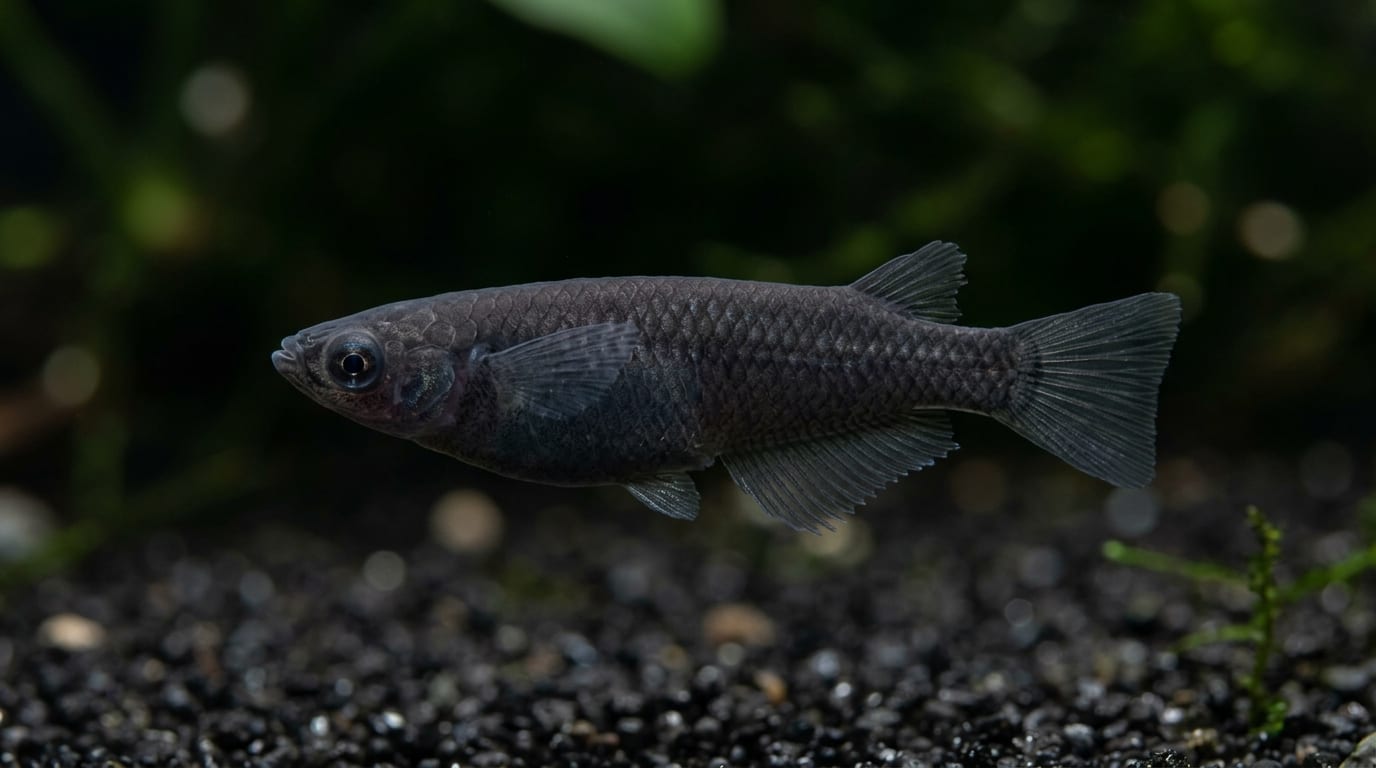
Small-Eye Medaka
The Small-Eye Medaka is a striking improved variety defined by its noticeably reduced, shrunken black eyes. Because its eyesight is weak, it shows little of the background-adaptation response that normally causes medaka to lighten in pale containers — so its color stays rich even in a white tank. This trait makes it a key foundation for black-colored medaka lines, and it draws real interest among enthusiasts. That same weak eyesight, though, means it can struggle to locate food quickly, so keepers need to watch feeding carefully when housing it with other medaka — making this a variety best suited to more experienced keepers.
View Small-Eye Medaka encyclopedia →0% commission on your first sales!Register by September 30, 2026 and your first 2 sales are commission-free!
Breeder Wanted!
List on BreederDirect and sell directly to customers nationwide!
9 Transparency Commitments from Br-Choku
Each Medaka listing includes the following from Breeder. Full transparency on color variations (Yokihi/Miyuki/Lame) and lineage guaranteed.
- Variety Name
- Lineage
- Actual Photos
- Color Classification
- Body Type
- Scale Type
- Size
- Origin
- Age/Generation
Browse all 116 breeds
Color
Scale Type
No listings match your filters
Adjust your filters, or get notified when new listings arrive.
Getting alerts is free with a member account. When new listings match your saved search, we'll notify you by email and in-app.
Browse other categories
Verified breeders (preview)

Small-Eye Medaka key facts
- Care level
- Advanced
- Lifespan
- 2-3 years
- Size
- Up to about 4cm SL
- Temperature
- 18〜28℃
- Diet
- Prepared medaka food, green water
- Lighting
- With background response absent, the colour holds even in a white container. Container colour cannot be used to adjust the fish, but colour can be judged in any container. The Medaka Web Encyclopedia recommends outdoor keeping and suggests shading half the container in summer.
- Diet & Nutrition
- Commercial prepared medaka food is the staple, given in an amount finished within a few minutes. Leftovers decay and foul the water, so adjust the quantity. Green water rich in phytoplankton suits fry rearing.
- Water Temperature & Quality
- Slightly acidic to slightly alkaline water is considered ideal, and the water drifts toward acidic as keeping continues. Around one water change per week is the guideline, and because sudden shifts in temperature or pH cause stress, acclimatise new fish by floating the bag. FishBase records the wild water chemistry of this species as pH 7.0-8.0 and hardness 9-19 dH.
- Tank Mates & Compatibility
- A peaceful schooling fish, normally kept as a group of the same variety. One litre of water per fish is the guideline against overcrowding; overstocking causes poor growth, reduced breeding, oxygen shortage and water fouling.
- Breeding
- Outdoors the spawning season runs from about April to October, once water reaches 18C or above with 12-13 hours of daylight. For year-round indoor breeding, 25-28C water and over 13 hours of lighting are the guideline. Eggs hatch at a cumulative 250 degree-days, about 10 days at 25C.
- Health & Notes
- Weak eyesight makes food hard to find, so feeding must be managed to reach every fish. The pure black medaka is described as more delicate than others because of its small pupils, and its low fixation rate makes both keeping and breeding a job for experienced keepers.
About Small-Eye Medaka
A guide to the Small-Eye Medaka, whose markedly shrunken black eyes give it stable, fade-resistant coloring but weaker eyesight — making it a variety best kept by more experienced hobbyists who feed with care.
7 things to know before welcoming a Small-Eye Medaka
1Weak Eyesight
The Small-Eye Medaka has a strikingly shrunken black eye area, and its eyesight is genuinely weak — its defining trait. Because it has trouble spotting food by sight, make sure food reaches its immediate area when feeding.
2Stable Coloring
Its weak eyesight means the background-adaptation response — the way medaka normally shift color to match their surroundings — is muted. As a result, its color stays rich even in a white container, which is part of its visual appeal.
3Foundation for Black Lines
This trait is known as a key foundation supporting black-colored medaka varieties. It's an especially interesting fish for anyone curious about color breeding in medaka.
4Mind Tank Mates
Housed with medaka that see well, it can lose out when competing for food. Consider keeping it alone, or feeding at separate times and spots to make sure it gets enough.
5Feed Thoughtfully
Since it struggles to spot food visually, scatter food across a wide area of the surface and drop some near where it's resting. Smaller, more frequent feedings also help.
6Best for Experienced Keepers
Its weak eyesight means it needs a bit more attention to feeding and environment stability, which is why it suits keepers who already have some medaka experience. Basic water-quality know-how goes a long way.
7Grows to About 4cm
Adults reach roughly 4cm in standard body length at maximum. Size your container and the number of tank mates accordingly.
Frequently asked questions about Small-Eye Medaka
- Q.Why does the Small-Eye Medaka have weak eyesight?
- A.It's because the black portion of its eye is markedly shrunken. As a result, the background-adaptation response — where medaka normally shift color to match their surroundings — is much weaker in this variety.
- Q.Is this a good medaka for beginners?
- A.It's generally considered a variety for more experienced keepers, since its weak eyesight calls for extra attention to feeding. It's a good idea to get comfortable with basic medaka care first.
- Q.Can it be kept together with other medaka?
- A.If housed with medaka that see well, it can end up losing out at feeding time. Keeping it alone, or feeding at separate times and locations, helps make sure it gets enough food.
- Q.How large does it grow?
- A.It reaches roughly 4cm in standard body length at maximum. Give it a container sized with some room to spare as it grows.
- Q.Is the Small-Eye Medaka subject to CITES?
- A.No, the Small-Eye Medaka is not subject to CITES.
Useful tools for Small-Eye Medaka care
Learn more about Small-Eye Medaka in the encyclopedia
View Small-Eye Medaka encyclopedia entry →
Care difficulty, lifespan, size and diet — all basics covered.
More in this category
Can't find the one you're looking for?
Post your wishes for free and breeders with matching animals will contact you with introductions.