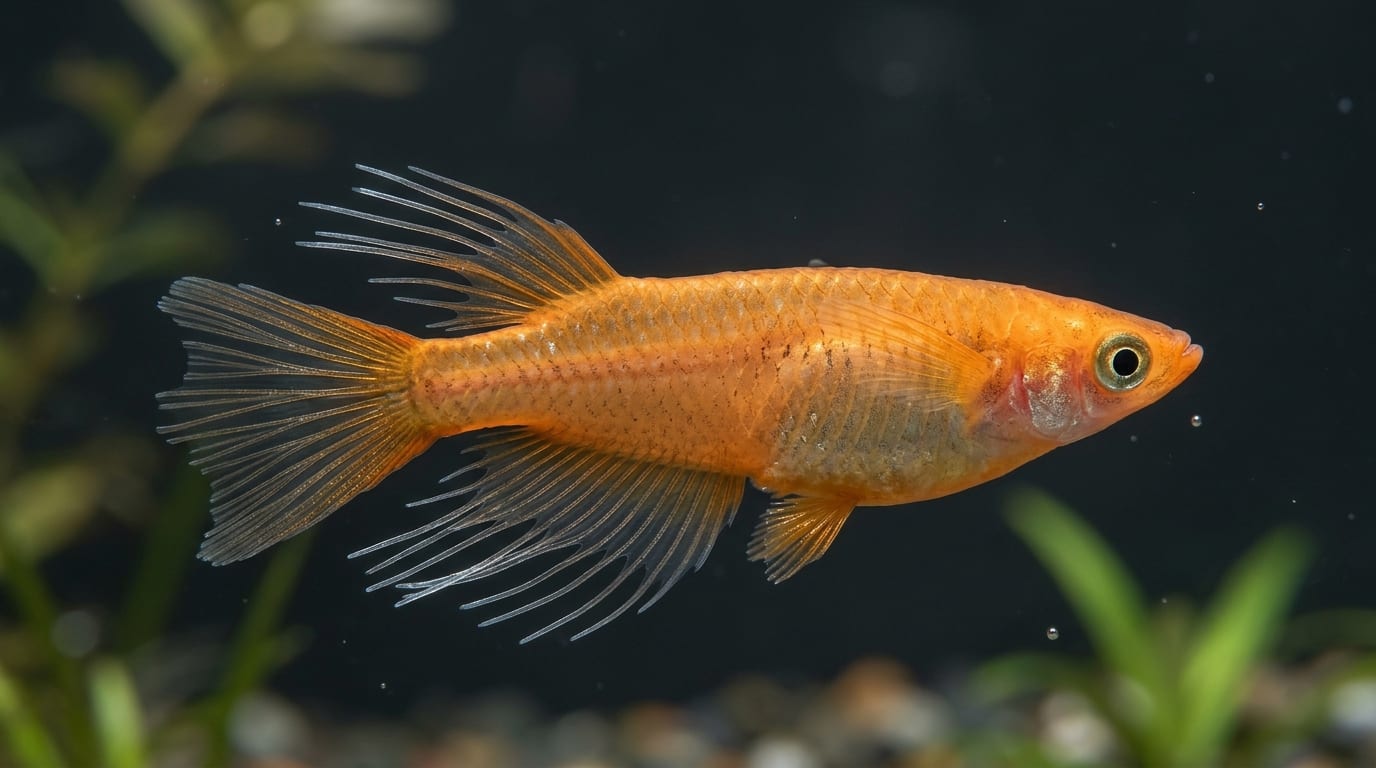
Longfin Medaka
Longfin Medaka is a selectively bred variety in which the soft rays of the dorsal and anal fins elongate, giving the fish a graceful, trailing silhouette. Unlike "finnage-long" types where the whole fin membrane extends, only the rays themselves stretch out here, producing a slender, delicate look. Temperament is calm and social, much like other medaka, and they're best enjoyed in a small group. Because care is considered intermediate-level, keepers who already have some experience with water quality management and daily observation tend to have an easier time keeping those elongated fins looking their best.
View Longfin Medaka encyclopedia →0% commission on your first sales!Register by September 30, 2026 and your first 2 sales are commission-free!
Breeder Wanted!
List on BreederDirect and sell directly to customers nationwide!
9 Transparency Commitments from Br-Choku
Each Medaka listing includes the following from Breeder. Full transparency on color variations (Yokihi/Miyuki/Lame) and lineage guaranteed.
- Variety Name
- Lineage
- Actual Photos
- Color Classification
- Body Type
- Scale Type
- Size
- Origin
- Age/Generation
Browse all 116 breeds
Color
Scale Type
No listings match your filters
Adjust your filters, or get notified when new listings arrive.
Getting alerts is free with a member account. When new listings match your saved search, we'll notify you by email and in-app.
Browse other categories
Verified breeders (preview)

Longfin Medaka key facts
- Care level
- Intermediate
- Lifespan
- 2-3 years
- Size
- Up to about 4cm SL
- Temperature
- 18〜28℃
- Diet
- Prepared medaka food, green water
- Lighting
- Because it is the dorsal and anal fins that extend, the fin shape is easiest to judge from the side. In lines that also carry external luminescence the sheen reaches the extended part, so the fish reads differently from above and from the side. Outdoors, summer sun raises water temperature sharply, so shade half the container with something such as a reed screen.
- Diet & Nutrition
- Commercial prepared medaka food is the staple, given in an amount finished within a few minutes. Leftovers decay and foul the water, so adjust the quantity. Green water rich in phytoplankton suits fry rearing.
- Water Temperature & Quality
- Slightly acidic to slightly alkaline water is considered ideal, and the water drifts toward acidic as keeping continues. Around one water change per week is the guideline, and because sudden shifts in temperature or pH cause stress, acclimatise new fish by floating the bag. FishBase records the wild water chemistry of this species as pH 7.0-8.0 and hardness 9-19 dH.
- Tank Mates & Compatibility
- Elongated fins are easily damaged by obstructions or crowding, so keep the container uncluttered and the stocking light. A peaceful schooling fish, normally kept as a group of the same variety. One litre of water per fish is the guideline against overcrowding; overstocking causes poor growth, reduced breeding, oxygen shortage and water fouling.
- Breeding
- Outdoors the spawning season runs from about April to October, once water reaches 18C or above with 12-13 hours of daylight. For year-round indoor breeding, 25-28C water and over 13 hours of lighting are the guideline. Eggs hatch at a cumulative 250 degree-days, about 10 days at 25C.
- Health & Notes
- The extended rays carry no membrane and are thin, so they damage easily; keep sharp-edged obstacles out of the container. The trait is often confused with hirenaga, but hirenaga elongates every fin together with its membrane while longfin elongates only the rays of the dorsal and anal fins. Outdoors the fish become inactive and overwinter near the bottom as water cools, resuming activity in spring once daytime water exceeds 10C. A 0.3-0.5% salt bath is used for ailing fish, with water raised to no more than about 28C.
About Longfin Medaka
Longfin Medaka is a selectively bred variety with elongated dorsal and anal fin rays. Learn its key traits and what to know before bringing one home.
7 things to know before welcoming a Longfin Medaka
1Different from "Finnage-Long"
In Longfin Medaka, only the soft rays of the dorsal and anal fins elongate, and the extended sections lack fin membrane. This gives it a distinct look from "finnage-long" types, where the entire fin membrane spreads out. Because the names sound similar, it's worth confirming which trait a given fish actually has before bringing one home.
2Intermediate-level care
Longfin Medaka is generally considered an intermediate-level fish to keep. Some prior experience with basic water quality management and medaka care makes it easier to keep those elongated fins healthy. If this is your first time keeping medaka, building up basic husbandry skills with a common variety first is a reasonable approach.
3Elongated fins can catch easily
The elongated soft rays can easily catch on dense plant growth or the mesh of a net. When choosing tank decor or a net for maintenance, opting for smoother materials and shapes that are less likely to snag helps reduce the risk of fin damage.
4Keep water flow gentle
Because the extended fins catch water resistance more easily, strong currents can make swimming tiring. Adjusting the filter outlet or flow direction to create gentler water movement in the tank helps avoid putting unnecessary strain on the fish.
5Choosing tankmates
Temperament is calm, much like other medaka varieties, but the elongated fins are a spot other fish may be tempted to nip at. When choosing tankmates, it's safer to avoid species known to target fins and stick with fellow medaka or other calm, small fish.
6What to watch for day to day
The elongated fin sections are thin and delicate, so it helps to stay in the habit of checking for changes in color or shape during daily observation. As with any medaka, watching for sudden shifts in temperature or water quality also supports catching health changes early.
7Preparing the environment beforehand
Before bringing one home, it's standard practice to have the tank fully cycled and the water quality stable. Since Longfin Medaka grows to roughly 4 cm in standard length at maximum, planning tank size and stocking numbers with that adult size in mind makes ongoing care easier down the line.
Frequently asked questions about Longfin Medaka
- Q.Is Longfin Medaka subject to CITES?
- A.Longfin Medaka is not subject to CITES. There are no international trade regulations specific to this variety.
- Q.How do I tell it apart from finnage-long varieties?
- A.Longfin Medaka has elongated soft rays only, with no fin membrane on the extended sections. Finnage-long varieties, by contrast, have the entire fin membrane expand along with the rays, and that presence or absence of membrane is the key way to distinguish the two.
- Q.Can beginners keep this variety?
- A.Longfin Medaka is generally considered intermediate-level to keep. If you're new to medaka care, learning the basics with a common variety first tends to make it easier to keep the elongated fins in good condition.
- Q.How big does it get?
- A.As an adult, it reaches up to about 4 cm in standard length. There's some individual variation depending on the fish and its environment, but this figure is a useful guide when choosing a tank.
- Q.What should I do if the fins get damaged?
- A.The elongated fins are prone to damage from snagging on objects or being nipped by other fish. The basic approach is to reduce sharp or snag-prone decor in the tank and keep water quality stable to support recovery. If you're concerned about the fish's condition, consulting a specialist is recommended.
Useful tools for Longfin Medaka care
Learn more about Longfin Medaka in the encyclopedia
View Longfin Medaka encyclopedia entry →
Care difficulty, lifespan, size and diet — all basics covered.
More in this category
Can't find the one you're looking for?
Post your wishes for free and breeders with matching animals will contact you with introductions.