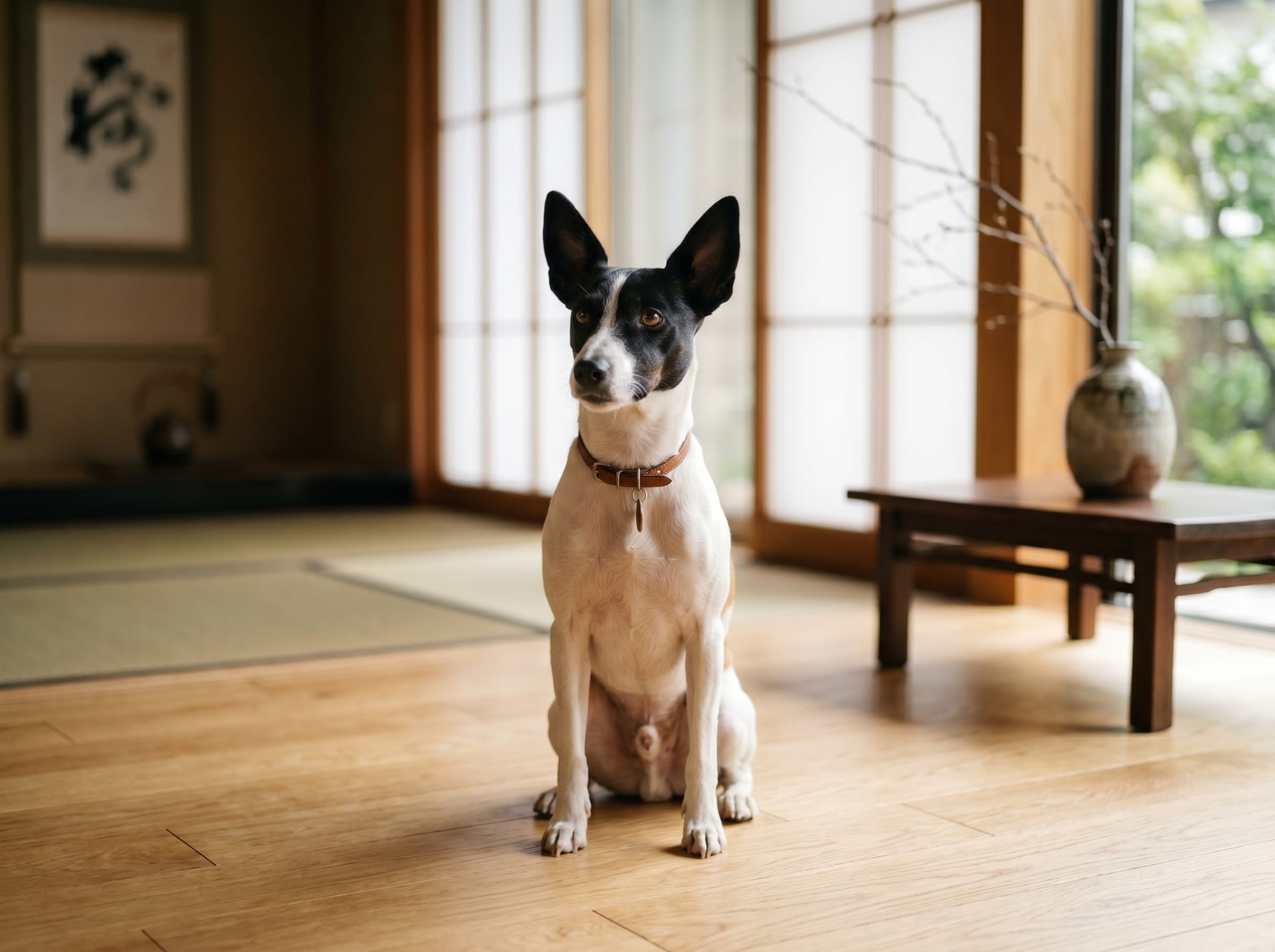
The Japanese Terrier is a purebred Japanese dog believed to have originated in the late Edo to Meiji period, when small terriers brought by traders to port cities such as Nagasaki were crossed with native Japanese dogs. Centuries of selective breeding produced its hallmark look: a crisp tricolor short coat of white with black markings and a compact, square-built frame. Weighing around 4–6 kg, the breed is small yet muscular, carrying itself with quiet dignity. In character, the Japanese Terrier is lively and inquisitive, deeply devoted to its family while retaining the independent spirit typical of terrier breeds. With breeding numbers remaining critically low, the breed has been considered for designation as a Japanese Natural Monument, reflecting its cultural significance. For those who value a rare and historically rooted companion, the Japanese Terrier offers an elegant appearance and a well-balanced personality that can form a uniquely close bond with its owner.
迎接日本㹴前需要了解的7件事
1An Exceptionally Rare Breed
Annual registrations in Japan number only in the dozens, and dedicated breeders are extremely limited. Those wishing to welcome one should expect to register with a specialist breeder and be prepared for a lengthy waiting period.
2Needs Regular Exercise
Despite its small size, the Japanese Terrier is energetic and requires daily walks and indoor play. Insufficient exercise can lead to stress-related behavioral issues. Apartment living is possible, but providing regular opportunities for physical activity is essential.
3Sensitive to Cold
Its thin, short coat means the Japanese Terrier struggles to retain body heat in cold weather or air-conditioned environments. Dog clothing and careful temperature management are recommended in winter, especially for puppies and senior dogs.
4Consistency Is Key in Training
Like other terriers, the Japanese Terrier can show an independent streak and may act on its own judgment. Starting positive, consistent training from puppyhood helps shape a well-mannered and responsive adult dog.
5Early Socialization Matters
Japanese Terriers can be somewhat cautious around strangers and unfamiliar dogs. Exposing puppies to a variety of people, environments, and sounds early on helps develop a calm, well-adjusted temperament.
Relatively Easy Coat Care
日本㹴的常見問題
Q.Where can I find a Japanese Terrier?
A.Because the breed is so rarely bred, Japanese Terriers are almost never available in pet shops. Acquiring one directly from a specialist breeder is the standard route. Searching through the Japan Kennel Club (JKC) or terrier breed clubs is the most reliable way to find a reputable breeder.
Q.What is the life expectancy of a Japanese Terrier?
The short coat sheds minimally and can be kept clean with regular brushing and wiping. Professional trimming is generally not required, but the white coat shows dirt easily, so frequent wiping around the face and paws helps keep the dog looking its best.
7Higher Acquisition Cost
Due to their rarity, puppies typically cost more than common small breeds, with prices often ranging around 300,000–600,000 yen. Finding a reputable breeder is especially important; always ask for health certifications and visit the breeding facility in person before committing.
A.
The Japanese Terrier typically lives around 12–15 years, which is standard for small breeds. Proper diet, regular veterinary checkups, and adequate daily exercise are the key factors in supporting a long, healthy life.
Q.Do Japanese Terriers get along with children and other pets?
A.Japanese Terriers bond closely with their families and can get along well with children, though their small size means interactions with very young children should be supervised. Early socialization helps them coexist with other dogs and cats, but the terrier instinct to chase small animals may emerge around rodents or birds.
Q.Are shedding and odor concerns with this breed?
A.With its short, minimal coat, the Japanese Terrier sheds relatively little and has a mild natural odor, making it well-suited to indoor living. Some increase in shedding can occur during seasonal coat changes, but overall grooming demands remain low.
Q.Can first-time dog owners raise a Japanese Terrier?
A.Japanese Terriers are capable learners and can thrive with a dedicated first-time owner. However, because the breed is so rare, access to experienced breeders and vets with breed-specific knowledge can be limited, so establishing a support network before bringing one home is advisable.