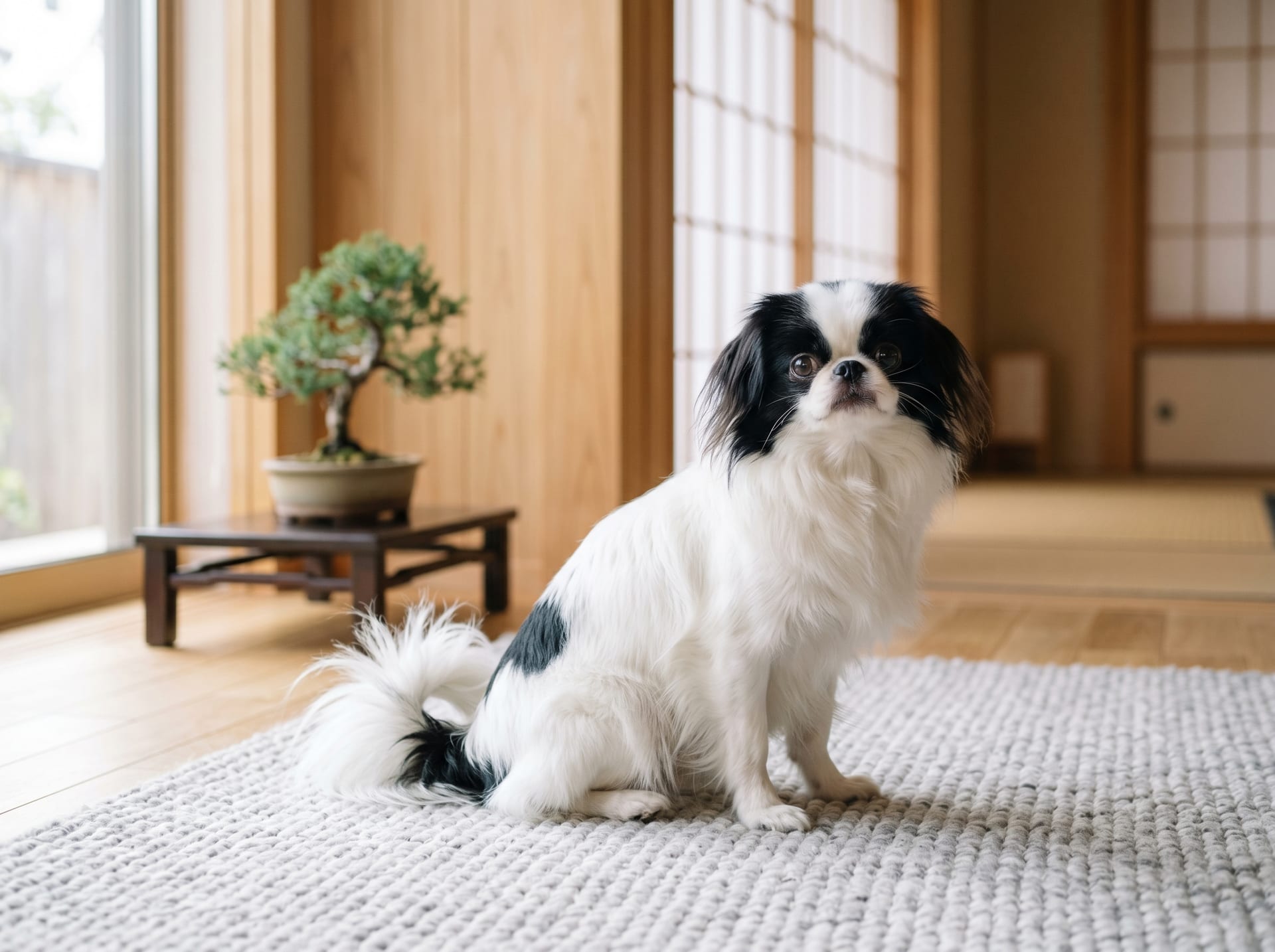
An ancient Japanese companion dog. Elegant coat and charming expression, with a calm and noble temperament.
View 日本狆 encyclopedia →前 3 筆銷售免佣金!於 2026 年 7 月 31 日前註冊成為繁殖者,前 3 筆銷售免收佣金!
繁殖者 招募中!
在 BreederDirect 上架,直接銷售給全國各地的客戶!
所有幼犬上架中,繁殖者均明示以下資訊。為確保安全透明的直銷交易,布里直售已將法律規定項目設為必須。
※ 晶片植入於《動物保護法》(2022年6月施行)中已成為繁殖業者出品的義務。
br-choku 的所有交易均受交易保障涵蓋。萬一無法迎接寵物將全額退款。健康保障在交付後也讓您安心。
想上架puppies嗎?
註冊成為繁殖者,即可與買家直接聯繫。
The Japanese Chin is believed to have arrived in Japan from China during the Nara or Heian period, where it became a treasured companion of the imperial court aristocracy. Its name is said to combine the characters for "dog" and "cat," a nod to its feline-like habits of climbing to high perches and its distinctly independent character. Physically, the breed is recognized by its long, silky coat in black-and-white or tri-color patterns, a pleasingly flat face with a short muzzle, and large, luminous round eyes. The body is compact yet well-proportioned, giving the Chin an air of quiet elegance. In temperament, it is gentle, reserved, and deeply affectionate with its family, though it values its own pace much as a cat would. Because it seldom barks, it adapts comfortably to apartment living. With consistent coat and eye care and moderate daily exercise, the Japanese Chin makes a devoted and graceful long-term companion.
1Coat Care
The long, silky coat benefits from daily brushing to prevent tangles and matting. Pay extra attention to dense fur around the ears and between the paw pads. Professional trimming is generally unnecessary, but regular coat checks are recommended.
2Facial Fold and Eye Care
As a brachycephalic breed, Chins tend to accumulate eye discharge and need daily wiping around the eyes. Moisture can also collect in facial folds, so clean and dry them regularly with a soft cloth. Neglecting this can lead to skin irritation or infection.
3Heat Sensitivity
Due to their brachycephalic anatomy, Chins are particularly sensitive to heat and humidity. Air conditioning indoors during summer is essential, and prolonged outdoor exposure in direct sunlight should be avoided. Stay vigilant about hydration and temperature control to prevent heatstroke.
4Exercise and Living Space
The Chin is a calm breed that is content with light indoor play and short daily walks for adequate exercise. It adapts well to apartment living and tends not to bark excessively, making it well-suited for shared housing. Moderate, consistent activity is preferable to intense exercise.
5Dignified Independence
Often compared to cats, the Chin has a notable independent streak and prefers its own pace over constant cuddling. Gentle, patient training works best, as harsh corrections can cause the dog to become withdrawn. Building a trusting relationship gradually brings out its more obedient side.
View 日本狆 encyclopedia entry →
Care difficulty, lifespan, size and diet — all basics covered.
6Patellar Luxation Risk
Patellar luxation is common in small breeds including the Chin and can be worsened by jumping on and off furniture or navigating stairs. Dog ramps or steps and non-slip mats on hardwood floors help reduce the risk. Consult a veterinarian promptly if you notice any changes in gait.
7Estimated Ownership Costs
As a rare breed, Chin puppies are often priced between 200,000–500,000 yen. Monthly food costs are modest given their small size, but brachycephalic-related medical expenses—such as eye and respiratory care—should be budgeted for. Considering pet insurance before bringing a Chin home is advisable.