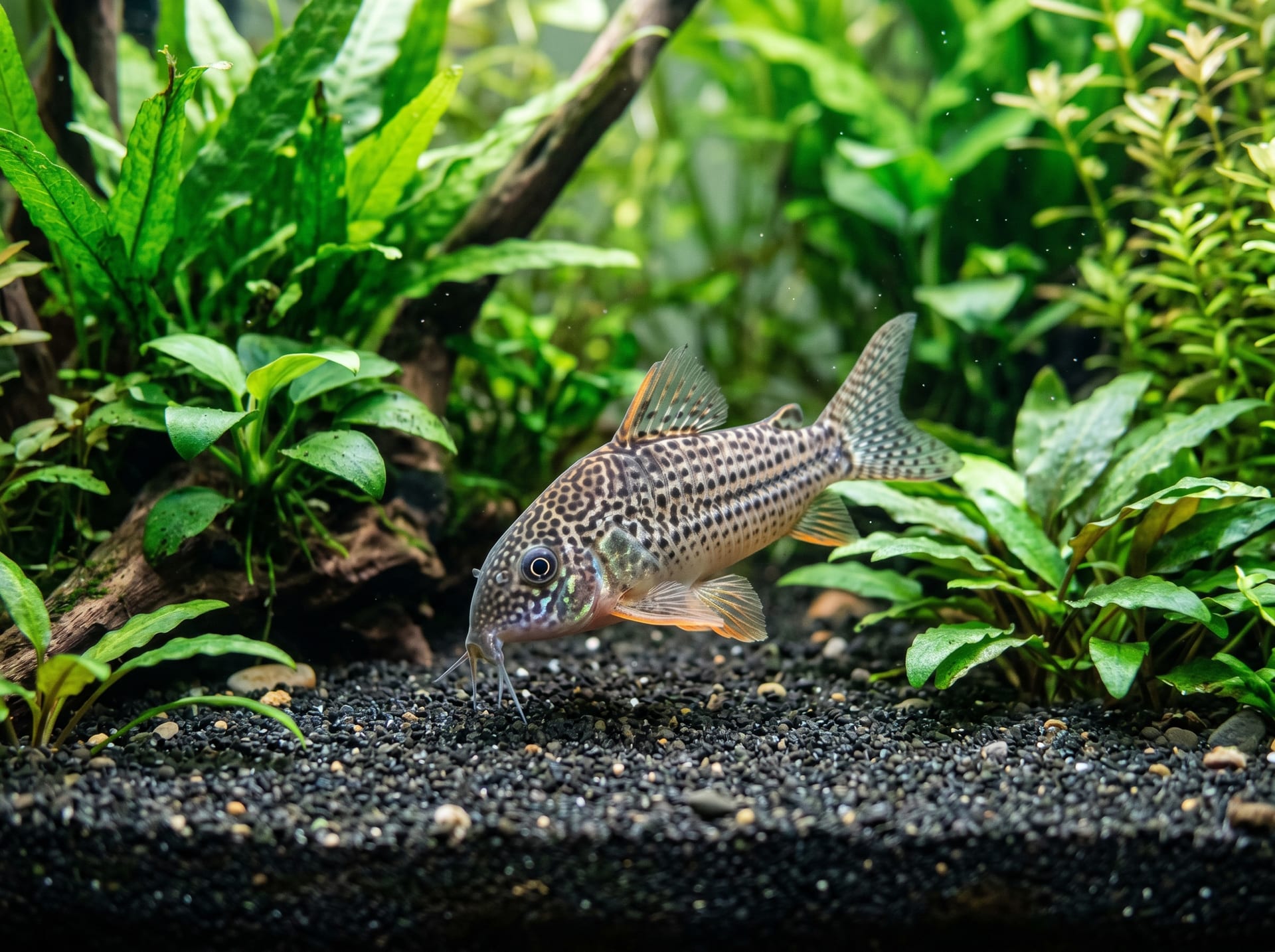
Corydoras
Cute small catfish that sifts through substrate. More active in groups. Peaceful for community tanks. Many collectors.
View Corydoras encyclopedia →0% commission on your first sales!Register by September 30, 2026 and your first 2 sales are commission-free!
Breeder Wanted!
List on BreederDirect and sell directly to customers nationwide!
Our 6 Transparency Commitments
All Tropical Fish listings include water quality, temperament, and tank size information from verified Breeder.
- Origin Disclosed
- Real Photos
- Water Quality Disclosed
- Recommended Tank Size
- Temperament Disclosed
- Breed Line Disclosed
Browse all 27 breeds
Water Type
Care Level
No listings match your filters
Adjust your filters, or get notified when new listings arrive.
Getting alerts is free with a member account. When new listings match your saved search, we'll notify you by email and in-app.
Browse other categories
Verified breeders (preview)
Are you raising tropical fish?
Register as a breeder and connect with buyers directly.
Apply as a breederCorydoras key facts
- Care level
- Beginner-friendly
- Lifespan
- 5-10 years
- Size
- 3-8cm
- Temperature
- 22〜26℃
- Diet
- Sinking tablets, frozen bloodworms
- Container & Tank
- A tank of 45 cm or more is recommended for a group. Fine, smooth sand is essential; sharp gravel damages the barbels.
- Water Temperature & Quality
- Slightly acidic to neutral water (pH 6.0-7.5) at 22-26°C suits it. Lifespan is 5-10 years.
- Tank Mates & Compatibility
- Very peaceful and social; keeping 5 or more of the same species makes them active.
- Diet & Feeding
- Eats sinking tablets and frozen bloodworms from the bottom, using its barbels to search the substrate for food.
- Notes
- Many species sensitive to medications — use half dose
- Breeding & Egg-laying
- Known for the unusual T-position spawning; eggs are stuck onto the glass or plant leaves.
About Corydoras
Corydoras are a diverse group of small catfish native primarily to the Amazon River basin of South America, with over 160 known species that have been scientifically described since the 19th century, and new species continue to be discovered. Ranging from 3 to 8 centimeters depending on the species, they are distinguished by bony plates called scutes that cover their bodies in place of scales. Their two pairs of sensitive barbels around the mouth are used to sift through substrate in search of food, producing the endearing rooting behavior that makes them so beloved. Gentle and somewhat shy by nature, corydoras are social fish that live in groups, making multi-individual keeping essential for their wellbeing. They coexist peacefully with tetras and other small community fish, while also contributing to the tank ecosystem by cleaning up leftover food from the bottom. Hardy and relatively disease-resistant when kept in suitable conditions, they can live 5 to 10 years, earning devoted fans among both beginners and dedicated collectors alike.
7 things to know before welcoming a Corydoras
1Keep Them in Groups
Corydoras are social fish that thrive in groups; kept alone, they tend to hide and show signs of stress. Aim for a minimum of 3–6 individuals of the same or compatible species to see their natural, lively schooling behavior.
2Choose Substrate Carefully
Corydoras sift through substrate with their sensitive barbels to find food, so sharp-edged gravel can injure their mouths and whiskers. Fine-grained, smooth river sand or small rounded substrate is the safest choice to protect their barbels and support natural foraging behavior.
3Stable, Soft Water Is Key
Most Corydoras originate from South American river systems and prefer a pH of 6.0–7.5 with water temperatures of 22–26°C. They are sensitive to sudden water-parameter shifts, so limit water changes to about one-third of the tank volume at a time and always dechlorinate new water thoroughly.
4Use Sinking Foods
As bottom-dwellers, Corydoras rarely reach surface-floating flakes before other fish do. Provide sinking wafers or pellets as a staple diet, supplemented with frozen bloodworms or tubifex dropped directly to the substrate to ensure they get adequate nutrition.
5Choose Tankmates Wisely
Corydoras are peaceful and pose no threat to other fish, making them excellent community tank members alongside mid- and upper-level species. However, avoid housing them with large predatory fish or highly territorial species that may stress or harm them. Small, peaceful fish like tetras or rasboras are ideal companions.
6Note Their Bony Armor
Unlike most fish, Corydoras are covered in overlapping bony plates called scutes rather than soft scales, giving them natural armor. Because their fin spines can snag easily in nets, it is safest to transfer them using a smooth container or cup rather than a standard mesh net to avoid injury.
7Watch for Ich After Introduction
Newly purchased Corydoras are vulnerable to ich (white spot disease) during the stress of transport and acclimation. Quarantining them in a separate tank for approximately two weeks before introducing them to your main aquarium helps protect both the new fish and your existing livestock from potential infection.
Frequently asked questions about Corydoras
- Q.Can I keep a single corydoras on its own?
- A.While it is technically possible, corydoras are social fish that feel stressed without companions. Keeping at least three individuals of the same species is strongly recommended for their health and happiness.
- Q.Are corydoras suitable for planted tanks?
- A.Corydoras generally do well in planted tanks, especially when paired with fine soft sand that protects plant roots. However, their active bottom-dwelling behavior may occasionally dislodge plants with shallow or delicate root systems.
- Q.Can corydoras be kept with other tropical fish?
- A.Yes, their peaceful nature makes them excellent community fish alongside small, gentle species like tetras, guppies, and platies. Avoid housing them with large predatory fish or aggressive species that may bully or harm them.
- Q.Is it a problem if my corydoras stays still at the bottom?
- A.Corydoras are naturally slow-moving and often rest at the bottom, so some stillness is normal. However, eroded barbels, faded coloration, or rapid breathing may indicate poor water quality or illness. Check their appetite and overall physical condition as well.
- Q.How long do corydoras live?
- A.With proper care, corydoras typically live 5 to 10 years, and some individuals have been reported to live even longer. Consistent water quality, a balanced diet, and a low-stress environment are the key factors for a long and healthy life.
Useful tools for Corydoras care
Learn more about Corydoras in the encyclopedia
View Corydoras encyclopedia entry →
Care difficulty, lifespan, size and diet — all basics covered.
Corydoras related articles
Betta Fish Tank Mates Guide | Compatible Fish, Incompatible Fish, and Tips for Success
A comprehensive guide to keeping Bettas with other tropical fish. We introduce compatible species like Neon Tetras, Corydoras, and Amano Shrimp, as well as species to avoid such as Sumatra Barbs and Guppies, with detailed explanations of why. Also includes practical advice on layout and tank size for successful community setups.
Complete Guide to South American Aquariums: Breeding and Care of Neon Tetras and Corydoras
This guide explains how to build a South American aquarium centered on Neon Tetras and Corydoras. It covers recreating a blackwater environment, managing low pH and soft water, breeding Neon Tetras in schools, and raising Corydoras fry from spawning—all with practical, hands-on approaches.
A Beginner's Complete Guide to Starting Tropical Fish Keeping
For beginners wanting to start keeping tropical fish. We explain in detail how to choose necessary equipment such as aquariums, filters, heaters, and lighting, the basics of water preparation, and recommended beginner-friendly species such as Neon Tetras, Guppies, and Corydoras.
Complete Guide to Keeping Corydoras | Varieties, Substrate, Water Quality, Tank Mates, Breeding
Comprehensive guide to keeping Corydoras, a popular bottom-dwelling tropical fish. Complete guidance on selecting beginner-friendly varieties, choosing substrate, managing water quality properly, compatible tank mates, and breeding methods.
Corydoras Breeding Techniques | Spawning Induction and Fry Rearing Methods
Explains Corydoras breeding methods. Introduces spawning induction through cold water stimulation, T-position mating, egg management, and fry feeding.
【Complete Comparison】Corydoras vs Otocinclus: Differences in Care Difficulty, Costs, and Features
Compare the roles, care difficulty, and compatibility of Corydoras and Otocinclus. Which is the better tank cleaner?
More in this category
Can't find the one you're looking for?
Post your wishes for free and breeders with matching animals will contact you with introductions.