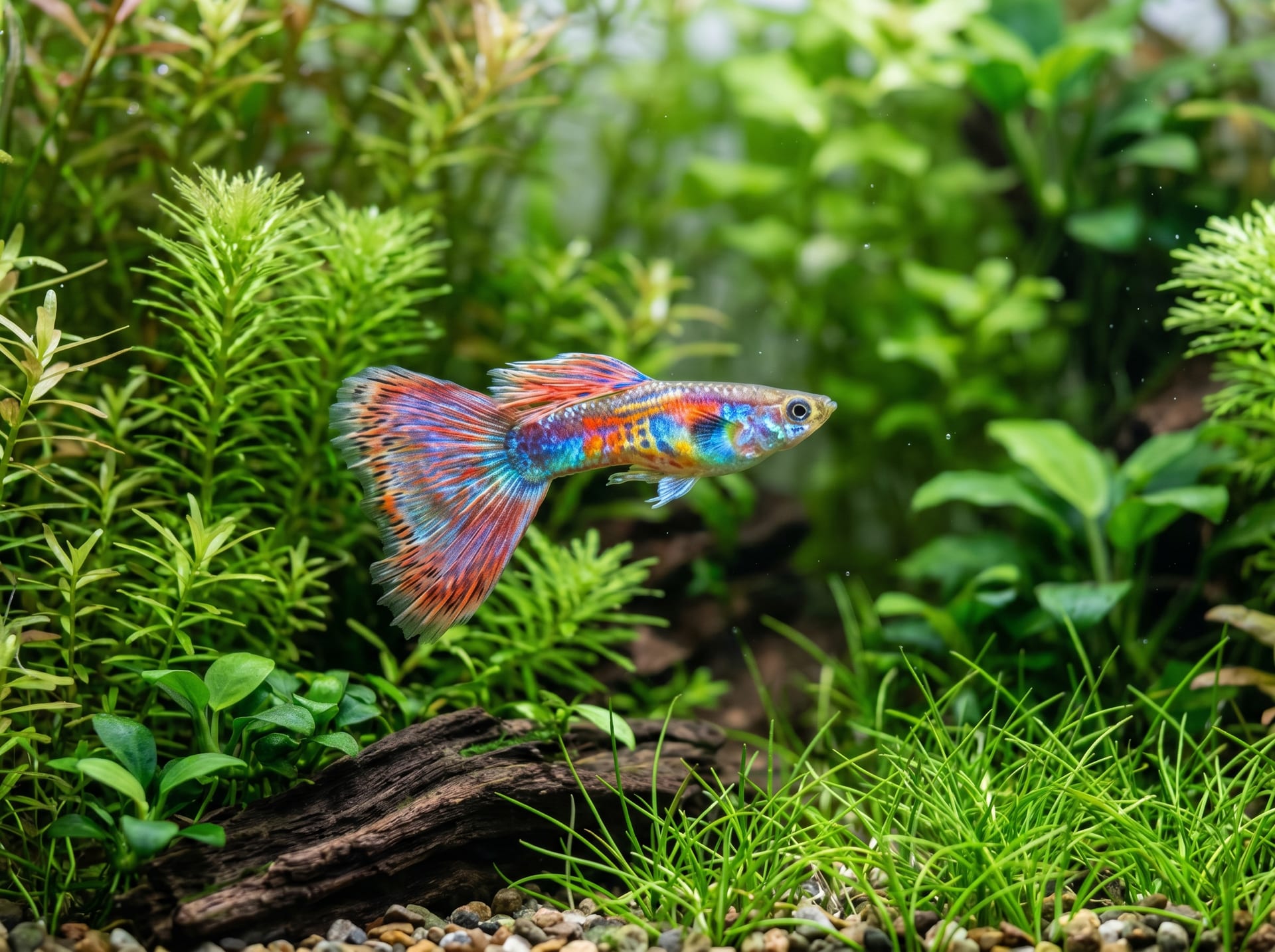
Guppy
The fish that 'begins and ends' the tropical fish hobby. Livebearing makes breeding easy. Endless tail color and shape varieties.
View Guppy encyclopedia →0% commission on your first sales!Register by September 30, 2026 and your first 2 sales are commission-free!
Breeder Wanted!
List on BreederDirect and sell directly to customers nationwide!
Our 6 Transparency Commitments
All Tropical Fish listings include water quality, temperament, and tank size information from verified Breeder.
- Origin Disclosed
- Real Photos
- Water Quality Disclosed
- Recommended Tank Size
- Temperament Disclosed
- Breed Line Disclosed
Browse all 27 breeds
Water Type
Care Level
No listings match your filters
Adjust your filters, or get notified when new listings arrive.
Getting alerts is free with a member account. When new listings match your saved search, we'll notify you by email and in-app.
Browse other categories
Verified breeders (preview)
Are you raising tropical fish?
Register as a breeder and connect with buyers directly.
Apply as a breederGuppy key facts
- Care level
- Beginner-friendly
- Lifespan
- 1-3 years
- Size
- 3-5cm
- Temperature
- 23〜28℃
- Diet
- Omnivore (flakes, brine shrimp)
- Tank Size
- 30cm+. Allow room as they breed prolifically
- Water
- pH 6.5-7.5. Prefers slightly hard water
- Breeding
- Livebearer, ~monthly cycle. Use breeding box for fry
- Notes
- Prolific breeders — avoid overcrowding. Line management is key
About Guppy
Guppies originate from rivers and brackish waters of northern South America and the Caribbean, and were formally described in the late 19th century after Robert John Lechmere Guppy collected specimens in Trinidad — giving the fish its common name. Today's ornamental guppies are the result of decades of selective breeding, producing a stunning diversity of tail shapes including roundtail, delta, and swordtail forms, with body colors spanning red, blue, yellow, black, metallic, and countless combinations. Males are smaller but brilliantly colored, while females are drabber yet capable of delivering 20 to 100 or more live fry in a single birth. Their active yet peaceful temperament brings energy to community aquariums, and the ease of breeding makes them a rewarding choice for hobbyists at every level. Long celebrated in Japan as the "king of tropical fish," guppies remain a cornerstone species of the aquarium hobby worldwide.
7 things to know before welcoming a Guppy
1Ideal Temperature: 24–26°C
As a tropical fish, guppies thrive when water temperature is kept stable between 24–26°C (75–79°F). Temperatures below 20°C can cause lethargy and increase susceptibility to disease. Use a heater with a thermostat to maintain a consistent temperature year-round.
2Males and Females Look Very Different
Male guppies boast colorful, flowing tails that make them the stars of the aquarium, while females are larger but more plainly colored. Most commercially bred varieties focus on enhancing male appearance, so choose the sex based on your goals—whether for display or breeding.
3They Reproduce Very Readily
Guppies are livebearers and females can give birth approximately every four weeks. Simply housing males and females together will lead to breeding, and populations can grow rapidly. If you don't want to breed them, consider keeping only one sex or separating them into different tanks.
4Fry Can Be Eaten by Adults
Newborn fry are tiny and vulnerable to being eaten by adult fish, including their own parents. To raise fry successfully, consider using a breeding box or a separate grow-out tank. Densely planted aquascapes can also provide hiding spots that improve fry survival rates.
5Choose Peaceful Tankmates
Guppies are peaceful and generally do well in community tanks with other small tropical fish. Avoid keeping them with larger fish, fin-nippers like tiger barbs, or any species with mouths large enough to swallow them. Small, gentle species with similar water parameter requirements make the best tankmates.
6Watch for Water Quality Decline
While guppies can adapt to a range of water conditions, they are sensitive to the buildup of ammonia and nitrites, which can cause fin deterioration. Make it a habit to perform partial water changes of about one-third of the tank volume weekly, and maintain your filtration system regularly.
7Initial Costs Are Relatively Low
Guppies are among the more affordable tropical fish, with common varieties available for just a few hundred yen. Basic equipment—a tank, heater, filter, and light—is all you need to get started, and a 20–45 liter aquarium is sufficient. However, rare or show-quality selectively bred varieties can cost several thousand to tens of thousands of yen.
Frequently asked questions about Guppy
- Q.Are guppies suitable for beginners?
- A.Guppies are well-suited to beginners who can maintain basic water quality. However, neglecting water parameters or the male-to-female ratio can lead to health issues, so building foundational knowledge before you start is highly recommended.
- Q.How many guppies should I start with?
- A.For a 30 cm tank, starting with two to three males, or a pair (one male and two to three females) is common. If you plan to breed them, numbers grow quickly, so start with a manageable group.
- Q.What is the lifespan of a guppy?
- A.In captivity, guppies typically live one to two years. Stable water quality and temperature, a balanced diet, and a low-stress environment all contribute to a longer, healthier life.
- Q.How do I protect fry from being eaten by adults?
- A.Moving a pregnant female to a breeding net or separate tank before she gives birth is the most reliable method. Dense plantings of aquatic plants such as java moss also provide hiding spots that reduce predation on fry.
- Q.How do I tell males from females?
- A.Males are smaller with large, colorful tails and a rod-shaped gonopodium (mating organ) on the underside of the abdomen. Females are larger, have plainer tails, and have a rounder belly. Sex can usually be determined by one to two months of age.
Useful tools for Guppy care
Learn more about Guppy in the encyclopedia
View Guppy encyclopedia entry →
Care difficulty, lifespan, size and diet — all basics covered.
Guppy related articles
A Practical Guide to Guppy Selective Breeding | Lineage Fixation, Culling Judgment, and Trimming Practice
For breeders aiming to improve guppy strains, this explains the practical aspects of selective breeding, fixation, and lineage management in multi-generational breeding. It provides specific guidance on criteria for deciding which individuals to keep and which to cull, and how to prevent reverse crossing and lineage collapse.
Guppy Disease Guide | White Spot Disease, Needle Disease, and Fin Rot: Causes and Treatment Methods
This guide explains the observation points for early detection of common guppy diseases (white spot disease, needle disease, fin rot, and pine cone disease), treatment methods using salt baths, medicated baths, and temperature management. We also introduce prevention strategies practiced by breeders.
Guppy Genetics Complete Guide | Color Fading Prevention & Color Fixation Practical Techniques
Complete explanation from the basics of guppy body color genetics to practical color fading prevention and color fixation techniques. From X-linked and Y-linked inheritance mechanisms, selective breeding procedures, to optimizing rearing environments and feed for enhanced coloration—presented from a breeder's practical perspective.
Complete Guide to Guppy and Platy Compatibility | Water Quality, Breeding Management, and Fry Protection Tips
A thorough examination of guppy and platy compatibility. From overlapping optimal water quality ranges and solutions to fin-nipping and food competition issues, fry protection methods, and recommended tank setups—this guide explains practical cohabitation and breeding management techniques.
Complete Guide to Guppy Breeding Techniques | From Pairing to Fry Rearing
A thorough explanation of pair selection, timing management of fry production, and methods for raising fry to successfully breed guppies. Introduces practical know-how including selection methods to maintain color and pattern lines, fry tank setup, and feeding schedules.
Complete Guppy Breeding Guide — Raising Fry and Strain-Specific Selective Breeding Methods
Guppy breeding for beginners: identifying pregnancy signs, isolating and raising fry, nutrition, selective breeding to stabilize strains, and managing inbreeding.
More in this category
Can't find the one you're looking for?
Post your wishes for free and breeders with matching animals will contact you with introductions.