What is Selective Breeding Across Generations
Selective breeding across generations refers, in the improvement of ornamental fish like guppies, to the practice of selecting individuals from each generation that possess target traits (body color, tail fin shape, size, etc.) and using them as breeding stock to produce the next generation, thereby fixing and stabilizing the desired phenotype within the lineage. Selection in a single generation does not stabilize the trait, and multi-generational continuous selection is essential for quality improvement and lineage fixation.
Guppies have a rapid breeding cycle, with juveniles reaching adulthood and breeding capability within 1-2 months of birth. This makes them well-suited for multi-generational improvement, as many generations can be achieved in a short period. On the other hand, genetic variation and environmental fluctuations easily cause phenotypic variation, and if one is careless, even a fixed trait can become disrupted. Meticulous record-keeping and consistent selective judgment are fundamental to maintaining high-quality breeder lines.
Designing Your Lineage and Establishing Selection Criteria
Before starting selective breeding across generations, it is important to first clearly define "what you are aiming for." By specifically articulating your target traits and establishing selection criteria, consistent selection can be maintained across generations.
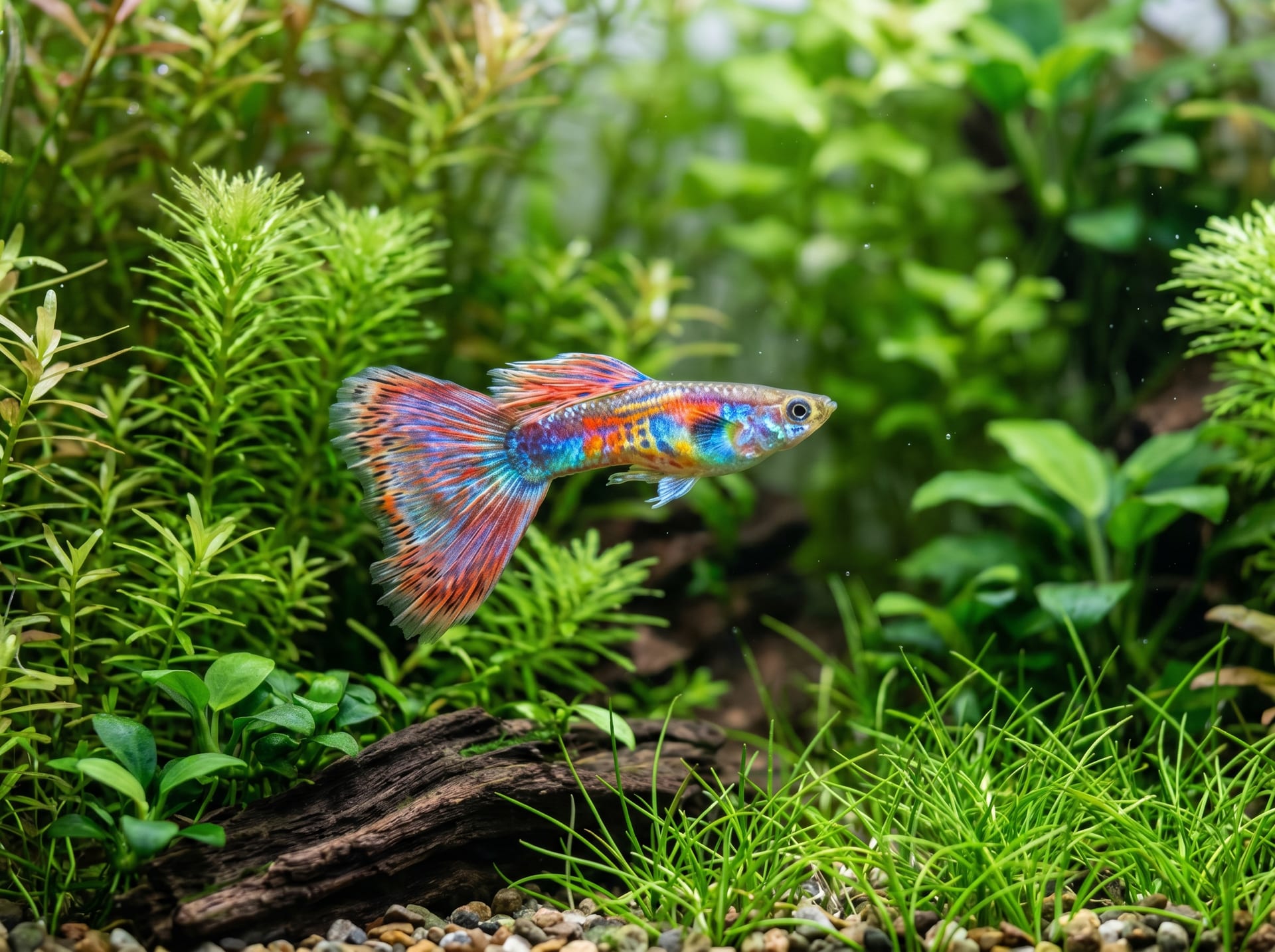
Whether you want to increase color purity, improve tail fin area or shape, or balance body form depends on your goals. For example, if your goal is "improving color purity in mosaic-patterned strains," you would exclude individuals with mixed, muddy colors from breeding candidates in each generation, selecting only those with vivid mosaic patterns.
Selection criteria gain objectivity not just from subjective preference but also by measuring and recording metrics such as body length, tail fin opening angle, and color area. By numbering individuals per tank and managing them with smartphone photos, it becomes easier to track changes across generations.
Actual Selection Work Procedure
When juveniles are born, first prevent overcrowding by dividing them into smaller groups for management. When sex can be confirmed (around 4 weeks old), separate males and females to prevent unnecessary breeding. At this point, conduct primary selection, moving individuals that clearly deviate from the target trait to a selection tank (separate tank or group).
Secondary selection is performed when each individual has matured and fins and body color are nearly complete (around 6-10 weeks old). At this stage, retain individuals meeting selection criteria as "breeding stock candidates," and put the rest up for sale or transfer. Further cull even among breeding stock candidates, ultimately keeping approximately 2-3 males and 4-6 females as breeding parents for the next generation.
If the number of breeding stock is too small, the risk of inbreeding depression from close breeding increases. To maintain adequate genetic diversity, it is best practice for long-term lineage maintenance to regularly introduce fresh, high-quality individuals from other bloodlines within the same strain in a planned "outcross."
Timing and Criteria for Culling Decisions
As you continue breeding across generations, you may reach a point where improvement plateaus or specific traits begin to decline. At such times, you need to make a culling decision: "Should we continue this lineage, or reset?"
Signs that culling is necessary include: "body color does not stabilize even across generations," "survival rate decreases due to inbreeding effects," and "non-target traits deteriorate (body shape distortion, fin deformation, etc.)." If these issues do not improve over multiple generations, it is time to introduce fresh blood from outside or reconsider the lineage itself.
Conversely, signs that you can judge "we've essentially fixed it in this generation" are "phenotypic variation among sibling individuals has decreased" and "the target trait appears at high rates (70-80% or higher)." Once reaching this level, enter the maintenance phase and continue management without loosening selection criteria too much.
Implementing Trimming (Culling Individuals)
As selective breeding progresses, inevitably large numbers of individuals are born. Considering tank capacity, maintenance costs, and management labor, individuals that do not remain as breeding stock candidates must be appropriately processed (trimmed).
The most recommended method is to sell or transfer healthy individuals to other aquarists. By using online marketplace platforms, you can deliver improved guppies directly to enthusiasts seeking them, allowing individuals to thrive while generating revenue. Surplus individuals from breeder lines have value as breeding material and there is demand for them, so make active use of this.
Because guppies have vigorous reproductive capacity, if left unchecked, tanks quickly become overcrowded. Overcrowding leads to water quality deterioration and increased inter-individual stress, negatively impacting selection work. Making regular trimming a habit and consistently maintaining manageable numbers is fundamental to continuing high-quality selective breeding.
The Importance and Application of Multi-generational Records
To successfully sustain long-term selective breeding, maintaining records is extremely important. By continuously recording which individuals were used as breeding stock, what selection was conducted in each generation, and what trends trait changes have shown, you can apply this information to future decision-making.
Spreadsheets, dedicated aquarium management apps, or even simple notebooks will work. Keeping photo records by generation makes it easier to visually grasp the progression of traits. Records of failed selections are also important—by reflecting on "why it didn't work," you improve selection accuracy in subsequent generations.
Records of multi-generational selective breeding become valuable assets when expanding activities as a breeder in the future. Proof of lineage and breeding history function effectively in gaining purchaser trust.