Complete Guide to Guppy Breeding Techniques | From Pairing to Fry Rearing
Complete guide to successful guppy breeding: selection for pairing, fry timing management, and rearing techniques. Learn practical methods for maintaining color and pattern lineages, setting up fry tanks, and feeding schedules.
Key Takeaways
Complete guide to successful guppy breeding: selection for pairing, fry timing management, and rearing techniques. Learn practical methods for maintaining color and pattern lineages, setting up fry tanks, and feeding schedules.
Related Species
Why Guppies Are a Beginner Breeding Species
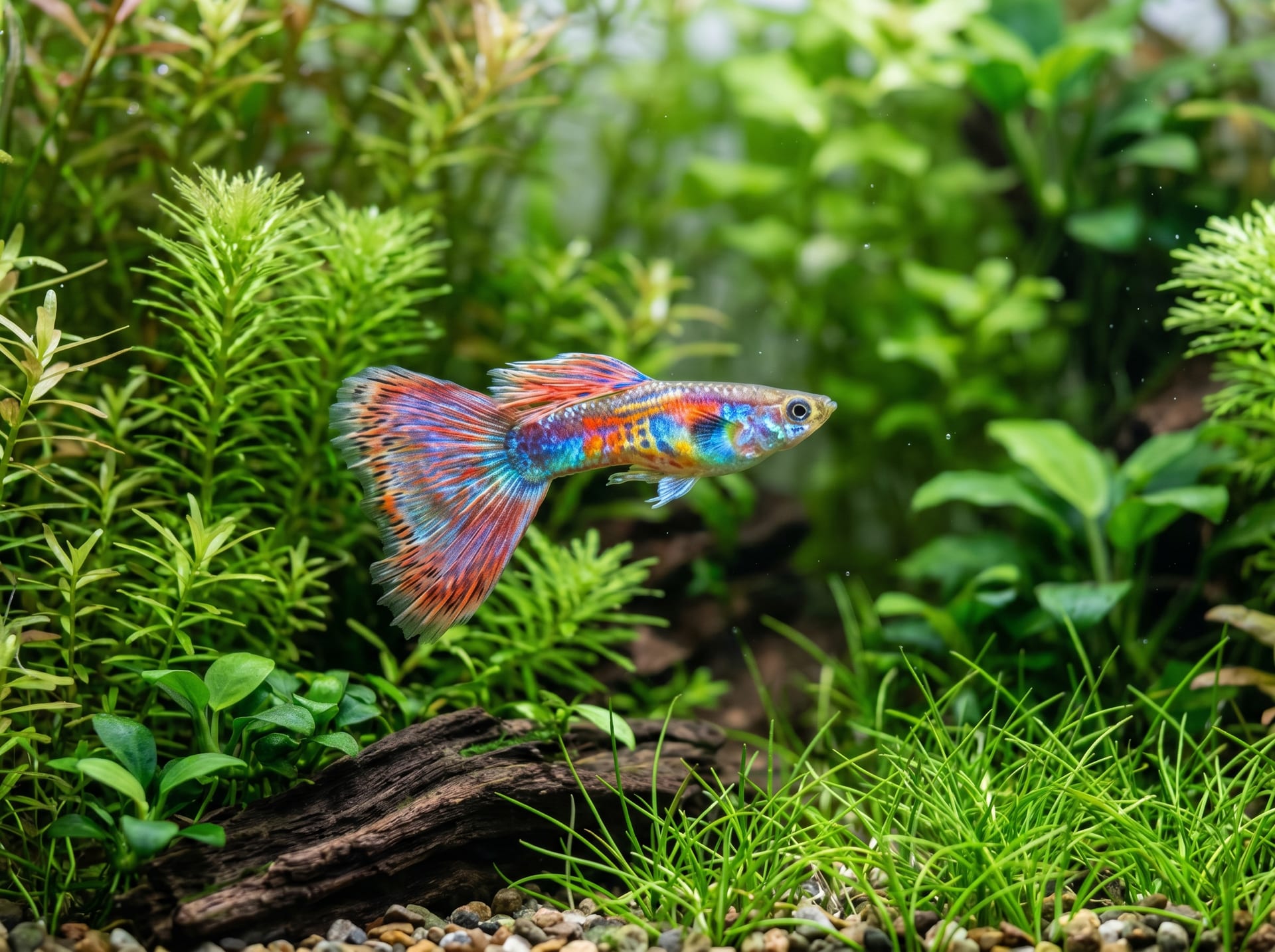
Guppies are livebearers, naturally breeding in tanks with fry born directly into the water. There is no need to manage eggs or worry about hatching, making them one of the easiest tropical fish species to breed. However, unplanned breeding results in "common guppies" with degraded colors and patterns. To maintain beautiful lineages, planned and systematic breeding is essential.
Selecting Males and Females
Choose breeding pairs only after clarifying your desired "lineage" goals.
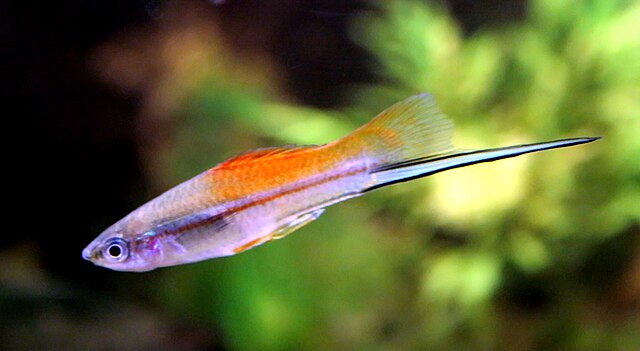
Selecting Males: Choose individuals with well-defined tail fin shape, color, and patterns, balanced body proportions, active behavior, and strong swimming ability. It is important to maintain consistency in tail type within your lineage—Mosaic, Sword, Delta, or Round Tail.
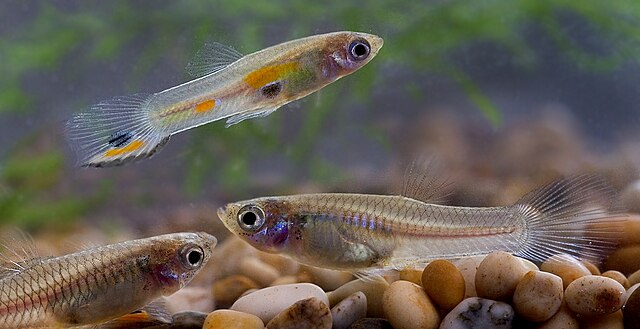
Selecting Females: Choose females with good body size, rounded form, clean scales, and an overall healthy appearance. Using virgin (unspawned) females ensures offspring are definitively from your chosen male. Pet shop females are often already spawned, so virgin females sourced directly from breeders are ideal for breeding purposes.
Ratio: One male to 2–3 females. Too many males causes excessive chasing, stressing the females.
Managing Fry Production
Guppy females produce fry approximately 28 days after mating. Pregnant females develop a noticeably rounded belly, and a dark spot appears near the anus where the developing fry are visible through the body wall.
Signs of imminent birth: belly becomes angular, movement becomes sluggish, fish remain hidden in tank corners.
Fry are typically born near plants or driftwood in sheltered areas. A breeding box (floating net) separates mother and fry, reducing predation risk. However, overly small breeding boxes cause stress; either use a spacious box or allow natural spawning in a large, heavily planted tank.
Rearing Fry
Newly born fry are extremely small (approximately 5–6mm) and begin seeking food immediately after becoming mobile.